Magnetic fasteners are revolutionizing various industries, offering a secure, efficient, and often invisible method of joining materials. These aren’t simply magnets stuck together; they represent a sophisticated application of magnetic principles, meticulously engineered for specific load-bearing, positioning, and release requirements. From securing panels in automotive manufacturing to creating modular construction components, magnetic fasteners are increasingly sought after for their unique advantages.
The global demand for efficient and adaptable fastening solutions is soaring, driven by advancements in manufacturing, construction, and product design. Traditional methods like screws, bolts, and welds often present limitations in terms of assembly time, material compatibility, and potential for corrosion. Magnetic fasteners directly address these challenges, providing a faster, cleaner, and more versatile alternative, particularly in environments where ease of maintenance and accessibility are crucial.
Understanding the capabilities of magnetic fasteners is essential for engineers, designers, and procurement specialists seeking innovative solutions. Their diverse applications are contributing to more streamlined production processes, increased product longevity, and a reduction in overall costs, cementing their role in modern industrial advancements.
Introduction to Magnetic Fasteners
Magnetic fasteners aren't a one-size-fits-all solution; they come in a variety of types tailored to specific applications. These include magnetic clasp systems, magnetic latches, and even more specialized arrangements using neodymium magnets, ceramic magnets, and electromagnets. The selection process depends heavily on the required holding force, environmental conditions, and the materials being joined.
The power of magnetic fasteners lies in their non-destructive joining method. Unlike welding or bonding, they allow for easy disassembly and reassembly, making them ideal for applications requiring frequent maintenance or adjustments. This adaptability, combined with their increasing affordability, is driving their widespread adoption across numerous sectors.
Global Relevance and Industry Context
The global fastener market is a multi-billion dollar industry, projected to continue its growth trajectory due to increasing construction, automotive production, and manufacturing activities worldwide. According to a report by the World Bank, infrastructure spending in developing countries is expected to reach trillions of dollars in the coming decades, creating substantial demand for efficient and reliable fastening solutions. Magnetic fasteners are positioned to capture a significant portion of this market.
The automotive industry, in particular, is rapidly adopting magnetic fasteners for interior panel attachment, lighting fixture mounting, and access panel closures. This shift is driven by the need for lighter vehicles, faster assembly times, and improved NVH (noise, vibration, and harshness) performance. ISO standards related to automotive quality and safety are also pushing manufacturers to explore innovative fastening technologies.
A key challenge facing the fastener industry is the increasing demand for sustainable and environmentally friendly solutions. Traditional fastening methods often involve the use of hazardous materials and generate significant waste. Magnetic fasteners, with their potential for reuse and recyclability, offer a greener alternative, aligning with global efforts to reduce carbon emissions and promote circular economy principles.
Defining Magnetic Fasteners
Magnetic fasteners are devices that utilize the attractive force between magnets to securely join two or more objects. Unlike traditional mechanical fasteners, they don't rely on physical penetration or adhesives. Instead, they employ precisely engineered magnetic fields to create a strong and reliable connection. This makes them particularly useful when avoiding damage to delicate surfaces or when a non-marring fastening solution is required.
Their connection to modern industry stems from the advancements in materials science, particularly the development of high-strength rare-earth magnets like neodymium iron boron (NdFeB). These magnets offer exceptional magnetic force in a small form factor, making them ideal for integration into compact fastening systems. This also addresses humanitarian needs where quick and easy assembly is vital, such as in the construction of temporary shelters or field hospitals.
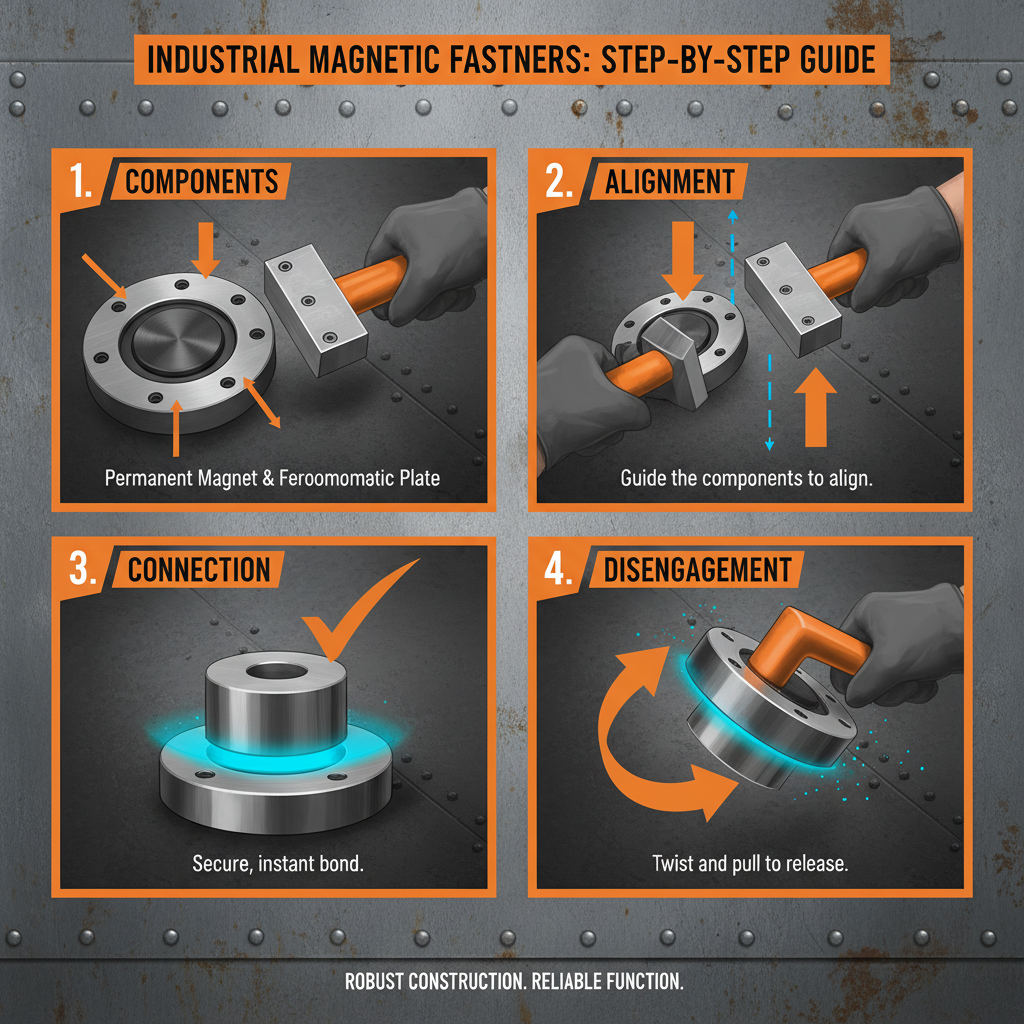
The core principle behind magnetic fasteners is relatively simple: opposite poles attract. However, the practical implementation involves careful consideration of magnetic circuit design, material properties, and the application’s specific requirements. The strength of the magnetic bond is influenced by factors like magnet size, shape, distance between magnets, and the presence of intervening materials.
Key Factors and Core Components
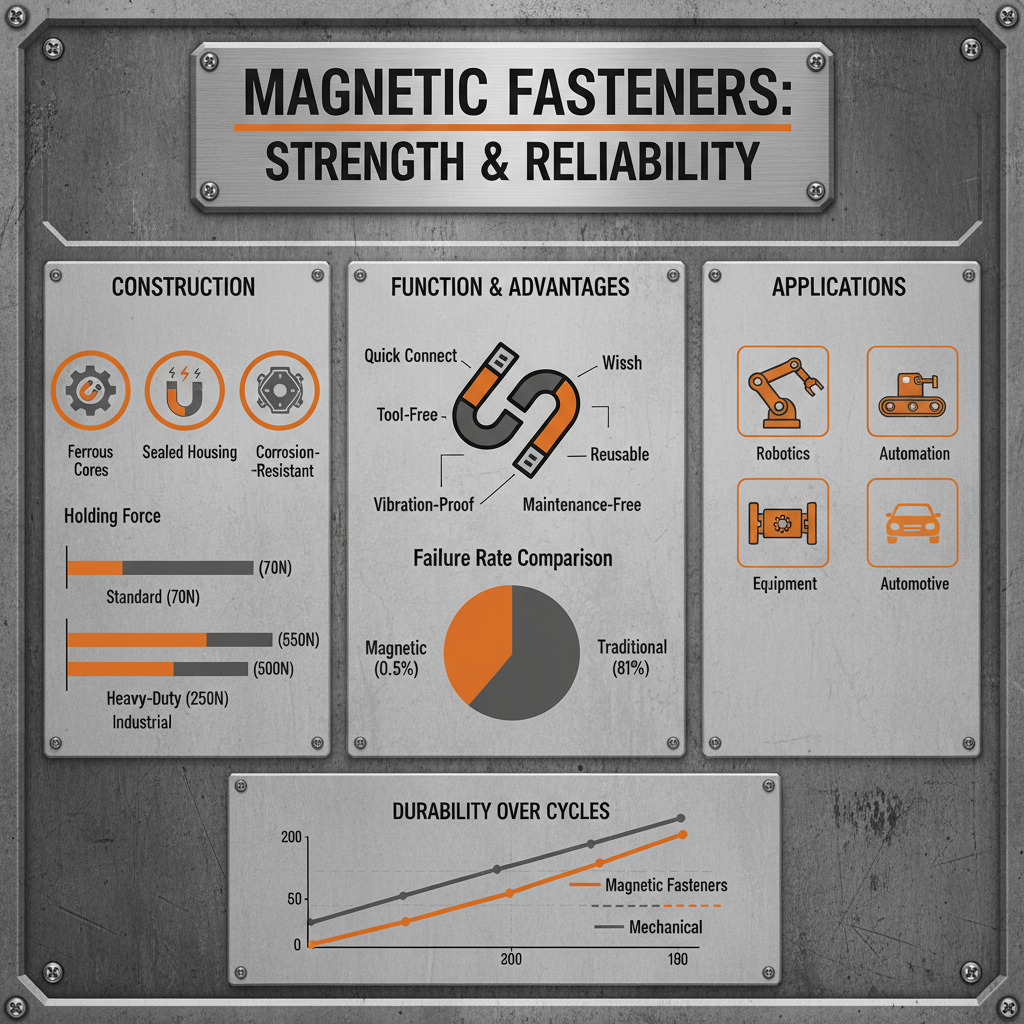
Holding Force: The primary characteristic of any magnetic fastener is its ability to resist separation under load. This force is determined by the magnet's strength, size, and the configuration of the magnetic circuit. Applications requiring high tensile strength will demand robust magnets and optimized designs.
Material Compatibility: Magnetic fasteners are generally compatible with a wide range of materials, including metals, plastics, and composites. However, it's crucial to consider the magnetic permeability of the materials being joined, as this can affect the strength of the magnetic bond. Non-magnetic materials may require the use of steel plates or other ferromagnetic elements to enhance the connection.
Magnetic Fastener Performance Metrics
Global Applications and Use Cases
In the automotive sector, magnetic fasteners are used extensively in the assembly of interior trim panels, allowing for quick and easy access for maintenance and repair. They’re also employed in the manufacturing of electric vehicles (EVs) to secure battery packs and other critical components. In Europe, several automotive manufacturers have adopted magnetic fasteners to streamline their production processes.
The aerospace industry leverages magnetic fasteners for non-destructive testing (NDT) and the assembly of composite structures. Their ability to provide a secure yet removable connection is crucial for maintaining the integrity of aircraft components. Furthermore, in remote industrial zones like those in Northern Canada, where accessibility is limited, magnetic fasteners simplify maintenance procedures for critical infrastructure.
Advantages and Long-Term Value
The cost savings associated with using magnetic fasteners are significant, stemming from reduced assembly time, lower labor costs, and minimized tooling requirements. Compared to traditional methods, they eliminate the need for drilling, tapping, or welding, simplifying the manufacturing process. From a sustainability standpoint, they reduce material waste and energy consumption.
Beyond the tangible benefits, magnetic fasteners offer a heightened sense of security and reliability. Their consistent holding force and resistance to loosening ensure a durable and long-lasting connection, enhancing product safety and customer satisfaction. This fosters trust in the brand and reinforces a commitment to quality and innovation.
Future Trends and Innovations
Research and development efforts are focused on enhancing the performance and versatility of magnetic fasteners. This includes exploring new magnetic materials with higher energy density, developing self-aligning magnetic systems, and integrating smart sensors for real-time monitoring of magnetic force. The rise of Industry 4.0 and the Industrial Internet of Things (IIoT) will play a crucial role in enabling these advancements.
The integration of magnetic fasteners with additive manufacturing (3D printing) technologies is opening up new possibilities for customized fastening solutions. This allows for the creation of complex geometries and tailored magnetic circuits optimized for specific applications. Furthermore, the increasing demand for lightweight materials in the automotive and aerospace industries is driving the development of magnetic fasteners based on advanced composites.
A key trend is the development of adjustable magnetic fasteners that allow for variable holding force. These are particularly useful in applications where precise control over clamping pressure is required. This is aligned with the broader push towards automation and intelligent manufacturing processes, where flexible and adaptable fastening solutions are essential.
FAQS
Magnetic fasteners offer several advantages, including faster assembly times, reduced labor costs, no drilling or tapping required, and the ability to easily disassemble and reassemble components. They also eliminate the risk of corrosion and avoid damaging delicate surfaces. This makes them ideal for applications where maintenance access is frequent or material compatibility is a concern.
The performance of magnetic fasteners in harsh environments depends on the type of magnet used. Neodymium magnets, while powerful, can lose magnetism at higher temperatures. Samarium cobalt magnets offer better temperature resistance, while ceramic magnets are highly corrosion-resistant. Choosing the appropriate magnet material is crucial for ensuring long-term reliability in challenging conditions.
The load capacity varies greatly depending on the size, shape, and material of the magnets, as well as the configuration of the magnetic circuit. Holding forces can range from a few pounds to several hundred pounds. It's crucial to consult with a magnetic fastener supplier to determine the appropriate solution for your specific application and load requirements.
While magnetic fasteners themselves don't actively emit electromagnetic radiation, they can be affected by strong external magnetic fields. In applications sensitive to EMI, shielding may be necessary to prevent interference. However, in most common industrial environments, the risk of EMI is minimal.
Magnetic fasteners work best with ferromagnetic materials like steel and iron. They can also be used with non-magnetic materials like aluminum and plastics, but often require the use of a steel plate or other ferromagnetic element to provide a conductive path for the magnetic flux. The compatibility of the materials is a key consideration when selecting a magnetic fastener.
Determining the appropriate size and strength involves considering the weight of the components being joined, the required holding force, the environmental conditions, and the materials involved. Consulting with a magnetic fastener expert is highly recommended to ensure optimal performance and safety. They can analyze your specific requirements and recommend the best solution.
Conclusion
Magnetic fasteners represent a paradigm shift in fastening technology, offering a compelling combination of speed, efficiency, reliability, and sustainability. Their ability to address the limitations of traditional methods is driving their adoption across a wide range of industries, from automotive and aerospace to construction and manufacturing. Understanding the principles and applications of magnetic fasteners is crucial for staying ahead in today's rapidly evolving technological landscape.
Looking ahead, continued innovation in magnetic materials, sensor integration, and smart manufacturing technologies will unlock even greater potential for magnetic fasteners. By embracing these advancements, companies can optimize their production processes, reduce costs, and create more durable, reliable, and environmentally friendly products. We encourage you to explore the possibilities and visit our website at www.lzfasteners.com to learn more about how we can help you integrate magnetic fasteners into your next project.






 English
  Afrikaans
  Arabic
  Bengali
  Bulgarian
  French
  German
  Hindi
Hindi  Indonesian
  Italian
  Japanese
  Korean
  Malay
Malay  Portuguese
  Russian
  Spanish
  Thai
Thai  Turkish
  Urdu
Urdu  Vietnamese