Metal snap fasteners are integral components across a diverse range of industries, from apparel and automotive to aerospace and medical devices. Their ability to provide quick, secure, and reliable closure makes them indispensable in applications demanding ease of use and repeated engagement. Understanding the nuances of metal snap fasteners – their materials, manufacturing processes, and performance characteristics – is crucial for engineers, designers, and procurement professionals seeking optimal fastening solutions.
The global market for metal snap fasteners is substantial and continues to grow, driven by increasing demand from emerging economies and a constant need for innovative fastening technologies. According to industry reports, the global fastener market is projected to reach billions of dollars in the coming years. This growth is fueled by trends in lightweighting, miniaturization, and the demand for more efficient assembly processes. A key challenge within this market is maintaining quality and consistency while meeting increasing volume demands.
The significance of metal snap fasteners extends beyond mere functionality. They contribute to product durability, aesthetic appeal, and overall user experience. Choosing the right metal snap fasteners can significantly impact a product’s lifespan and its acceptance in the marketplace. Furthermore, advancements in materials and manufacturing are making these fasteners more sustainable and environmentally friendly.
Introduction to Metal Snap Fasteners
Metal snap fasteners represent a versatile and robust fastening solution widely utilized across numerous sectors. Their primary benefit lies in their ease of use – requiring minimal force for engagement and disengagement – coupled with their reliable holding strength. This combination makes them ideal for applications where frequent access or adjustments are necessary.
These fasteners are typically composed of two main components: a stud (or post) and a socket (or cap). The stud features a head that is designed to interlock with the socket, creating a secure connection. The materials used in manufacturing are carefully selected based on the intended application, considering factors like corrosion resistance, strength, and aesthetic requirements.
Defining Metal Snap Fasteners
Metal snap fasteners, at their core, are mechanical joining elements that provide temporary and readily releasable connections. Unlike permanent fasteners like rivets or welds, snap fasteners enable quick assembly and disassembly without requiring specialized tools. This feature is especially valuable in industries requiring frequent product maintenance or customization.
The functionality of a metal snap fastener hinges on the precise engineering of its interacting components. The stud, typically featuring a rounded or pointed head, is designed to seat securely within the socket. The socket’s internal geometry ensures a snug fit, preventing accidental disengagement while allowing for intentional removal with minimal effort.
In a modern industrial context, these fasteners are crucial for streamlining production processes. They facilitate rapid assembly lines, reduce labor costs, and enhance product repairability. They also play a vital role in humanitarian efforts where quick shelter deployment and medical equipment assembly are critical.
Core Components and Characteristics
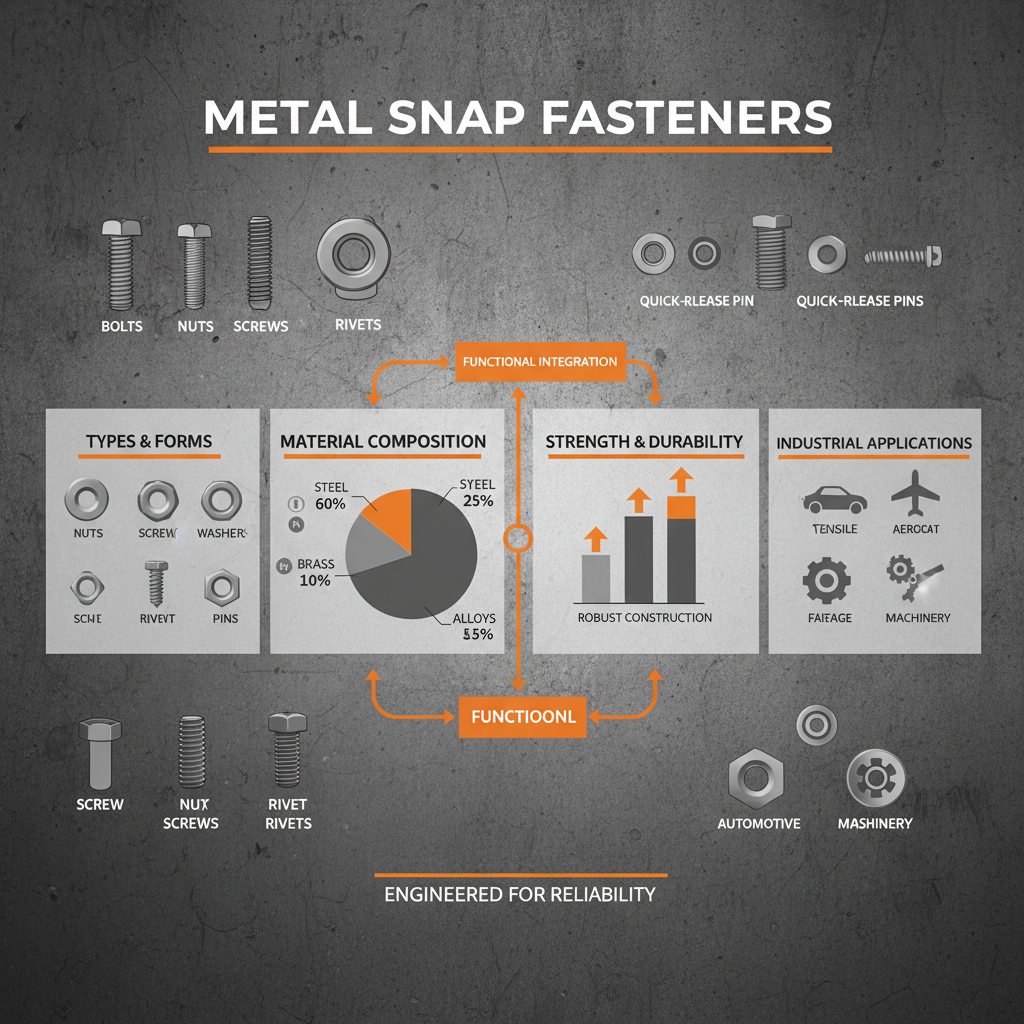
The performance of metal snap fasteners is largely determined by several key characteristics. Firstly, material selection plays a critical role. Common materials include brass, stainless steel, copper, and aluminum. Each material offers unique properties regarding corrosion resistance, strength, and cost. Brass, for example, is frequently used for its decorative appeal and corrosion resistance, while stainless steel provides superior strength and durability in harsh environments.
Secondly, the design and precision of the stud and socket geometry are paramount. The interlocking mechanism must ensure a secure connection under load while still allowing for easy separation when desired. This requires tight tolerances and consistent manufacturing processes. Variations in socket and stud design accommodate different load-bearing requirements and aesthetic preferences.
Thirdly, the finishing process impacts both the appearance and corrosion resistance of the fastener. Plating options such as nickel, chrome, or zinc can enhance durability and aesthetic appeal. Finally, the size and shape of the snap fastener are chosen based on the specific application and the desired level of security and ease of use.
Key Factors Affecting Performance
Several factors directly influence the performance and longevity of metal snap fasteners. Corrosion is a significant concern, especially in environments exposed to moisture, salt spray, or harsh chemicals. Selecting corrosion-resistant materials and applying protective coatings are essential mitigation strategies.
Load capacity is another critical factor. The fastener must withstand the intended forces without experiencing deformation or failure. This depends on the material strength, geometry, and the quality of the manufacturing process.
Metal Snap Fasteners Performance Metrics
Diverse Applications of Metal Snap Fasteners
Metal snap fasteners find widespread application across a multitude of industries. In the apparel sector, they are commonly used in clothing, bags, and accessories, providing secure and convenient closures. The automotive industry utilizes them in interior trim components, carpeting, and upholstery.
Furthermore, the medical device field relies on these fasteners for applications requiring frequent access and sterilization, such as medical garments and equipment cases. In the marine environment, corrosion-resistant metal snap fasteners are essential for boat covers, sails, and other outdoor applications.
Advantages and Long-Term Value
The advantages of using metal snap fasteners are numerous. Cost-effectiveness is a major benefit, as they are generally less expensive than alternative fastening methods like zippers or buckles. Durability and reliability contribute to a longer product lifespan, reducing the need for frequent replacements.
From a sustainability perspective, many metal snap fasteners are recyclable, minimizing their environmental impact. The ease of assembly and disassembly also promotes repairability, extending the product’s useful life. The inherent safety provided by secure closures enhances user confidence and product integrity.
The long-term value extends beyond immediate cost savings. Choosing quality metal snap fasteners builds trust with customers, reinforces brand reputation, and contributes to a positive user experience. This, in turn, can lead to increased customer loyalty and repeat business.
Future Trends and Innovations
The future of metal snap fasteners is poised for innovation, driven by advancements in materials science and manufacturing technologies. Researchers are exploring the use of lightweight alloys and advanced coatings to enhance corrosion resistance and reduce weight.
Digital transformation is also playing a role, with automated assembly systems and smart fasteners equipped with sensors to monitor performance and detect potential failures. Sustainability is another key focus, with a growing emphasis on using recycled materials and developing eco-friendly manufacturing processes.
Furthermore, the integration of metal snap fasteners with wearable technology and smart textiles is opening up new possibilities for interactive and responsive garments and accessories. These advancements will further solidify the role of these fasteners in a wide range of emerging applications.
Challenges and Solutions
Despite their numerous advantages, metal snap fasteners face certain challenges. One common issue is the potential for failure under extreme loads or repeated cycling. Selecting the appropriate fastener size and material for the intended application is crucial to mitigate this risk.
Corrosion remains a persistent concern, particularly in harsh environments. Utilizing corrosion-resistant materials, applying protective coatings, and implementing proper maintenance procedures are essential solutions. Another challenge is ensuring consistent quality control during the manufacturing process.
Implementing rigorous testing procedures, investing in advanced manufacturing equipment, and adhering to industry standards can help maintain high-quality standards. Furthermore, ongoing research into new materials and designs will continue to improve the performance and reliability of metal snap fasteners.
Analysis of Metal Snap Fastener Manufacturing Process Improvements
| Manufacturing Process |
Cost Efficiency (1-10) |
Production Speed (1-10) |
Quality Control (1-10) |
| Traditional Stamping |
7 |
8 |
6 |
| Precision Machining |
5 |
6 |
9 |
| Automated Injection Molding |
9 |
10 |
7 |
| Cold Forming |
8 |
7 |
8 |
| Powder Metallurgy |
6 |
5 |
7 |
| Additive Manufacturing (3D Printing) |
4 |
4 |
8 |
FAQS
Metal snap fasteners are commonly manufactured from materials like brass, stainless steel, copper, and aluminum. Brass offers good corrosion resistance and aesthetic appeal, stainless steel provides superior strength and durability, copper delivers excellent conductivity, and aluminum provides a lightweight option. The choice of material depends on the application's specific requirements, such as corrosion exposure, load-bearing capacity, and desired appearance. Selecting the appropriate material is crucial for ensuring the fastener's longevity and performance.
Selecting the correct size metal snap fastener involves considering the thickness of the materials being joined, the required holding strength, and the overall design of the product. Thicker materials generally require larger fasteners. Refer to manufacturer specifications and load-bearing charts to determine the appropriate size for your specific application. It's also important to consider the potential for stress concentration and ensure the fastener's size is compatible with the surrounding materials to avoid damage.
Common failure modes of metal snap fasteners include corrosion, fatigue failure due to repeated cycling, and shear failure under excessive load. Corrosion can weaken the fastener material, while fatigue failure occurs when the fastener is subjected to repeated stress cycles exceeding its endurance limit. Shear failure happens when the force applied exceeds the fastener’s shear strength. Proper material selection, protective coatings, and avoiding overloading can help prevent these failures.
Several methods can enhance the corrosion resistance of metal snap fasteners. Using corrosion-resistant materials like stainless steel is a primary step. Applying protective coatings such as nickel, chrome, or zinc can create a barrier against corrosive elements. Proper surface preparation before coating is crucial for adhesion. Regularly inspecting and maintaining fasteners in corrosive environments is also essential to identify and address corrosion early on.
Automated assembly of metal snap fasteners offers significant advantages, including increased production speed, improved consistency, reduced labor costs, and minimized errors. Automated systems can accurately position and engage the fasteners, ensuring a secure and reliable connection. This leads to higher product quality and faster time-to-market. Automation is particularly beneficial for high-volume production runs.
Environmental factors such as temperature, humidity, and exposure to chemicals can significantly impact the performance of metal snap fasteners. Extreme temperatures can alter material properties, while high humidity promotes corrosion. Chemical exposure can cause degradation and weaken the fastener. Selecting materials and coatings resistant to the specific environmental conditions is vital for ensuring long-term reliability. Regular inspection and maintenance are also crucial in harsh environments.
Conclusion
In conclusion, metal snap fasteners are essential components in countless applications, providing a reliable, convenient, and cost-effective fastening solution. Their versatility, durability, and ease of use make them indispensable across diverse industries, from apparel and automotive to medical devices and beyond. Understanding the core characteristics, key factors affecting performance, and emerging trends is crucial for engineers, designers, and manufacturers.
Looking ahead, continued innovation in materials, manufacturing processes, and automation will further enhance the capabilities and sustainability of metal snap fasteners. By embracing these advancements, we can unlock new possibilities for product design, improve efficiency, and reduce environmental impact. Visit our website at www.lzfasteners.com to explore our wide range of metal snap fasteners and discover how we can meet your specific fastening needs.






 English
  Afrikaans
  Arabic
  Bengali
  Bulgarian
  French
  German
  Hindi
Hindi  Indonesian
  Italian
  Japanese
  Korean
  Malay
Malay  Portuguese
  Russian
  Spanish
  Thai
Thai  Turkish
  Urdu
Urdu  Vietnamese