Automotive plastic fasteners are revolutionizing the automotive industry, offering a lightweight, cost-effective, and corrosion-resistant alternative to traditional metal fasteners. Their increasing adoption is driven by the growing need for fuel efficiency, reduced vehicle weight, and enhanced design flexibility. Understanding the nuances of these fasteners – their materials, manufacturing processes, and application-specific requirements – is crucial for automotive engineers, manufacturers, and suppliers alike. The global automotive industry’s constant push for innovation relies heavily on advancements in fastening technology, making automotive plastic fasteners a key area of focus.
The automotive sector represents a significant portion of the global fastener market, with plastic fasteners gaining prominence due to their adaptability and performance benefits. According to industry reports, the demand for lightweight materials in vehicles is projected to increase significantly in the coming years, directly impacting the growth of the automotive plastic fastener market. Manufacturers are facing challenges related to stringent safety regulations, rising material costs, and the need for sustainable manufacturing practices, all of which are being addressed through the innovative use of engineered plastics in fastening solutions.
The widespread adoption of automotive plastic fasteners is not just a trend, it's a fundamental shift in how vehicles are designed and assembled. This transition allows for greater design freedom, improved durability, and a reduced carbon footprint, directly contributing to a more sustainable and efficient automotive industry.
The Significance of Automotive Plastic Fasteners
The automotive industry is constantly evolving, driven by the need for lighter, stronger, and more cost-effective components. Automotive plastic fasteners play a vital role in meeting these demands. They offer significant weight reduction compared to metal counterparts, contributing to improved fuel efficiency and reduced emissions. This shift towards plastics isn’t merely about cost savings; it’s about enabling innovative vehicle designs and enhancing overall performance.
The increasing complexity of modern vehicles necessitates fastening solutions that can accommodate various materials and assembly processes. Automotive plastic fasteners excel in this regard, offering excellent compatibility with diverse plastics, composites, and metals. Their ability to withstand harsh environmental conditions and maintain structural integrity makes them a critical component in ensuring vehicle safety and reliability.
Defining Automotive Plastic Fasteners
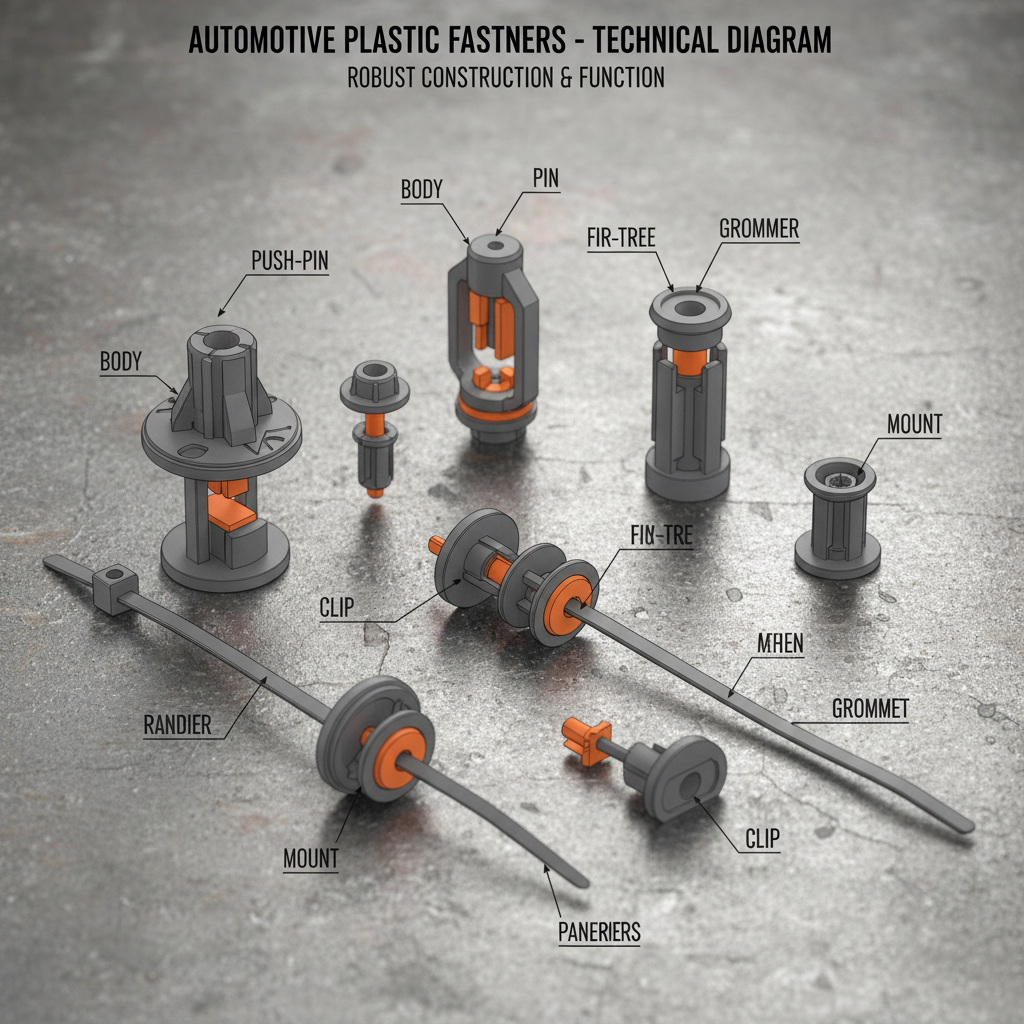
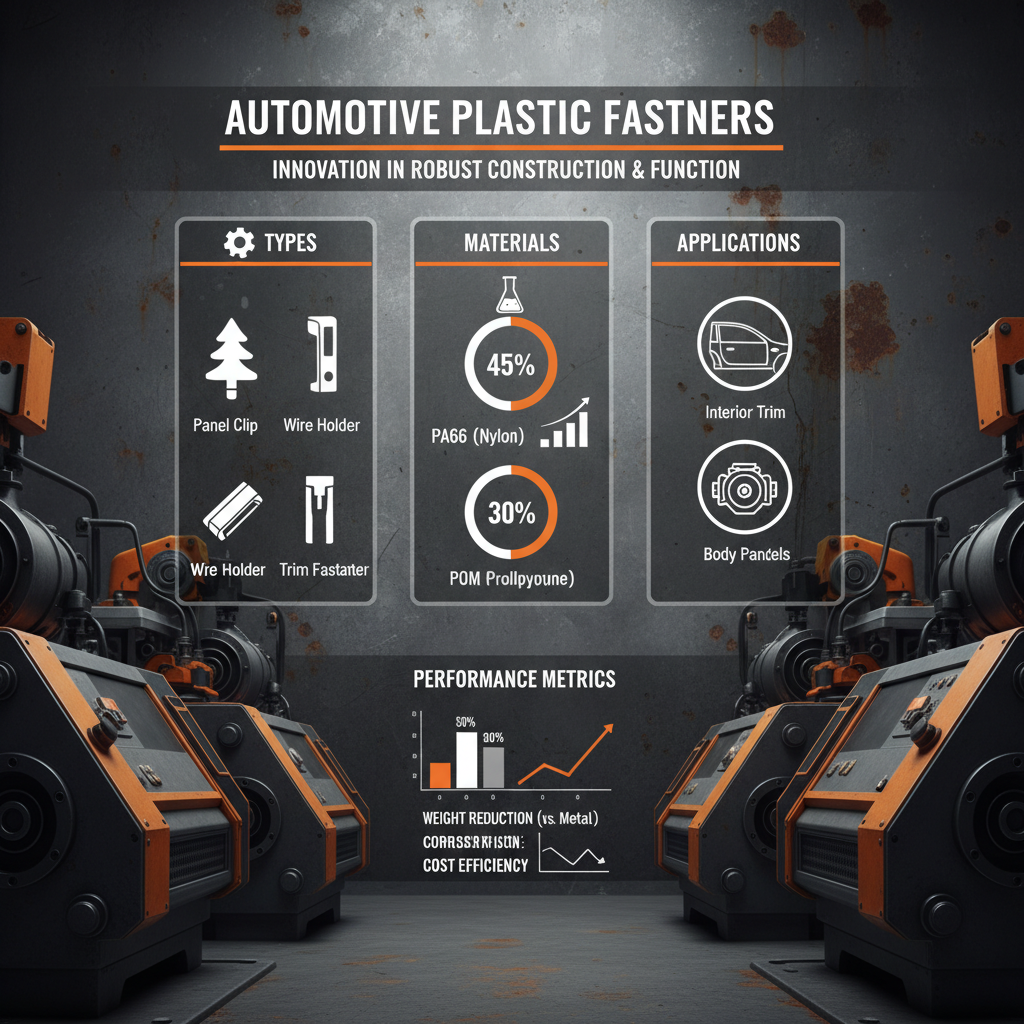
Automotive plastic fasteners are non-metallic fastening elements used to join components within a vehicle. These fasteners are typically manufactured from engineering-grade polymers like Polyamide (Nylon), Polypropylene (PP), Acrylonitrile Butadiene Styrene (ABS), and Polyoxymethylene (POM), chosen for their specific properties such as strength, flexibility, and temperature resistance. They encompass a wide range of types, including clips, push-in fasteners, screws, rivets, and retaining rings.
Unlike traditional metal fasteners that rely on threading or mechanical locking, plastic fasteners often utilize snap-fit, interference-fit, or torsion mechanisms for secure attachment. This design flexibility allows for faster assembly times and reduced manufacturing costs. Their inherent corrosion resistance also eliminates the need for protective coatings, further simplifying the production process.
The connection between automotive plastic fasteners and modern industry stems from the relentless pursuit of efficiency and sustainability. As vehicles become more complex and require lighter materials, plastic fasteners provide a crucial solution, enabling manufacturers to meet increasingly stringent performance and environmental standards. This has a ripple effect, driving innovation across the entire automotive supply chain.
Core Characteristics of Automotive Plastic Fasteners
Durability is a cornerstone of automotive plastic fastener design. These components must withstand continuous vibrations, temperature fluctuations, and exposure to fluids without compromising their integrity. Engineers carefully select materials and optimize geometries to ensure long-term reliability in demanding automotive environments.
Cost-efficiency is another significant advantage. The lower material cost of plastics, combined with streamlined manufacturing processes, results in substantial savings compared to metal fasteners. This cost reduction is particularly important in high-volume automotive production.
Weight reduction is paramount in modern vehicle design. Automotive plastic fasteners are significantly lighter than their metal counterparts, contributing to improved fuel efficiency and reduced emissions. This is a critical factor in meeting increasingly stringent environmental regulations.
Applications Across the Automotive Landscape
Automotive plastic fasteners are ubiquitous throughout a modern vehicle. They secure interior trim components, such as dashboard panels, door cards, and headliners. Their lightweight nature and aesthetic compatibility make them ideal for these applications. They also play a crucial role in securing exterior components like bumpers, spoilers, and underbody panels.
Beyond visible applications, plastic fasteners are extensively used in engine compartments to secure wiring harnesses, hoses, and cooling system components. Their resistance to corrosion and high temperatures makes them suitable for these demanding environments. In the chassis and structural areas, they are increasingly replacing metal fasteners in non-critical applications, contributing to overall weight reduction.
Application Breakdown of Automotive Plastic Fasteners
The Advantages of Utilizing Automotive Plastic Fasteners
The primary advantage of automotive plastic fasteners lies in their weight reduction. By substituting heavier metal components, manufacturers can significantly lower the overall vehicle weight, leading to improved fuel economy and reduced emissions. This contributes to a smaller carbon footprint and aligns with increasingly stringent environmental regulations.
Beyond weight savings, plastic fasteners offer exceptional corrosion resistance. Unlike metal fasteners, they do not rust or corrode, eliminating the need for protective coatings and reducing maintenance requirements. This is particularly important in harsh environmental conditions where vehicles are exposed to moisture, salt, and other corrosive elements.
Future Trends in Automotive Plastic Fastener Technology
The future of automotive plastic fasteners is intrinsically linked to the evolution of materials science and manufacturing processes. We can expect to see increased adoption of bio-based and recycled plastics, contributing to a more sustainable automotive industry. Research and development efforts are focused on enhancing the strength, temperature resistance, and durability of these materials.
Smart fasteners, integrating sensors and communication capabilities, are also emerging as a promising trend. These intelligent fasteners can provide real-time data on stress levels, temperature, and component integrity, enabling predictive maintenance and enhancing vehicle safety. Digitalization and automation in manufacturing will also play a crucial role in optimizing the production of automotive plastic fasteners.
The drive toward electric vehicles (EVs) is also impacting fastener design. EVs often require different fastening solutions due to the unique structural requirements and battery pack integration. Automotive plastic fasteners are well-positioned to meet these evolving needs, offering lightweight and thermally stable solutions for EV assembly.
Overcoming Challenges in Automotive Plastic Fastener Implementation
Despite their numerous advantages, automotive plastic fasteners also present certain challenges. One common concern is their lower strength compared to metal fasteners in certain applications. Engineers address this by carefully selecting materials, optimizing designs, and employing advanced manufacturing techniques to enhance the structural integrity of plastic fasteners.
Another challenge is maintaining dimensional stability over a wide temperature range. Plastics can expand and contract with temperature changes, potentially leading to loosening or failure of the fastener. Material selection and design considerations are crucial in mitigating this issue.
Long-term durability and resistance to UV degradation are also important considerations. Exposure to sunlight and harsh weather conditions can cause plastics to become brittle and lose their strength. The use of UV stabilizers and protective coatings can help to extend the lifespan of automotive plastic fasteners and ensure reliable performance.
Summary of Automotive Plastic Fastener Performance Attributes
| Fastener Type |
Tensile Strength (MPa) |
Temperature Resistance (°C) |
Cost Index (1-10) |
| Nylon 6/6 Clip |
60-80 |
80-100 |
2 |
| Polypropylene Push-In Fastener |
40-60 |
60-80 |
1 |
| ABS Screw |
50-70 |
70-90 |
3 |
| POM Rivet |
70-90 |
90-110 |
4 |
| Glass-Filled Nylon Fastener |
80-100 |
100-120 |
5 |
| Bio-Based Plastic Fastener |
55-75 |
75-95 |
6 |
FAQs
Automotive plastic fasteners offer significant advantages over metal counterparts, primarily in weight reduction, corrosion resistance, and cost-effectiveness. They are considerably lighter, contributing to improved fuel efficiency. They don't rust or corrode, eliminating the need for protective coatings. Manufacturing processes are also often simpler and less expensive, resulting in overall cost savings for automotive manufacturers.
While some plastics have limitations in high-temperature environments, specialized engineering plastics like PEEK and PPS are specifically designed for such applications. These materials maintain their structural integrity and performance characteristics at elevated temperatures, making them suitable for use in engine compartments and other high-heat areas. Selection of the correct material is crucial.
The long-term durability of plastic fasteners depends on the material used and the environmental conditions. High-quality engineering plastics, combined with UV stabilizers and protective coatings, can offer comparable durability to metal fasteners in many applications. Regular inspection and proper material selection are key to ensuring long-lasting performance.
Using automotive plastic fasteners contributes to environmental sustainability through weight reduction, which improves fuel efficiency and reduces emissions. The increasing use of recycled and bio-based plastics further minimizes the environmental impact. The corrosion resistance of plastic fasteners also eliminates the need for harmful coatings, reducing waste and pollution.
Selecting the right plastic fastener involves considering several factors, including the operating temperature, load requirements, exposure to chemicals, and desired lifespan. Material properties, fastener geometry, and manufacturing processes must all be carefully evaluated to ensure optimal performance and reliability. Consulting with a fastener specialist is often recommended.
Many automotive plastic fasteners are recyclable, particularly those made from common plastics like polypropylene and nylon. However, the recyclability depends on the specific plastic type and the availability of recycling infrastructure. Increasing efforts are being made to develop closed-loop recycling systems for automotive plastics, promoting a circular economy.
Conclusion
In conclusion, automotive plastic fasteners have emerged as a critical component in modern vehicle design and manufacturing. Their advantages in weight reduction, corrosion resistance, cost-efficiency, and design flexibility make them an indispensable element in meeting the evolving demands of the automotive industry. The integration of these fasteners not only improves vehicle performance but also contributes to a more sustainable and environmentally responsible future.
As materials science continues to advance, we can expect to see even more innovative applications of plastic fasteners in the automotive sector. Investing in research and development, exploring bio-based materials, and promoting closed-loop recycling systems will be crucial in maximizing the benefits of this technology. By embracing these advancements, the automotive industry can further enhance vehicle efficiency, safety, and sustainability.







 English
  Afrikaans
  Arabic
  Bengali
  Bulgarian
  French
  German
  Hindi
Hindi  Indonesian
  Italian
  Japanese
  Korean
  Malay
Malay  Portuguese
  Russian
  Spanish
  Thai
Thai  Turkish
  Urdu
Urdu  Vietnamese