



Comprehensive Guide to M16 Spring Washer Selection and Applications
Understanding M16 Spring Washers: A Comprehensive Guide
M16 spring washers are crucial components in fastening systems, providing a resilient cushioning effect and maintaining bolt tension. This article dives deep into their purpose, types, applications, and importance in various industries. We'll explore how these seemingly small parts contribute significantly to the reliability and longevity of assembled structures. Whether you're an engineer, a procurement specialist, or simply curious about fasteners, this guide will provide valuable insights. You can find a comprehensive range of M16 spring washers and other fasteners at LZ Fasteners.
What is an M16 Spring Washer?
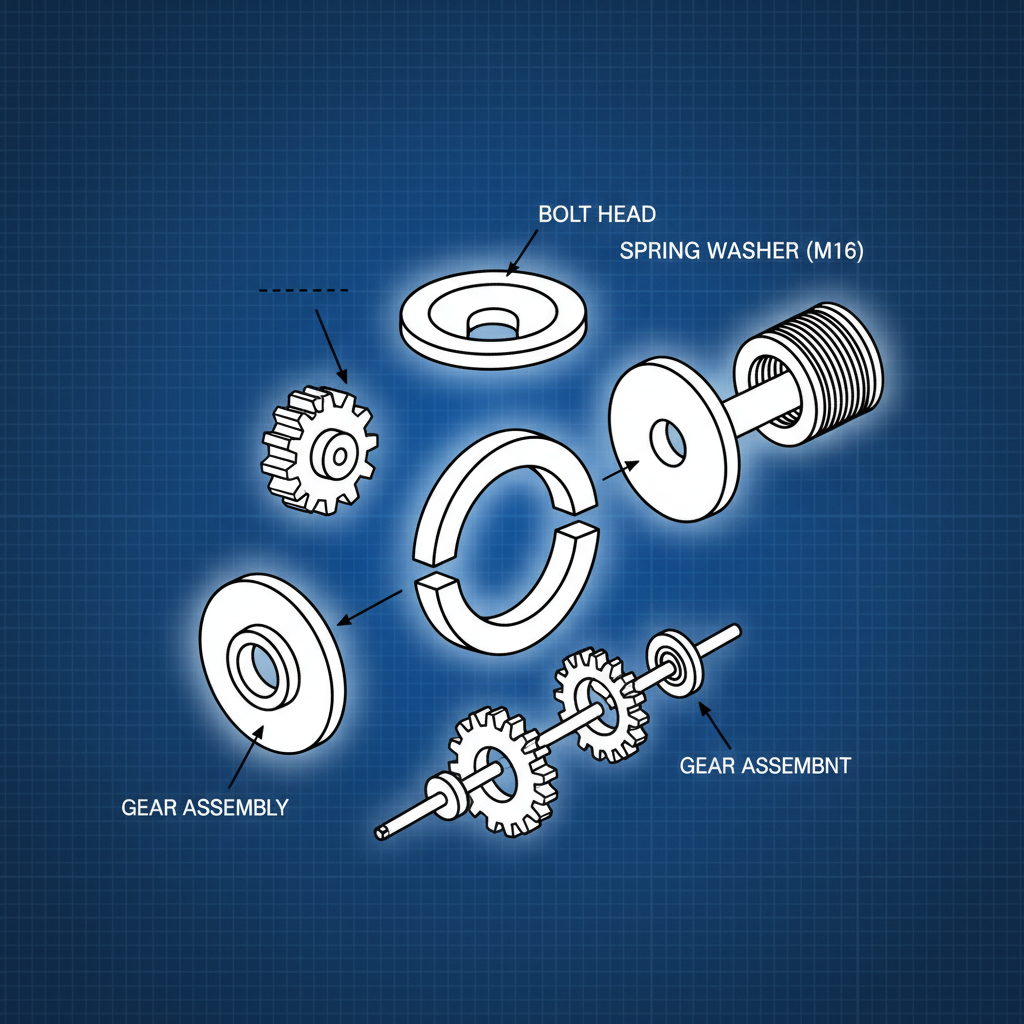
An M16 spring washer is a resilient fastening component designed to be used with an M16 bolt or screw. Its primary function isn't to provide clamping force like a flat washer, but to absorb vibration and shock, preventing loosening of the fastener. These washers are typically made from spring steel, which gives them the elasticity needed to maintain tension even when subjected to dynamic loads. The 'M16' designation refers to the metric thread diameter of the bolt it's designed to accompany – in this case, 16 millimeters. They are an essential element in maintaining secure and reliable connections in a wide array of applications.
Key Highlights: Provides resilient cushioning, absorbs vibration, and maintains bolt tension. Made from spring steel for elasticity.
Types of M16 Spring Washers
While all M16 spring washers share the same nominal size, they come in different designs optimized for specific applications. The most common types include split spring washers and wave spring washers. Split spring washers, characterized by their split configuration, provide a locking action by increasing friction. Wave spring washers, with their undulating form, offer a more consistent load distribution and are better suited for applications requiring low seating forces. Selecting the right type depends on the specific requirements of the fastening system and the environment it will operate in. You can explore different types of spring washers at LZ Fasteners.
Spring Washer Types:
• Split Spring Washers: Locking action via increased friction.
• Wave Spring Washers: Consistent load distribution, low seating forces.
M16 Spring Washer Applications
M16 spring washers are used across numerous industries and applications where maintaining secure fastenings is critical. Common uses include automotive assembly, construction machinery, industrial equipment, and even household appliances. They are particularly beneficial in applications exposed to vibration, shock, or thermal expansion and contraction. Their ability to compensate for these dynamic forces prevents loosening and ensures the integrity of the assembled structure. For instance, in automotive engine components, they are used to secure exhaust systems and engine mounts.
Benefits of Using M16 Spring Washers
Implementing M16 spring washers offers a multitude of advantages. First and foremost, they significantly reduce the risk of fastener loosening, enhancing safety and reliability. This is crucial in applications where failure could have catastrophic consequences. Secondly, they help to distribute load more evenly, minimizing stress concentrations and prolonging the lifespan of both the fastener and the connected components. Furthermore, they can accommodate minor surface irregularities, creating a more consistent clamping force. Finally, they are a relatively inexpensive solution that delivers a substantial return on investment by reducing maintenance and preventing costly failures.
Materials and Standards for M16 Spring Washers
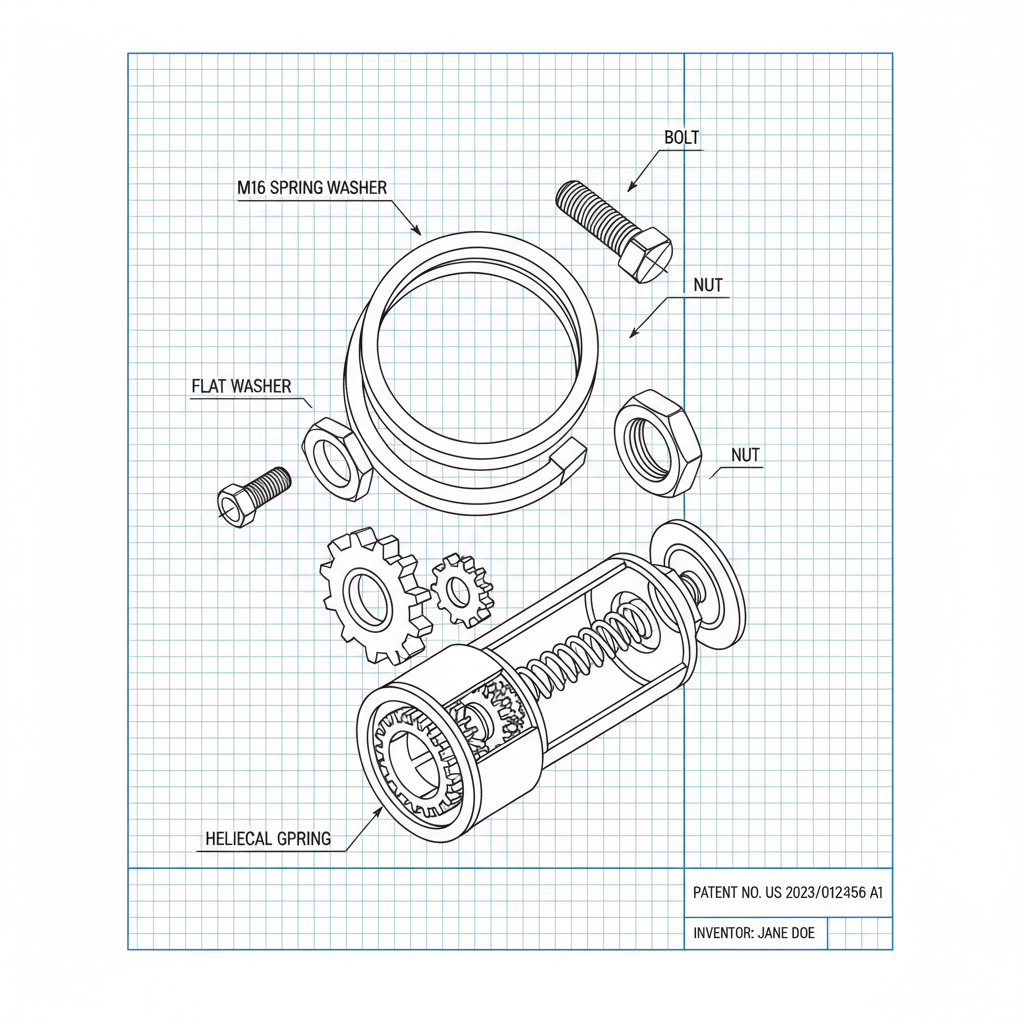
M16 spring washers are typically manufactured from high-carbon spring steel, such as SAE J431 or equivalent, ensuring the necessary elasticity and strength. The material is often coated with zinc or phosphate to provide corrosion resistance. These washers commonly adhere to DIN 127, EN 127, or ISO 7089 standards, defining their dimensions and mechanical properties. It’s vital to choose washers that meet relevant industry standards and are appropriate for the specific environmental conditions they will encounter. LZ Fasteners provides M16 spring washers that comply with these international standards.
Conclusion: Ensuring Secure Fastenings with M16 Spring Washers
M16 spring washers play a critical role in maintaining the integrity and reliability of fastened assemblies. By understanding their types, applications, and benefits, you can make informed decisions to ensure secure and long-lasting connections. Investing in quality spring washers, like those available at LZ Fasteners, is a proactive step towards preventing failures and maximizing the performance of your equipment and structures.
Frequently Asked Questions (FAQs)
What is the difference between a spring washer and a flat washer?
A flat washer distributes the load of a fastener and protects the surface being fastened. A spring washer, however, is designed to provide a resilient cushioning effect and maintain bolt tension by compensating for vibration or thermal expansion/contraction. Unlike a flat washer which is static, a spring washer is dynamic, actively working to prevent loosening. Both serve different purposes and are often used together in critical applications.
Can I reuse an M16 spring washer?
While technically possible, reusing an M16 spring washer is generally not recommended. The spring tension can be compromised after repeated compression, reducing its effectiveness in preventing loosening. Using a new spring washer ensures optimal performance and reliability. The cost of a new washer is minimal compared to the potential consequences of fastener failure.
What material should I choose for a corrosive environment?
For corrosive environments, selecting a spring washer made from stainless steel (such as 304 or 316) is crucial. Stainless steel provides excellent resistance to corrosion and will maintain its properties over time. Alternatively, a spring washer with a protective coating, like zinc plating or phosphate coating, can also offer increased corrosion resistance. Consider the specific chemicals and environmental conditions when making your selection.
How do I determine the correct spring washer size?
The spring washer size should always match the bolt or screw size. In this case, for an M16 bolt, you need an M16 spring washer. Ensure the washer's inside diameter is appropriate for the bolt's shank, allowing it to sit flat against the fastened surface. Refer to the bolt specifications and washer dimensions to confirm compatibility.
Latest news
-
Essential Guide to ms15795 856 Fasteners Precision and Reliability
NewsApr.16,2026
-
High Precision ms15795 852 Fasteners for Aerospace Applications
NewsApr.09,2026
-
Comprehensive Guide to MS15795 848 Fasteners for Aerospace and Industrial Applications
NewsApr.07,2026
-
Comprehensive Guide to MS15795 846 Fasteners for Aerospace and Industrial Use
NewsApr.04,2026
-
Comprehensive Guide to MS15795 844 Fasteners for Aerospace and Defense Applications
NewsMar.31,2026
-
Comprehensive Guide to MS15795 842 Fasteners for Aerospace and Defense
NewsMar.28,2026
 English
  Afrikaans
  Arabic
  Bengali
  Bulgarian
  French
  German
  Hindi
Hindi  Indonesian
  Italian
  Japanese
  Korean
  Malay
Malay  Portuguese
  Russian
  Spanish
  Thai
Thai  Turkish
  Urdu
Urdu  Vietnamese