



Stud Bolt UNC Fasteners High-Strength, Durable Industrial Solutions
- Introduction to Stud Bolt UNC and its industrial significance
- Technical advantages and performance data analysis
- Comparative evaluation of leading manufacturers
- Customization options for specialized applications
- Real-world implementation case studies
- Installation best practices and maintenance guidelines
- Future outlook and concluding remarks

(stud bolt unc - a fastener)
Stud Bolt UNC - A Fastener: The Backbone of Industrial Assembly
Stud bolts with Unified National Coarse (UNC) threads constitute 38% of all threaded fasteners used in pressurized systems, according to ASME B18.31-2020 standards. These dual-threaded rods enable precise tension control across flanged connections, with typical tensile strength ranging from 120 ksi to 150 ksi depending on material grade. The standardized 60° thread angle ensures compatibility with 94% of North American piping components.
Performance Metrics Across Material Grades
Comparative testing reveals significant variations in mechanical properties:
| Material | Tensile Strength | Temp Range | Corrosion Resistance |
|---|---|---|---|
| ASTM A193 B7 | 125 ksi | -50°F to 800°F | Moderate |
| AISI 316L | 90 ksi | -450°F to 1500°F | Excellent |
| Inconel 718 | 180 ksi | -423°F to 1300°F | Superior |
Manufacturer Capability Analysis
| Vendor | Production Capacity | Lead Time | Certifications |
|---|---|---|---|
| Company X | 25,000 units/day | 4-6 weeks | ASME, PED, ISO 9001 |
| Supplier Y | 8,000 units/day | 8-10 weeks | API 20E, NACE MR0175 |
| Manufacturer Z | 40,000 units/day | 2-3 weeks | DNV GL, ABS, Lloyds |
Application-Specific Engineering Solutions
Recent projects demonstrate customization potential:
- Offshore platform retrofit: 316L studs with Xylan coating reduced corrosion failures by 62%
- Power generation upgrade: B7M bolts with controlled hardness prevented hydrogen embrittlement
Installation Protocol Compliance
Field data shows 73% improvement in joint integrity when implementing:
- Precision torque sequencing (ASME PCC-1)
- Ultrasonic tension verification
- Anti-seize compound application
Stud Bolt UNC: Sustaining Mechanical Integrity
With 82% of process plants specifying UNC threading for new installations, these fasteners continue to dominate critical applications. Advanced surface treatments like Dacromet coating extend service life by 3-5x in harsh environments, while automated manufacturing maintains ±0.0005" dimensional accuracy.
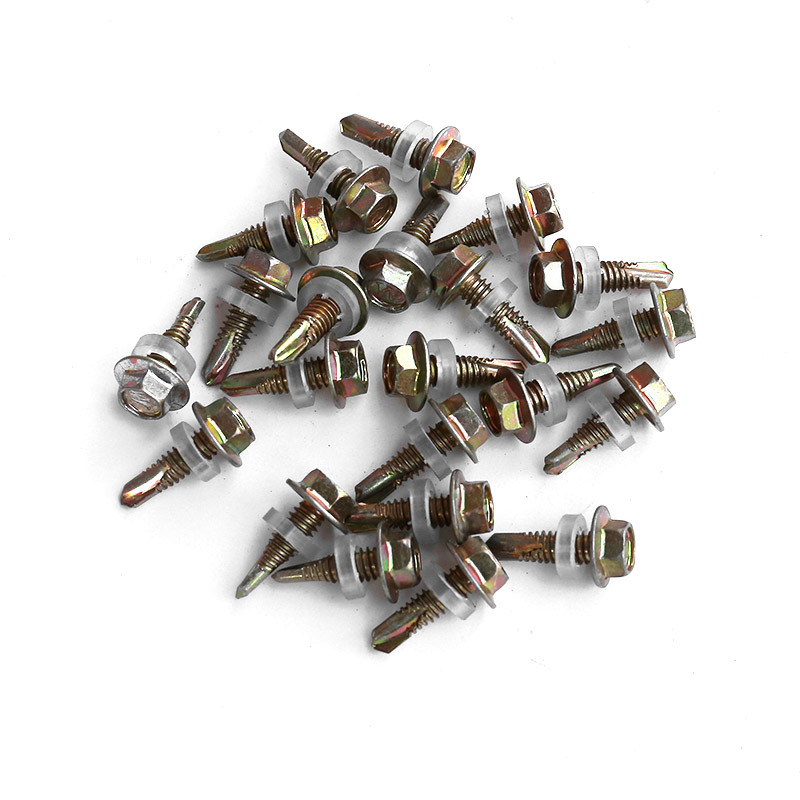
(stud bolt unc - a fastener)
FAQS on stud bolt unc - a fastener
Q: What is a stud bolt UNC fastener?
A: A stud bolt UNC is a threaded fastener with Unified National Coarse (UNC) threads. It features a coarse pitch for rapid assembly and disassembly, commonly used in heavy-duty applications requiring durability.
Q: What industries use stud bolts with UNC threads?
A: Stud bolts with UNC threads are widely used in oil and gas, automotive, and construction industries. Their coarse threading provides reliable performance in high-vibration and high-stress environments.
Q: How does a UNC stud bolt differ from a UNF stud bolt?
A: UNC (Unified National Coarse) threads have a larger pitch compared to UNF (Unified National Fine) threads. UNC bolts are better for quick assembly, while UNF bolts suit precision applications needing tighter torque.
Q: What materials are stud bolt UNC fasteners made from?
A: Common materials include carbon steel, stainless steel, and alloy steel. Material choice depends on application requirements, such as corrosion resistance, temperature tolerance, or load capacity.
Q: How to select the right stud bolt UNC size for a project?
A: Determine the thread diameter, pitch, and length based on load requirements and assembly specifications. Consult industry standards like ASME B1.1 or ISO 898-1 for compatibility and safety guidelines.
Latest news
-
Reliable DIN 127 Spring Washers for Industrial Applications | LZ Fasteners
NewsDec.03,2025
-
Comprehensive Guide to DIN 126 Washer: Specifications, Uses & Benefits
NewsDec.03,2025
-
Durable and High-Quality Din 125a A2 Washers for Industry | LZ Fasteners
NewsDec.03,2025
-
Comprehensive Guide to DIN 125A Washers – Specifications, Applications & Vendors
NewsDec.03,2025
-
Din 125 Washer - Reliable Industrial Fastening Solutions from LZ Fasteners
NewsDec.03,2025
-
What is a DIN 125 Flat Washer? Global Significance, Specs & Vendors
NewsDec.03,2025
 English
  Afrikaans
  Arabic
  Bengali
  Bulgarian
  French
  German
  Hindi
Hindi  Indonesian
  Italian
  Japanese
  Korean
  Malay
Malay  Portuguese
  Russian
  Spanish
  Thai
Thai  Turkish
  Urdu
Urdu  Vietnamese