



Full Thread Studs: Max Strength & Secure Fastening
Industry Trends and Market Dynamics for Full Thread Studs
The global market for industrial fasteners, particularly specialized components like the full thread stud, is experiencing dynamic shifts driven by several key trends. Automation in manufacturing processes, a heightened focus on material science advancements, and the growing demand for corrosion-resistant and high-strength fasteners in extreme environments are paramount. Industries such as petrochemicals, power generation, offshore exploration, and heavy machinery are consistently seeking fasteners that offer enhanced reliability, extended service life, and reduced maintenance costs.
Emerging trends include the increased adoption of advanced alloys like Super Duplex Stainless Steel (e.g., UNS S32750, S32760) and Nickel-based alloys (e.g., Inconel, Monel) to withstand aggressive media and elevated temperatures. Furthermore, a push towards sustainable manufacturing practices is influencing material sourcing and process optimization. Digitalization, through advanced CAD/CAM systems and predictive maintenance technologies, is also playing a crucial role in optimizing fastener design and application. The demand for fasteners compliant with international standards such as ASTM, ISO, DIN, and ANSI, reflecting stringent quality and safety requirements, continues to grow, emphasizing the need for robust testing and certification processes from reputable manufacturers.
The market value of industrial fasteners is projected to grow steadily, with an increasing share attributed to high-performance, specialized fasteners like the full thread stud, which offer superior tensile strength and fatigue resistance for critical applications. For example, the global industrial fasteners market was valued at approximately USD 90 billion in 2022 and is projected to reach USD 120 billion by 2030, with a significant compound annual growth rate (CAGR) driven by infrastructure development and industrial expansion.
Manufacturing Process of a Full Thread Stud
The production of a full thread stud, often referred to as a stud bolt full thread or stud bolt fully threaded, involves a meticulously controlled manufacturing process to ensure dimensional accuracy, material integrity, and optimal mechanical properties. This process typically integrates several advanced engineering techniques:
Process Flow Overview:
- Material Selection and Preparation: High-grade raw material, typically in rod or bar form, is selected based on application requirements (e.g., carbon steel, alloy steel like ASTM A193 B7, stainless steel like ASTM A320 L7, or exotic alloys). Materials are inspected for chemical composition and mechanical properties.
- Cutting to Length: The raw material is precisely cut to the specified length for the full thread stud, accounting for subsequent processing steps.
- Forging (Optional for larger diameters): For larger diameter studs, forging may be used to enhance grain structure and improve mechanical properties. This involves heating the material and shaping it under pressure.
- CNC Machining: For precision applications, Computer Numerical Control (CNC) machining is employed to achieve exact dimensions and surface finishes. This stage ensures the stud bolt fully threaded meets tight tolerances.
- Thread Rolling: This is a critical step where the threads are formed by displacing the material rather than cutting it. Thread rolling creates stronger threads with improved fatigue resistance due to work hardening and uninterrupted grain flow, making the stud full thread more robust than cut threads.
- Heat Treatment: Depending on the material and desired mechanical properties (e.g., tensile strength, hardness), studs undergo controlled heat treatment processes such as quenching and tempering. This optimizes the microstructure and performance characteristics.
- Surface Finishing/Coating: To enhance corrosion resistance and provide specific functional properties, various coatings may be applied. Common finishes include hot-dip galvanizing, zinc plating, PTFE coating, Xylan, Cadmium plating, or phosphate coatings.
- Quality Control & Testing: Throughout the process, rigorous testing is conducted. This includes dimensional checks, thread gauge verification, hardness testing, tensile strength tests (per ASTM A370), impact testing (Charpy V-notch), and non-destructive testing (NDT) such. Studs are verified against standards like ISO 898-1, ANSI/ASME B1.1, ASTM F1554, ASTM A193, and ASTM A320.
- Marking and Packaging: Finished studs are marked with material grade, manufacturer's identification, and heat code for traceability, then carefully packaged to prevent damage during transit.
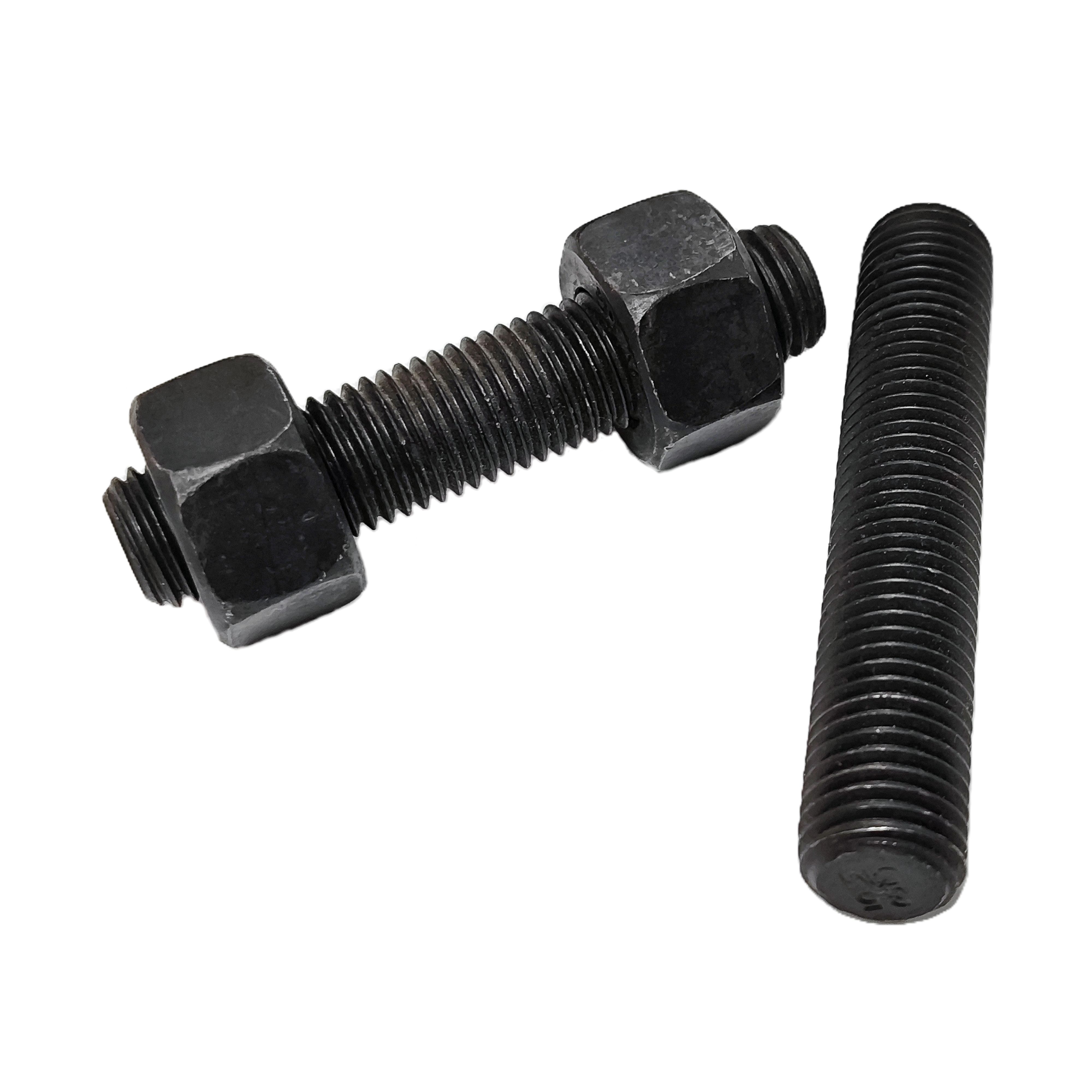
Precision-machined stud bolts in a quality control check.
Target Industries and Advantages:
The extensive process ensures the suitability of stud whole threaded steel for demanding sectors such as:
- Petrochemical and Oil & Gas: Critical for flange connections in pipelines, valves, and pressure vessels, offering corrosion resistance and high-temperature stability. Advantages include enhanced safety due to reliable sealing and prolonged service intervals.
- Power Generation: Used in steam turbines, boilers, and nuclear reactors where high temperature and pressure resistance are crucial. Contributes to energy saving by maintaining leak-proof seals, reducing heat loss.
- Metallurgy and Heavy Manufacturing: For structural integrity in heavy machinery, furnaces, and rolling mills. Provides robust fastening under heavy loads and vibrations.
- Water Supply & Drainage: Essential for reliable flange joints in pumping stations, water treatment plants, and large-diameter pipelines, often requiring specialized corrosion-resistant coatings. Ensures long service life and reduced environmental impact from leaks.
The rigorous manufacturing and testing protocols for stud bolt full thread contribute directly to prolonged service life, often exceeding 20-30 years in non-corrosive environments and several years in aggressive chemical services, especially when material selection and coating are optimized for the application.
Technical Specifications and Material Properties
Understanding the technical specifications of a full thread stud is paramount for engineers and procurement specialists to ensure optimal performance and safety in industrial applications. Key parameters include material grade, nominal diameter, thread pitch, length, and specific mechanical properties like tensile strength, yield strength, and hardness.
Common Material Grades and Properties:
| Standard/Grade | Material Type | Tensile Strength (min, MPa) | Yield Strength (min, MPa) | Hardness (max, HRC) | Operating Temp Range (°C) |
|---|---|---|---|---|---|
| ASTM A193 B7 | Chromium Molybdenum Steel | 860 | 725 | 35 | -29 to 454 |
| ASTM A193 B16 | Chromium Molybdenum Vanadium Steel | 860 | 725 | 35 | -29 to 538 |
| ASTM A320 L7 | Alloy Steel (Low Temp Service) | 860 | 725 | 35 | -101 to 454 |
| ASTM A193 B8 (Class 1) | 304 Stainless Steel | 515 | 205 | 22 (HBW) | -270 to 800 |
| ASTM A193 B8M (Class 1) | 316 Stainless Steel | 515 | 205 | 22 (HBW) | -270 to 870 |
These values are minimum requirements as per ASTM standards. Actual properties may vary slightly based on specific heat treatment and manufacturing processes. The choice of material grade significantly impacts the stud bolt full thread's resistance to corrosion, high temperatures, and stress, crucial for extending service life and ensuring structural integrity.
Application Scenarios and Technical Advantages
The versatility and robust nature of the full thread stud make it indispensable across a multitude of heavy industrial applications where secure and reliable fastening is paramount. Its design, with threads extending along the entire length of the shank, offers distinct technical advantages over partially threaded bolts.
Typical Application Scenarios:
- Flange Connections: In high-pressure and high-temperature piping systems (e.g., oil & gas refineries, chemical plants), stud bolts fully threaded are crucial for sealing flanges to prevent leaks of hazardous or valuable fluids. The full threading allows for maximum engagement with nuts, providing superior clamp load distribution.
- Pressure Vessels and Heat Exchangers: Securing heads and covers on pressure vessels where thermal expansion and contraction cycles are common. The uniform thread engagement of the stud full thread helps mitigate stress concentrations and ensures joint integrity under cyclic loading.
- Valve and Pump Assemblies: Fastening critical components in pumping and valving systems in water treatment and power generation. Materials like A320 L7 for low-temperature applications in LNG facilities or A193 B16 for high-temperature steam systems are commonly used.
- Heavy Equipment and Machinery: Used in the assembly of large industrial machinery, mining equipment, and structural steel where high shear and tensile loads are present. The robust design of a stud whole threaded steel ensures durability and stability.
- Wind Turbine Construction: Securing critical structural elements where fasteners are exposed to constant vibration, extreme weather, and fatigue. The high-strength properties and consistent thread engagement are vital for long-term reliability.
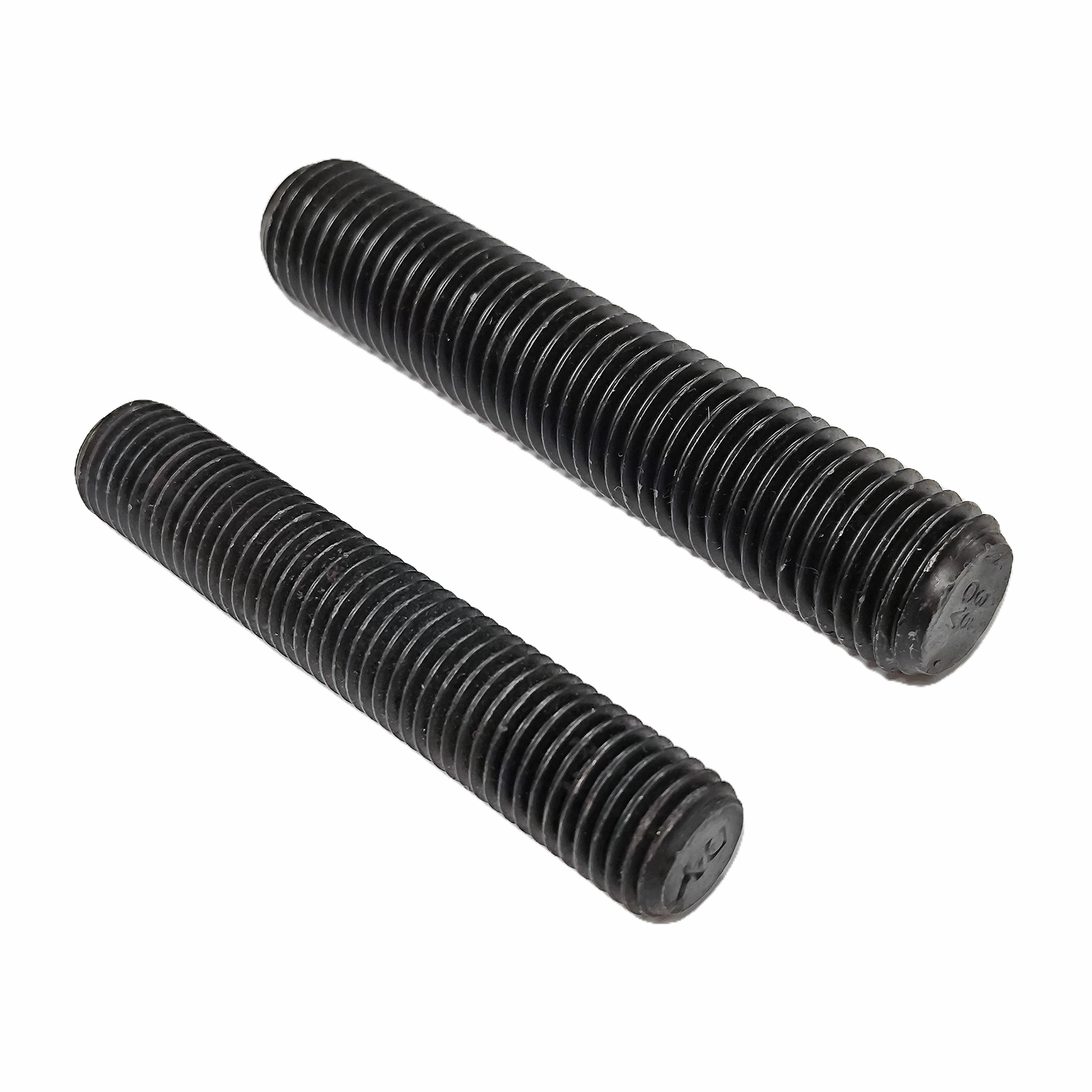
Full thread studs ready for heavy industrial applications.
Technical Advantages of Full Thread Studs:
- Maximum Thread Engagement: Unlike partially threaded bolts, a full thread stud allows for complete thread engagement with both nuts, ensuring even load distribution across all engaged threads. This minimizes the risk of thread stripping, particularly crucial in high-stress, dynamic environments.
- Versatility in Grip Length: The fully threaded design offers flexibility in accommodating varying flange thicknesses or component separations without needing to stock multiple lengths of partially threaded bolts. Excess thread can be easily cut if necessary.
- Superior Fatigue Resistance: Thread rolling, a common manufacturing process for full thread stud bolt, introduces compressive stresses on the thread flanks. This cold-working process enhances fatigue strength significantly compared to cut threads, which can have micro-notches acting as stress concentrators.
- Enhanced Corrosion Resistance (with coatings): When paired with appropriate coatings (e.g., PTFE, Xylan, Hot-Dip Galvanizing), the stud bolt full thread offers exceptional resistance to corrosive environments, extending the service life and reducing maintenance downtime. This is particularly valuable in offshore or chemical processing applications.
- Reduced Stress Concentration: The absence of an unthreaded shank portion (like on a bolt) can sometimes lead to more uniform stress distribution along the fastener length, especially under bending loads, depending on the application design.
These advantages collectively contribute to a higher degree of structural integrity, reliability, and safety in critical industrial applications, validating the choice of a stud bolt fully threaded for demanding environments.
Vendor Comparison and Customized Solutions
Selecting the right supplier for full thread stud fasteners is critical for project success, impacting quality, lead time, and overall cost-efficiency. A thorough vendor comparison should extend beyond just price, focusing on manufacturing capabilities, quality assurance, certification, and capacity for customized solutions.
Key Vendor Comparison Factors:
| Feature | Tier 1 Supplier (e.g., LZ Fasteners) | Standard Supplier |
|---|---|---|
| Material Range & Sourcing | Extensive (Carbon, Alloy, Stainless, Exotic Alloys); Certified Mills only; Full MTRs (Material Test Reports) | Limited (Common Grades); Variable Sourcing; Basic MTRs |
| Manufacturing Process | In-house forging, CNC machining, thread rolling, heat treatment; Advanced automation | Outsourced processes; Less control over quality variations |
| Quality Assurance & Certs | ISO 9001, PED 2014/68/EU, TUV, DNV, CE; Full traceability; Comprehensive NDT & mechanical testing | Basic ISO; Limited test reports; Less rigorous inspection |
| Customization Capability | High (custom dimensions, materials, coatings, thread forms); Engineering support & design optimization | Low (standard products only); Limited technical assistance |
| Lead Time & Fulfillment | Reliable, competitive lead times (e.g., 2-4 weeks for standard, 6-8 weeks for custom); Global logistics | Often longer, less predictable; Localized shipping |
| After-Sales Support | Dedicated technical support, warranty, field assistance, detailed documentation | Minimal support, limited warranty |
Customized Solutions for Stud Bolt Fully Threaded:
Recognizing that standard products may not always meet unique project demands, leading manufacturers specialize in providing customized solutions for the stud bolt full thread. This includes:
- Special Materials: Fabricating stud full thread from exotic alloys like Inconel 625, Monel 400, Hastelloy, or high-strength stainless steels (e.g., Duplex, Super Duplex) for extreme corrosive or high-temperature environments.
- Non-Standard Dimensions: Producing stud whole threaded steel with specific lengths, diameters, or thread pitches not covered by standard specifications (e.g., fine pitch threads, Acme threads for power transmission).
- Proprietary Coatings: Applying specialized coatings beyond standard options, such as ceramic coatings for wear resistance, or multi-layer organic coatings for enhanced chemical protection and reduced friction during assembly.
- Unique Testing Requirements: Performing additional or more stringent testing beyond standard protocols, such as simulated environmental testing, accelerated corrosion tests, or specific non-destructive evaluations (e.g., ultrasonic inspection, magnetic particle testing) to meet project-specific safety factors.
- Integrated Fastening Systems: Providing complete fastening kits including the stud bolt full thread, matched nuts, and washers, ensuring compatibility and simplifying procurement for complex assemblies.
A vendor with comprehensive in-house capabilities and an experienced engineering team can significantly reduce project risk and optimize fastener performance for bespoke applications. This focus on tailored solutions underlines an authoritative and customer-centric approach in the B2B sector.
Application Case Studies
Real-world application case studies demonstrate the tangible benefits and reliability of high-quality full thread stud fasteners in challenging industrial settings. These examples highlight the product’s adaptability and critical role in ensuring operational integrity.
Case Study 1: High-Pressure Flange in a Chemical Processing Plant
Challenge: A major chemical processing plant faced recurring leakage issues at critical flange connections in a high-temperature (350°C), corrosive acid line. Standard partially threaded bolts were showing signs of stress corrosion cracking and galling during maintenance, leading to costly downtime and safety concerns.
Solution: The plant replaced the problematic fasteners with custom-engineered full thread stud bolts made from ASTM A193 B8M (316 SS) with a specialized PTFE coating. The fully threaded design ensured maximum nut engagement and uniform stress distribution, while the chosen material and coating provided superior resistance to both high temperature and chemical attack.
Outcome: After 5 years of operation, the flange connections remained leak-free. Maintenance intervals were extended by 30%, and the issues of galling were completely eliminated, resulting in significant operational savings and enhanced safety. This successful deployment demonstrated the superior reliability of the specialized stud bolt full thread.
Case Study 2: Offshore Platform Critical Structural Support
Challenge: An offshore oil and gas platform required extremely robust fasteners for structural members exposed to constant wave action, high winds, and a saline, corrosive atmosphere. Fasteners needed to withstand dynamic loads and resist hydrogen embrittlement.
Solution: High-strength alloy steel full thread stud bolts conforming to ASTM A320 L7 with a hot-dip galvanized and additional corrosion-resistant fluoropolymer topcoat were specified. The full threading provided the necessary high clamp load and fatigue resistance for the dynamic environment, while the dual-layer coating system offered unparalleled protection against the harsh marine conditions and eliminated concerns about hydrogen embrittlement often associated with specific high-strength steels in marine environments.
Outcome: The installation proved highly successful, with no reported fastener failures or significant corrosion after several years in service. The enhanced lifespan of the fasteners contributed to reduced inspection frequencies and lower maintenance costs, proving the long-term value of investing in quality stud full thread solutions for critical infrastructure.
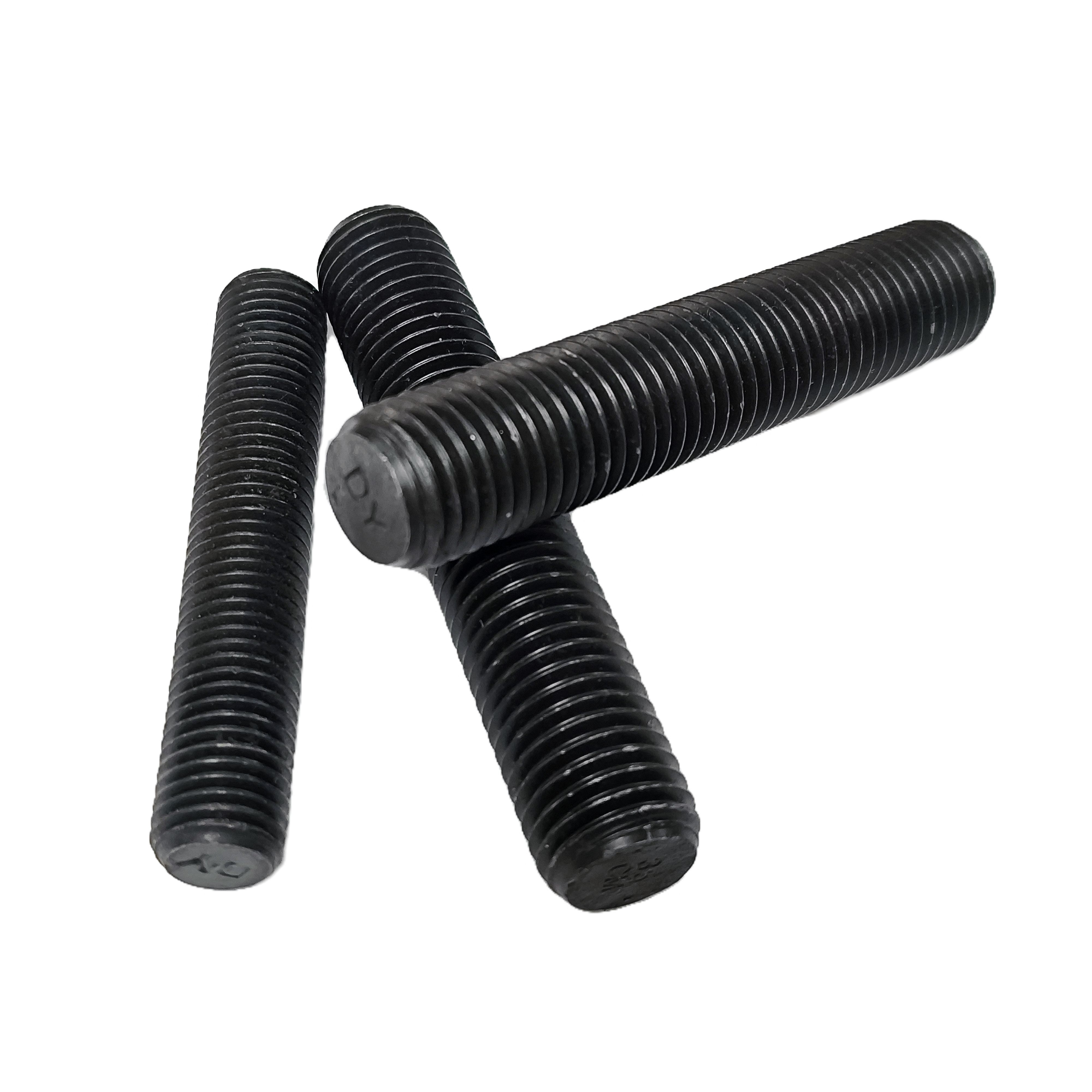
A collection of full thread studs awaiting quality inspection.
Trustworthiness: FAQ, Lead Time, Warranty, and Support
At the core of any B2B partnership is trust, built on transparency, reliability, and robust support infrastructure. We strive to provide comprehensive information and unwavering commitment to our clients.
Frequently Asked Questions (FAQ):
- Q1: What are the primary advantages of a full thread stud over a partially threaded bolt?
- A1: The primary advantages include greater thread engagement for uniform load distribution, enhanced fatigue resistance due to thread rolling (if applicable), and increased flexibility in accommodating varying grip lengths. This makes the stud bolt full thread ideal for high-stress and critical applications.
- Q2: What material grades are available for your stud bolt fully threaded products?
- A2: We offer a comprehensive range of material grades including, but not limited to, ASTM A193 B7, B16, B8/B8M, ASTM A320 L7, L43, and various exotic alloys such as Super Duplex Stainless Steels (UNS S32750, S32760), Inconel, Monel, and Hastelloy. Custom materials are also available upon request.
- Q3: How do you ensure the quality and compliance of your fasteners?
- A3: Our manufacturing processes are ISO 9001 certified. We adhere strictly to international standards such as ASTM, ANSI, DIN, and ISO. Every batch undergoes rigorous quality control including dimensional checks, mechanical testing (tensile, yield, hardness, impact), and non-destructive testing (NDT) where required. Full Material Test Reports (MTRs) are provided with every order, ensuring complete traceability and compliance.
Lead Time and Fulfillment:
We understand the critical nature of project timelines. For standard full thread stud configurations and common material grades, our typical lead time is 2-4 weeks from order confirmation. For highly customized products, specialized materials, or large-volume orders, lead times may range from 6-10 weeks, depending on complexity and material availability. We employ efficient production scheduling and a robust supply chain to ensure on-time delivery. Expedited options are available for urgent requirements, subject to project scope.
Warranty Commitments:
All our stud bolt full thread products are backed by a comprehensive warranty against defects in material and workmanship, typically for 12 months from the date of shipment or 18 months from the date of manufacture, whichever comes first. This warranty reflects our confidence in our manufacturing processes and commitment to delivering superior quality products that meet or exceed industry standards. Specific warranty details are outlined in our terms and conditions of sale.
Customer Support:
Our dedicated customer support team and technical specialists are available to assist with product selection, technical specifications, custom design inquiries, and after-sales support. We provide engineering consultation to optimize fastening solutions for unique application challenges. Contact us via phone, email, or our website for prompt and professional assistance. Our goal is to forge lasting partnerships by providing not just products, but complete, reliable fastening solutions and expert guidance throughout your project lifecycle.
References
- American Society for Testing and Materials (ASTM) International Standards. (e.g., ASTM A193/A193M, ASTM A320/A320M, ASTM A370).
- International Organization for Standardization (ISO) Standards. (e.g., ISO 898-1: Mechanical properties of fasteners made of carbon steel and alloy steel).
- ASME Boiler and Pressure Vessel Code (BPVC), Section II, Part A: Ferrous Material Specifications.
- European Committee for Standardization (CEN) Standards. (e.g., EN 10204: Metallic products - Types of inspection documents).
- Industrial Fasteners Institute (IFI) Standards. (e.g., IFI-144: Specification for Locknuts).
Latest news
-
Essential Guide to ms15795 856 Fasteners Precision and Reliability
NewsApr.16,2026
-
High Precision ms15795 852 Fasteners for Aerospace Applications
NewsApr.09,2026
-
Comprehensive Guide to MS15795 848 Fasteners for Aerospace and Industrial Applications
NewsApr.07,2026
-
Comprehensive Guide to MS15795 846 Fasteners for Aerospace and Industrial Use
NewsApr.04,2026
-
Comprehensive Guide to MS15795 844 Fasteners for Aerospace and Defense Applications
NewsMar.31,2026
-
Comprehensive Guide to MS15795 842 Fasteners for Aerospace and Defense
NewsMar.28,2026
 English
  Afrikaans
  Arabic
  Bengali
  Bulgarian
  French
  German
  Hindi
Hindi  Indonesian
  Italian
  Japanese
  Korean
  Malay
Malay  Portuguese
  Russian
  Spanish
  Thai
Thai  Turkish
  Urdu
Urdu  Vietnamese