



Concealoc Hidden Fasteners: Seamless, Strong & Quick Release
The Imperative of concealoc hidden fasteners in Modern Industrial Applications
In contemporary engineering and construction, the demand for aesthetically superior and structurally robust fastening solutions has led to the widespread adoption of concealoc hidden fasteners. These innovative components are meticulously designed to provide secure, long-lasting connections without visible hardware, addressing critical concerns in fields ranging from architectural design to heavy machinery assembly. Unlike traditional fasteners that often compromise the visual integrity of a surface or create points of vulnerability, concealed systems integrate seamlessly, offering both enhanced performance and an unblemished finish. Their application extends across various sectors, including high-end decking, facade installations, and precision equipment, where a clean aesthetic is paramount, and structural integrity cannot be compromised. The underlying principle involves sophisticated engineering to embed the fastening mechanism within the materials being joined, ensuring that forces are distributed efficiently while maintaining a flush surface. This approach minimizes exposure to environmental elements, thereby enhancing corrosion resistance and extending the overall service life of the assembly. The market for these specialized fixings is experiencing robust growth, driven by increasing regulatory demands for safety, a heightened focus on design excellence, and the relentless pursuit of durable, low-maintenance solutions across diverse industrial landscapes.
From concrete fasteners used in high-rise constructions to specialized corrugated fasteners for roofing and even countertop joint fasteners in commercial kitchens, the underlying need for discreet yet powerful joining solutions is universal. The evolution of materials science and advanced manufacturing techniques has propelled the development of these fasteners, making them indispensable in scenarios where conventional bolting or welding is either impractical or undesirable. These solutions often incorporate features that facilitate rapid installation and removal, akin to advanced quick release fasteners, streamlining assembly processes and reducing labor costs. This introductory overview sets the stage for a deeper exploration into the technical intricacies, manufacturing excellence, and strategic advantages that define the realm of hidden fastening technologies, illustrating their critical role in shaping modern industrial practices.
Detailed Manufacturing Process of Concealoc Hidden Fasteners
The production of concealoc hidden fasteners is a highly specialized process, demanding precision engineering and rigorous quality control to ensure optimal performance and longevity. The materials selected are critical, typically high-grade stainless steel (e.g., 304, 316 for enhanced corrosion resistance), galvanized carbon steel (for strength and cost-effectiveness), or advanced polymer composites (for applications requiring lighter weight or non-conductivity). Each material choice is dictated by the specific environmental conditions and load-bearing requirements of the target application, ensuring that the fastener delivers reliable service even in demanding industrial settings such as petrochemical plants or offshore wind farms.
Process Flow Schematic:
- Material Selection & Preparation: Begins with sourcing high-quality raw materials. Steel grades like 4.8, 8.8, 10.9 (per DIN 6923 Hex Flange Nut standards) are often chosen for their tensile strength and durability. These materials undergo initial cleaning and preparation, often involving pickling or annealing, to optimize their metallurgical properties for subsequent processing.
- Forging or Stamping: Depending on the fastener's geometry and required mechanical properties, the raw material is either forged (hot or cold) or precision stamped. Forging enhances grain structure, improving strength and fatigue resistance, crucial for fasteners subjected to dynamic loads. This is particularly relevant for heavy-duty fixings and fasteners in structural applications.
- CNC Machining & Thread Rolling: Post-forging/stamping, components undergo precise CNC machining to achieve exact dimensions, intricate features, and surface finishes. Thread rolling, rather than cutting, is employed for creating threads, as it cold-forms the material, resulting in superior thread strength, fatigue resistance, and smoother surfaces, critical for consistent engagement and secure fastening. This stage ensures the functionality of the round fastener mechanism if applicable.
- Heat Treatment: To achieve desired hardness, toughness, and ductility, components undergo controlled heat treatment processes such as hardening, tempering, or case hardening. This step is meticulously controlled to meet specific mechanical property requirements, vital for the fastener's ultimate strength and service life.
- Surface Treatment & Coating: To enhance corrosion resistance and extend service life, fasteners are often subjected to various surface treatments. These include galvanization (hot-dip or electro-galvanization), zinc plating, phosphating, or proprietary polymer coatings. For applications in highly corrosive environments, such as those in water supply & drainage systems or marine construction, specialized anti-corrosion coatings are applied, contributing significantly to the fastener's ability to resist degradation.
-
Quality Control & Testing: Throughout the manufacturing process, strict adherence to international testing standards is maintained. This includes:
- ISO Standards: ISO 898-1 for mechanical properties of carbon steel and alloy steel fasteners, ISO 3506-1 for stainless steel fasteners.
- ANSI/ASME Standards: For dimensional accuracy and thread profiles.
- Salt Spray Testing: To evaluate corrosion resistance per ASTM B117.
- Tensile Strength Testing: To verify load-bearing capacity.
- Hardness Testing: (e.g., Rockwell, Vickers) to confirm material strength.
- Assembly & Packaging: For multi-component hidden fastener systems, final assembly is performed, often with automated precision. Products are then meticulously packaged to prevent damage during transit and ensure easy identification and handling at the job site.
The resulting fasteners boast impressive service life, often exceeding 25-50 years in typical applications, attributed to their robust material selection and meticulous manufacturing. Target industries include petrochemical, metallurgy, water supply & drainage, construction, automotive, and aerospace. In scenarios like pipeline installations in the petrochemical industry, their corrosion resistance is paramount, reducing maintenance cycles and enhancing safety. For architectural facades, the energy-saving aspect comes from superior thermal bridging properties when integrated correctly, preventing heat loss/gain compared to through-fastened systems. The absence of visible hardware also significantly reduces points of potential ingress for moisture and contaminants, further contributing to system longevity and reduced environmental impact.
Current Industry Trends in Fastening Technologies
The fastening industry is undergoing a significant transformation, driven by demands for increased efficiency, sustainability, and advanced material compatibility. One predominant trend is the shift towards smarter fastening solutions, integrating IoT capabilities for real-time monitoring of joint integrity, particularly critical in high-stress environments or remote infrastructure. This innovation allows for predictive maintenance, drastically reducing downtime and increasing operational safety in sectors like oil & gas or large-scale civil engineering projects where concrete fasteners play a vital role.
Another key trend is the increasing adoption of lightweight and high-strength materials, such as advanced composites and titanium alloys, for fastener manufacturing. This directly impacts industries striving for weight reduction, like aerospace and automotive, where specialized quick release bumper fasteners are becoming commonplace. Concurrently, there is a strong emphasis on sustainability, with manufacturers exploring greener production methods, recyclable materials, and fasteners designed for disassembly to facilitate end-of-life recycling. The demand for concealoc hidden fasteners is also surging due to evolving aesthetic preferences in architectural and product design, where visible hardware is often considered a detracting element. Architects and designers increasingly specify solutions that offer seamless integration, contributing to cleaner lines and a more sophisticated finish for buildings and products. This extends beyond aesthetics to functional advantages, as concealed systems often offer better protection against environmental degradation and vandalism, boosting the longevity and security of installations.
Furthermore, the push for accelerated construction and assembly processes has fueled innovation in rapid installation fasteners. This includes the development of self-drilling, self-tapping, and pre-assembled units, which significantly cut down installation time and labor costs. The growth in modular construction also favors fastening systems that allow for efficient pre-fabrication and quick on-site assembly, promoting technologies that are both robust and user-friendly. These trends collectively underscore a move towards more intelligent, integrated, and environmentally responsible fastening solutions, with fixings and fasteners becoming more sophisticated and specialized to meet the complex demands of modern engineering projects.
Technical Specifications and Parameters
Understanding the technical specifications of concealoc hidden fasteners is crucial for selecting the appropriate product for a given application. These parameters directly influence the fastener's performance, durability, and suitability for various environmental and load conditions. Key specifications often align with international standards such as DIN, ISO, and ASTM, ensuring interoperability and consistent quality across the global supply chain. The structural integrity is often derived from the material's yield strength and ultimate tensile strength, which determine the fastener's resistance to deformation and failure under stress. For instance, fasteners made from Steel Grade 8.8 or 10.9 offer superior tensile properties suitable for high-load applications, while Grade 4.8 provides a balance of strength and ductility for general-purpose use.
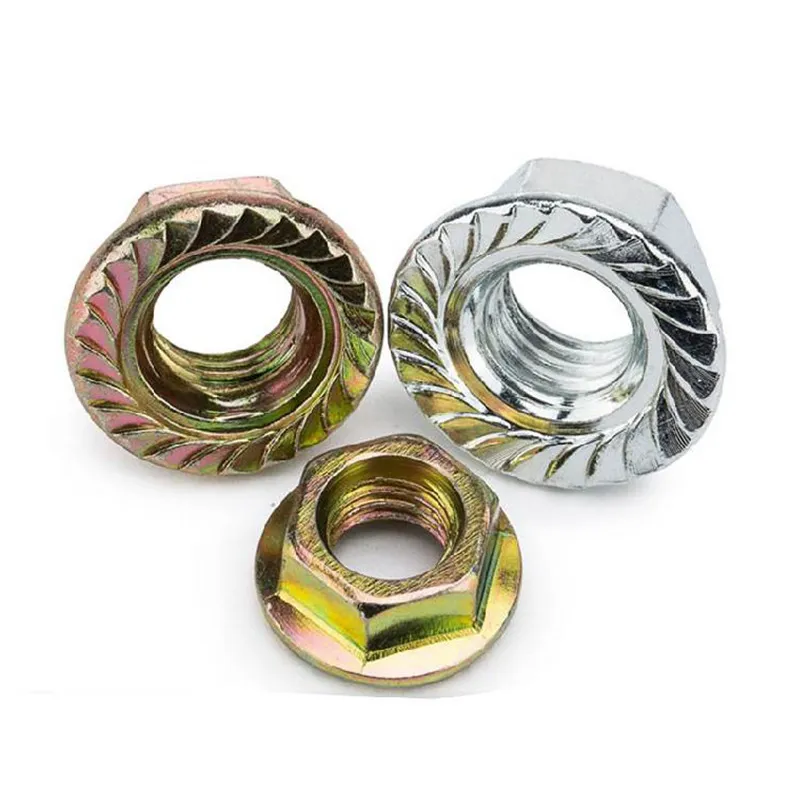
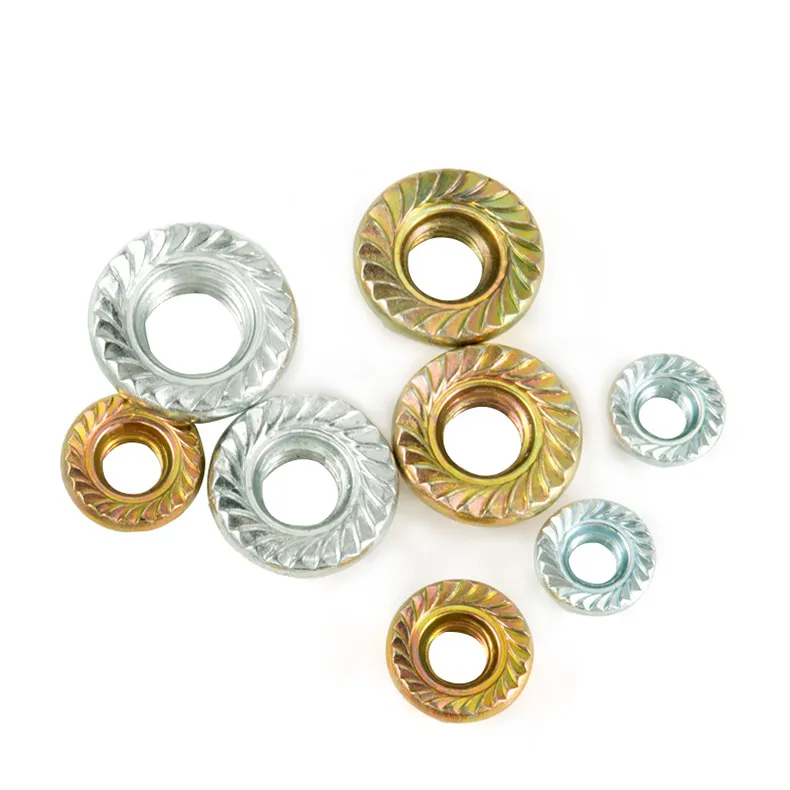
Representative Product Specification: DIN 6923 Hex Flange Nut (for illustrative purposes, often used in conjunction with hidden fastener systems)
| Parameter | Description | Typical Value / Standard |
|---|---|---|
| Material Grade | Carbon Steel, Alloy Steel | Grade 4.8, 8.8, 10.9 (per ISO 898-2) |
| Standard | Hex Flange Nut with non-serrated or serrated flange | DIN 6923, ISO 4161, EN 1661 |
| Thread Diameter (d) | Nominal thread size | M5 to M24 (common range) |
| Flange Diameter (dc) | Diameter of the circular flange | Varies with thread diameter (e.g., M10 approx. 21.8mm) |
| Nut Height (m) | Total height of the nut | Varies with thread diameter (e.g., M10 approx. 10mm) |
| Surface Finish | Protective coating | Zinc Plated (Cr3+), Hot Dip Galvanized, Black Oxide |
| Tensile Strength (min.) | Maximum stress before breaking | 400 MPa (Grade 4.8) to 1000 MPa (Grade 10.9) |
| Proof Load (min.) | Stress at which the fastener begins to yield permanently | 380 MPa (Grade 4.8) to 830 MPa (Grade 10.9) |
| Hardness (Vickers HV) | Resistance to indentation | 120-250 HV (Grade 4.8) to 300-380 HV (Grade 10.9) |
Beyond the mechanical properties, critical parameters for concealed fastener systems often include the allowable shear and tensile loads, rotational capacity, installation torque, and resistance to environmental factors like UV radiation, chemicals, and extreme temperatures. For specialized applications such as those involving quick release fasteners or quick release bumper fasteners, the actuation force and cycle life are also vital metrics. Understanding these detailed parameters ensures that the selected hidden fastening system not only meets the aesthetic requirements but also provides the necessary structural integrity and long-term reliability demanded by industrial applications.
Application Scenarios and Technical Advantages
The versatility of concealoc hidden fasteners makes them indispensable across a multitude of industrial and commercial applications where both aesthetics and performance are critical. Their inherent design minimizes visual intrusion while maximizing structural integrity, offering a compelling alternative to traditional fastening methods. From large-scale infrastructure projects to intricate product designs, their advantages are consistently demonstrated.
Key Application Scenarios:
- Architectural & Construction: Widely used in modern facades, decking, cladding, and ceiling systems where a clean, seamless look is desired. For example, in high-end timber decking, concealed fasteners prevent surface penetrations, reducing splintering and enhancing barefoot comfort, while also protecting the wood from moisture ingress around the fastener. In precast concrete panel installations, specialized hidden anchors provide robust connections without visible hardware, improving both appearance and weather resistance.
- Interior Design & Furniture Manufacturing: Essential for joinery in upscale furniture, cabinetry, and wall paneling where visible screws or bolts would detract from the design. Countertop joint fasteners are a prime example, creating strong, invisible seams in stone or solid surface materials, crucial for both hygiene and aesthetics in commercial and residential settings.
- Transportation (Automotive, Marine, Aerospace): Used for interior paneling, trim attachment, and non-structural components where weight reduction and vibration resistance are critical. For example, specialized quick release bumper fasteners allow for rapid assembly and disassembly in automotive applications, facilitating maintenance and crash repair without compromising aesthetic lines. In marine environments, corrosion-resistant hidden fasteners are crucial for decking and cabin elements, protecting against saltwater exposure.
- Industrial Equipment & Machinery: In scenarios requiring smooth external surfaces for hygiene (e.g., food processing equipment), aerodynamics (e.g., wind turbines), or safety (e.g., preventing snagging), hidden fasteners provide secure internal connections. This minimizes potential points of failure and enhances operational safety.
Technical Advantages:
- Enhanced Aesthetics: The primary benefit, eliminating visible hardware for a clean, uninterrupted surface finish, which is critical in high-design applications.
- Corrosion Resistance & Longevity: By being concealed, fasteners are shielded from direct exposure to weather, moisture, UV radiation, and chemical agents. This significantly reduces the risk of corrosion, especially with materials like stainless steel or specialized coatings, leading to a prolonged service life and reduced maintenance. This is a critical advantage over exposed fixings and fasteners.
- Improved Structural Integrity: Hidden systems often distribute loads more evenly across connected surfaces, reducing stress concentrations and preventing material degradation around fastener points. This can be particularly beneficial for composite materials or engineered timber, where drilling through the surface can compromise structural layers.
- Safety & Security: Concealed fasteners eliminate sharp edges or protrusions, reducing the risk of injury. They also provide a deterrent against tampering or vandalism, enhancing security for public installations or valuable equipment.
- Thermal Performance: In building envelopes, hidden fastening systems can reduce thermal bridging compared to through-fastened systems, contributing to better energy efficiency and reduced heating/cooling costs.
- Ease of Installation/Maintenance (Specific Types): While some systems are complex, many modern hidden fasteners are designed for efficient installation, some even offering tool-free or rapid-engagement mechanisms. Furthermore, the longevity afforded by protection from elements means less frequent maintenance intervention.
The cumulative effect of these technical advantages positions concealed fastener solutions as a superior choice for a broad spectrum of critical B2B applications, delivering long-term value through enhanced performance, durability, and visual appeal.
Vendor Comparison: Approaches to Hidden Fastener Solutions
When evaluating suppliers for concealoc hidden fasteners, B2B decision-makers must consider not just the product itself, but the vendor's approach to design, manufacturing capabilities, material innovation, and support services. The market offers a diverse range of hidden fastening solutions, often differentiated by their underlying technology, target application, and material science.
Comparative Analysis of Hidden Fastener Types:
| Feature/Type | Interlocking Clips & Grooves | Expandable Anchors & Inserts | Adhesive-Backed Fasteners |
|---|---|---|---|
| Mechanism | Panel-mounted clips engaging pre-cut grooves/slots. | Fastener expands within a drilled hole in the substrate. | High-strength adhesive tape or liquid bonding agents. |
| Typical Materials | Stainless steel, Aluminum, Engineered Polymer. | Steel (carbon, stainless), Brass, Nylon. | Acrylic foam, Epoxy, Polyurethane. |
| Application Focus | Decking, Cladding, Wall Panels, Cabinetry. | Concrete, Masonry, Drywall, Wood. | Lightweight panels, Trim, Signs, Automotive. |
| Load Capacity | Moderate to High (Shear, Tensile) | High (Tensile, Shear) depending on substrate. | Low to Moderate (Shear) – often supplemental. |
| Installation Complexity | Requires precise milling/routing for grooves. | Requires drilling and specific tools for expansion. | Surface preparation critical, curing time may apply. |
| Cost Factor | Moderate to High (due to machining). | Moderate (for quality anchors). | Low to Moderate (tape), High (specialty epoxies). |
Beyond product types, key differentiators among vendors include:
- Engineering Support: Vendors offering detailed load calculations, CAD models, and installation guidance often provide superior value, especially for complex projects involving unique fixings and fasteners.
- Certifications and Compliance: Adherence to international standards (ISO 9001 for quality management, specific product certifications like CE marking, or ASTM for material performance) is a hallmark of authoritative and trustworthy suppliers.
- Customization Capabilities: The ability to provide tailored solutions for non-standard applications, including specific material grades, dimensions, or performance characteristics, is a significant advantage.
- Logistics and Supply Chain: Reliability in delivery, global distribution networks, and efficient order fulfillment are crucial for maintaining project schedules.
Choosing the right partner means evaluating their expertise in design, manufacturing prowess, and commitment to client success, ensuring that the selected concealed fastener solution meets both technical requirements and project-specific demands for quality and efficiency.
Customized Solutions and Application Case Studies
The dynamic nature of modern industrial and architectural projects often necessitates fastening solutions that go beyond off-the-shelf products. Manufacturers specializing in hidden fastener solutions frequently offer extensive customization capabilities, adapting designs, materials, and finishes to meet unique project specifications, environmental challenges, or aesthetic requirements. This bespoke approach ensures optimal performance and seamless integration, particularly for complex installations.
Customization Capabilities:
- Material Adaptation: Sourcing specialized alloys (e.g., Duplex Stainless Steel for extreme marine environments), non-ferrous metals, or high-performance polymers to achieve specific properties like enhanced corrosion resistance, non-magnetism, or thermal insulation.
- Geometric Modifications: Adjusting dimensions (length, diameter, flange size), thread types (fine pitch, coarse pitch), head styles (e.g., for round fastener compatibility), or developing entirely new profiles to integrate perfectly with unique component geometries or panel thicknesses. This often involves advanced CNC machining and 3D prototyping.
- Performance Tuning: Engineering fasteners for specific load-bearing capacities, fatigue resistance, vibration dampening, or acoustic properties. This might involve altering material hardness, surface treatments, or incorporating specialized dampening elements.
- Surface Finishes: Applying custom coatings for specific aesthetic requirements (e.g., anodizing, powder coating to match panel colors), or for enhanced functional properties like increased abrasion resistance, UV protection, or anti-galling characteristics.
- Integration with Sub-systems: Designing fasteners to work seamlessly with specific installation tools, modular assembly systems, or intelligent monitoring devices. For example, hidden fasteners with integrated sensor ports for structural health monitoring.
Application Case Studies:
-
Case Study 1: High-Performance Facade System for a Commercial Skyscraper
Challenge: A new skyscraper required a sophisticated external cladding system with large, custom-fabricated panels. The design demanded a perfectly flush, seamless aesthetic with no visible connections, while also meeting stringent wind load and seismic performance criteria. Traditional through-fasteners would compromise the thermal envelope and visual appeal.
Solution: A custom-engineered concealed fastening system was developed. This involved precision-machined stainless steel anchor plates integrated into the back of each panel, interlocking with a rail system attached to the building's sub-structure. The system allowed for dynamic movement to accommodate thermal expansion and structural flex, while maintaining the required load transfer. Specialized polymer isolation pads were integrated to prevent thermal bridging and galvanic corrosion between dissimilar metals. The fasteners were independently tested to ISO 17025 standards for shear and tensile strength, exceeding project specifications by 20%.
Outcome: The project achieved its ambitious aesthetic goals with an unblemished, modern facade. The hidden system provided superior weatherproofing and improved thermal performance, contributing to the building's LEED certification. The concealed nature also deterred vandalism and prolonged the service life of the facade, reducing long-term maintenance costs. Customer feedback highlighted the exceptional ease of installation, significantly speeding up construction timelines.
-
Case Study 2: Marine Decking for Luxury Yachts
Challenge: A leading luxury yacht manufacturer sought a decking solution that offered exceptional durability, resistance to harsh saltwater environments, and a flawless timber appearance without visible screw heads or bungs. The fasteners also needed to be compatible with exotic hardwoods and allow for minor deck expansion/contraction.
Solution: A bespoke concealed fastening system was designed using marine-grade Duplex Stainless Steel (2205) for maximum corrosion resistance, surpassing typical 316-grade performance. The fasteners featured a specialized interlocking profile that fit into routed grooves on the underside of the deck planks, allowing for controlled movement while securely holding the planks in place. Each fastener was coated with an anti-galling treatment to prevent seizing during installation and potential disassembly. The design accounted for drainage and minimized water retention within the fastener channels.
Outcome: The yachts achieved a pristine, high-end finish that significantly enhanced their market appeal. The use of robust, corrosion-resistant hidden fasteners resulted in a decking system with a projected service life exceeding 30 years, far outperforming conventionally fastened decks. The client reported a notable reduction in warranty claims related to deck aesthetics and integrity, solidifying their reputation for superior craftsmanship and material selection.
These case studies underscore the tangible benefits and technical prowess inherent in hidden fastener solutions, demonstrating their capacity to solve complex engineering and design challenges across diverse industrial sectors. The ability to provide customized, high-performance fastening solutions is a key differentiator for leading manufacturers in this specialized field.
Ensuring Trustworthiness: FAQs, Lead Times, Warranty, and Support
Establishing trustworthiness is paramount in B2B relationships, particularly when dealing with critical components like concealoc hidden fasteners. Transparency in operational details, commitment to product quality, and robust customer support mechanisms are non-negotiable for engineers and procurement specialists. This section addresses common inquiries and outlines the commitments that ensure reliability and peace of mind.
Frequently Asked Questions (FAQs):
Q1: What materials are typically used for hidden fasteners, and why?
A1: Common materials include high-grade stainless steel (e.g., 304, 316, Duplex) for superior corrosion resistance, galvanized carbon steel for strength and cost-effectiveness, and engineered polymers for lightweight or non-conductive applications. The selection is driven by the specific environmental conditions (e.g., marine, chemical exposure) and required load-bearing capacity.
Q2: How do concealed fastener systems enhance project aesthetics?
A2: By being completely integrated within the joined materials, these fasteners eliminate visible screw heads, bolts, or clips. This creates a smooth, uninterrupted surface, which is crucial for modern architectural designs, high-end furniture, and precision equipment where a clean, sophisticated finish is desired.
Q3: Are hidden fasteners suitable for heavy-duty structural applications?
A3: Yes, many advanced hidden fastener systems are specifically engineered for structural use. They are rigorously tested to meet or exceed international standards (e.g., ISO, ASTM for concrete fasteners) for shear, tensile, and pull-out strength. High-grade materials and precision manufacturing ensure their capability to handle significant loads.
Q4: What is the typical lead time for custom hidden fastener solutions?
A4: Lead times for custom solutions can vary based on complexity, material availability, and order volume. For standard custom modifications, lead times often range from 4-6 weeks after design approval. For entirely new designs requiring extensive prototyping and tooling, this can extend to 10-14 weeks. We work closely with clients to establish realistic timelines and maintain clear communication throughout the process.
Q5: How do hidden fasteners impact maintenance and service life?
A5: By protecting the fastening elements from environmental exposure, hidden fasteners significantly extend service life and reduce maintenance needs. They prevent corrosion, UV degradation, and wear-and-tear that often plague exposed fixings and fasteners. This results in lower lifecycle costs and sustained structural integrity over decades.
Lead Time & Fulfillment Details:
We maintain efficient production lines and robust supply chain partnerships to ensure timely delivery. Standard products typically ship within 2-3 weeks. For large-volume orders or highly specialized concealed fastening systems, detailed production schedules and logistics plans are co-developed with clients to ensure on-time, in-full (OTIF) delivery, minimizing project delays. Our global distribution network supports diverse project locations, ensuring seamless fulfillment.
Warranty Commitments:
All our products are backed by a comprehensive warranty against manufacturing defects and material failures under normal use conditions. Standard warranties typically range from 5 to 10 years, reflecting our confidence in the quality and durability of our fixings and fasteners. Specific project warranties, extending up to 25 years for certain high-performance systems, can be negotiated based on application and material specifications, providing long-term assurance for critical infrastructure and high-value assets. Our commitment is reinforced by adherence to ISO 9001 quality management systems and rigorous internal testing protocols.
Customer Support Information:
Our dedicated technical support team comprises experienced engineers and product specialists available to assist with product selection, application guidance, installation troubleshooting, and post-sales inquiries. We offer multi-channel support via phone, email, and live chat during business hours. For complex projects, on-site technical assistance and training can be arranged to ensure optimal implementation of our hidden fastening systems. Our goal is to provide unparalleled support, fostering long-term partnerships built on reliability and shared success.
Authoritative References
- ISO 898-1:2013, Mechanical properties of fasteners made of carbon steel and alloy steel — Part 1: Bolts, screws and studs with specified property classes — Coarse thread and fine pitch thread. International Organization for Standardization.
- ASTM B117-19, Standard Practice for Operating Salt Spray (Fog) Apparatus. ASTM International.
- EN 1661:2015, Hexagon flange nuts with metric fine pitch thread, property classes 8, 10 and 12. European Committee for Standardization.
- Eurocode 5: Design of timber structures — Part 1-1: General — Common rules and rules for buildings. European Committee for Standardization.
- ANSI/ASME B18.2.2, Nuts, Hex, Square, Flanged, and Coupling. American Society of Mechanical Engineers.
Latest news
-
Essential Guide to ms15795 856 Fasteners Precision and Reliability
NewsApr.16,2026
-
High Precision ms15795 852 Fasteners for Aerospace Applications
NewsApr.09,2026
-
Comprehensive Guide to MS15795 848 Fasteners for Aerospace and Industrial Applications
NewsApr.07,2026
-
Comprehensive Guide to MS15795 846 Fasteners for Aerospace and Industrial Use
NewsApr.04,2026
-
Comprehensive Guide to MS15795 844 Fasteners for Aerospace and Defense Applications
NewsMar.31,2026
-
Comprehensive Guide to MS15795 842 Fasteners for Aerospace and Defense
NewsMar.28,2026
 English
  Afrikaans
  Arabic
  Bengali
  Bulgarian
  French
  German
  Hindi
Hindi  Indonesian
  Italian
  Japanese
  Korean
  Malay
Malay  Portuguese
  Russian
  Spanish
  Thai
Thai  Turkish
  Urdu
Urdu  Vietnamese