



Premium Hexagon Flange Bolts | Secure Grip & Even Load Distribution
Introduction to Hexagon Flange Bolts
In high-performance industrial applications, the choice of fastening solutions is critical for ensuring structural integrity, operational efficiency, and long-term reliability. Among the myriad of fastener types, Hexagon Flange Bolts stand out due to their integrated washer design, which distributes the load over a larger area, thereby minimizing the risk of material deformation and loosening under dynamic stress. This inherent advantage makes them indispensable in sectors demanding robust and secure connections.
This comprehensive guide delves into the technical intricacies, manufacturing excellence, diverse applications, and strategic advantages of Hexagon Flange Bolts, offering insights crucial for engineers, procurement specialists, and decision-makers in B2B environments. We will explore everything from material science and production processes to real-world performance metrics and customization capabilities, adhering strictly to industry standards and best practices.
Industry Trends in Fastener Technology
The industrial fastener market is continually evolving, driven by demands for enhanced performance, sustainability, and intelligent manufacturing. Key trends influencing the development and adoption of Hexagon Flange Bolts include:
- Advanced Materials: A growing focus on high-strength, lightweight, and corrosion-resistant alloys (e.g., Duplex and Super Duplex Stainless Steels, Nickel Alloys) to withstand extreme operational conditions, reducing maintenance costs and extending service life.
- Sustainable Manufacturing: Adoption of energy-efficient production processes, reduced material waste, and the use of recyclable materials aligns with global environmental regulations and corporate social responsibility initiatives.
- Smart Fasteners: Integration of sensors for real-time monitoring of tension, temperature, and vibration is an emerging trend, promising predictive maintenance and enhanced safety in critical applications.
- Customization and Specialization: Increasing demand for bespoke fastener solutions tailored to unique application requirements, driving innovation in design and manufacturing flexibility.
- Digitalization of Supply Chains: Leveraging AI and IoT for inventory management, demand forecasting, and optimized logistics to ensure timely delivery and cost efficiency.
These trends collectively push the boundaries of fastener engineering, ensuring that products like Hexagon Flange Bolts continue to meet the rigorous demands of modern industrial infrastructure.
Manufacturing Process Flow of Hexagon Flange Bolts
The production of Hexagon Flange Bolts involves a meticulous multi-stage process designed to achieve superior mechanical properties, precise dimensions, and optimal surface finishes. Adherence to international standards like ISO and ANSI is paramount at every step.
Key Materials:
- Carbon Steel: Grades such as 10B21, 1035, 1045 for general industrial applications requiring high tensile strength.
- Alloy Steel: Grades like 40Cr, 35CrMo, 42CrMo for enhanced strength and fatigue resistance, often used in automotive and heavy machinery.
- Stainless Steel: A2 (304), A4 (316) for excellent corrosion resistance, crucial in petrochemical, marine, and food processing industries.
- Exotic Alloys: Inconel, Monel, Hastelloy for extreme temperature, pressure, and corrosive environments in specialized applications.
Manufacturing Stages:
- Wire Rod Preparation: Raw material wire rods are descaled and lubricated for subsequent processing.
- Cold Forging/Hot Forging:
- Cold Forging: Predominantly used for smaller to medium-sized bolts. This process involves forming the bolt head and flange without heating the material above its recrystallization temperature. It enhances material strength and surface finish.
- Hot Forging: Utilized for larger diameter or specialized alloy bolts. Material is heated to reduce its yield strength, allowing for complex shapes and improved grain structure.
- CNC Machining (if required): Precision machining operations for specific dimensions, counterbores, or unique features that cannot be achieved solely through forging.
- Thread Rolling: A cold-forming process that creates the threads by displacing material, rather than cutting it. This method enhances the threads' fatigue strength, shear strength, and wear resistance, a significant advantage over cut threads.
- Heat Treatment: A critical step to achieve desired mechanical properties like tensile strength, yield strength, hardness, and ductility. Processes include quenching, tempering, and annealing, tailored to the specific material grade and application requirements (e.g., ISO 898-1 for property classes).
- Surface Treatment/Coating: Application of coatings such as zinc plating (clear, yellow, black), hot-dip galvanizing, Dacromet, Geomet, or specialized anti-corrosion coatings to enhance durability and corrosion resistance.
- Quality Inspection & Testing:
- Dimensional Accuracy: Verification against drawings and standards (e.g., ANSI B18.2.1, DIN 6921).
- Mechanical Properties: Tensile strength, proof load, hardness tests (e.g., ASTM F606, ISO 898-1).
- Non-Destructive Testing (NDT): Magnetic particle inspection, eddy current testing for surface defects.
- Corrosion Resistance: Salt spray tests for coated fasteners (e.g., ASTM B117).
- Vibration Testing: For specific applications requiring high vibration resistance.
- Packaging: Finished bolts are packed according to customer specifications, ensuring protection during transit.
Testing Standards and Service Life:
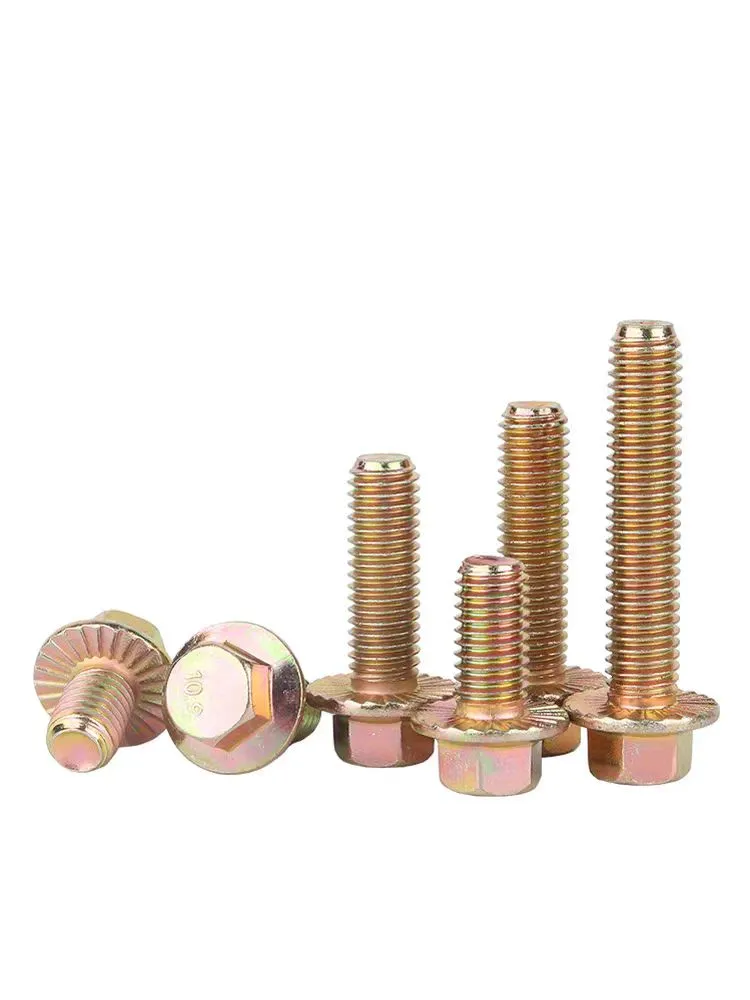
All Hexagon Flange Bolts undergo stringent testing to meet international standards such as ISO 4017, DIN 6921, and ANSI B18.2.1. These standards govern dimensions, mechanical properties, and material specifications. The service life of a Hexagon Flange Bolt can vary significantly based on material, application environment, applied loads, and maintenance schedules, typically ranging from 10 to over 50 years in well-engineered systems. Proper material selection, robust design, and regular inspection are key to maximizing operational longevity.
Technical Specifications and Parameters
Understanding the technical specifications of Hexagon Flange Bolts is paramount for proper selection and integration into engineering designs. These parameters define their performance envelope and suitability for various industrial applications.
Key Structural and Performance Parameters:
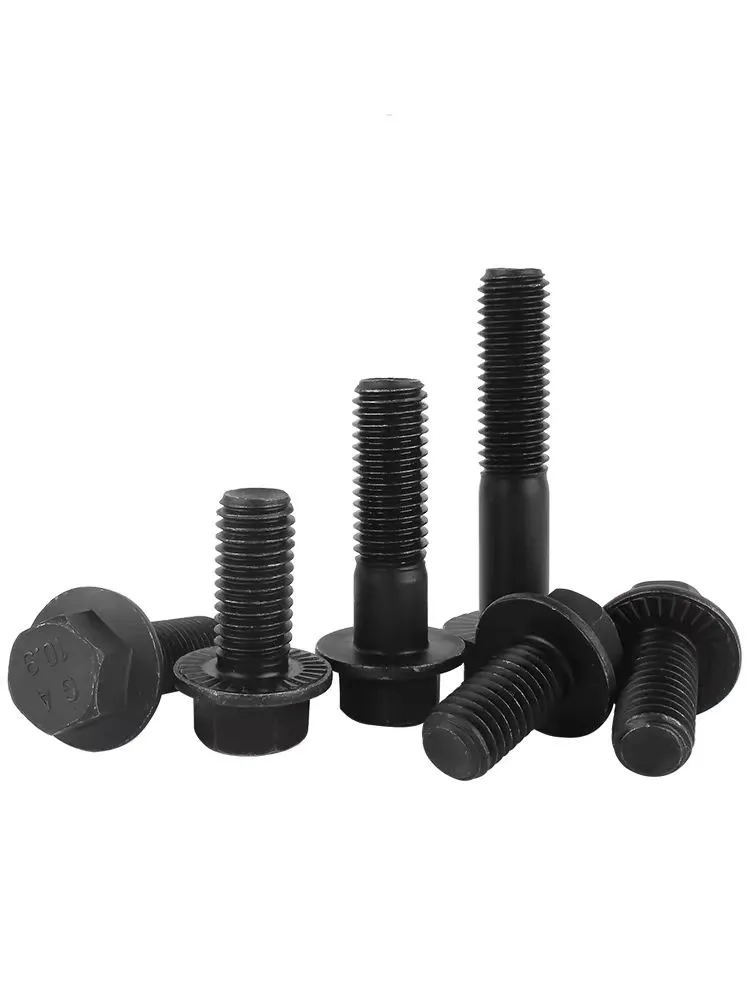
- Head Type: Hexagon flange head, often serrated for enhanced grip.
- Thread Type: Metric coarse (M), Metric fine, UNC, UNF.
- Diameter Range: Typically M5 to M36 (or 1/4" to 1-1/2" in imperial).
- Length Range: From 10mm to 300mm (or 1/2" to 12").
- Property Class (Tensile Strength):
- Steel: 8.8, 10.9, 12.9 (e.g., 8.8 denotes 800 MPa ultimate tensile strength and 640 MPa yield strength).
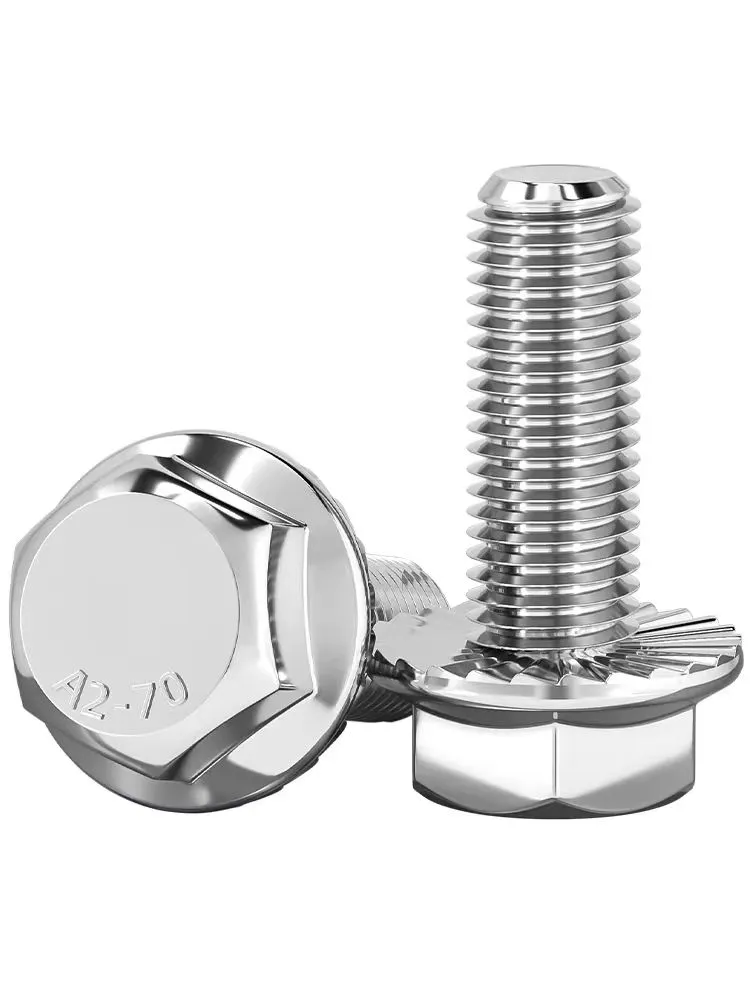
- Stainless Steel: A2-70, A4-80 (e.g., A4-80 indicates 316 stainless steel with 800 MPa ultimate tensile strength).
- Flange Diameter: Designed to provide a larger bearing surface than standard hex bolts.
- Proof Load: The maximum tensile force that a bolt can withstand without permanent deformation (e.g., 580 MPa for class 8.8).
- Torque Specifications: Crucial for ensuring correct clamping force; varies by diameter, pitch, material, and lubrication.
Typical Product Specification Table:
| Parameter | Specification (e.g., M10 x 40, Property Class 10.9) | Applicable Standard |
|---|---|---|
| Material | Alloy Steel (e.g., 42CrMo) | ASTM A574 / ISO 898-1 |
| Diameter | M10 | DIN 6921 / ISO 4161 |
| Length | 40 mm | DIN 6921 / ISO 4161 |
| Property Class | 10.9 | ISO 898-1 |
| Tensile Strength (min) | 1000 MPa | ISO 898-1 |
| Yield Strength (min) | 900 MPa | ISO 898-1 |
| Surface Treatment | Zinc Plated (Clear Cr3) | ISO 4042 |
Application Scenarios and Target Industries
The robust design and enhanced load distribution capabilities of Hexagon Flange Bolts make them suitable for a wide array of demanding industrial applications where reliability is non-negotiable.
Target Industries:
- Automotive Industry: Engine assemblies, chassis components, wheel hubs, where vibration resistance and high clamping forces are essential.
- Petrochemical and Oil & Gas: Flange connections in pipelines, valves, pumps, and structural frameworks where corrosion resistance (with appropriate material selection) and leak-proof seals are critical.
- Heavy Machinery & Construction: Securing structural elements in excavators, cranes, agricultural machinery, and industrial robots, enduring heavy loads and dynamic stresses.
- Water Supply & Drainage Systems: Flange joints in large diameter pipes, pumps, and treatment equipment, especially where resistance to environmental factors and potential corrosion is needed.
- Metallurgy and Mining: Fastening components in conveyors, crushers, and processing equipment subjected to abrasive conditions and extreme forces.
- Renewable Energy: Securing components in wind turbines (nacelles, towers) and solar tracking systems, requiring high fatigue resistance and weather durability.
Advantages in Typical Application Scenarios:
- Corrosion Resistance (Petrochemical): Utilizing A4 (316) stainless steel Hexagon Flange Bolts in offshore drilling platforms ensures longevity and structural integrity in saline environments, significantly reducing maintenance downtime and associated costs.
- Energy Saving (Automotive): By providing a reliable, vibration-resistant connection in engine components, these bolts prevent loosening that could lead to inefficient operation or fuel leakage, indirectly contributing to energy savings through optimized performance.
- Enhanced Safety (Heavy Machinery): The integrated flange distributes clamping force more evenly, preventing embedment and loosening, which is critical for safety in high-stress machinery where fastener failure could lead to catastrophic accidents.
- Reduced Assembly Time (General Manufacturing): Eliminating the need for separate washers streamlines assembly processes, leading to faster production cycles and reduced labor costs.
Technical Advantages of Hexagon Flange Bolts
The design of Hexagon Flange Bolts offers several distinct technical advantages over standard hex head bolts and traditional bolt-washer assemblies:
- Superior Load Distribution: The integrated flange acts as a built-in washer, distributing the clamping force over a larger surface area. This reduces the bearing stress on the fastened material, minimizing the risk of embedment, material damage, and creep, especially in softer materials or through-hole applications.
- Enhanced Vibration Resistance: The larger contact area and often serrated flange design provide increased friction and resistance to loosening under dynamic loads and vibrations, improving joint integrity and reliability in challenging environments.
- Simplified Assembly and Reduced Parts Count: By integrating the washer into the bolt head, assembly is faster, easier, and less prone to errors. It eliminates the need to handle and orient a separate washer, reducing inventory management complexities and potentially lowering overall assembly costs.
- Optimized Clamping Force: The consistent bearing surface of the flange ensures a more uniform and predictable clamping force, which is crucial for achieving desired joint preload and preventing localized stress concentrations.
- Improved Aesthetics: The integrated design often results in a cleaner, more finished appearance compared to separate bolt and washer combinations, which can be an advantage in visible applications.
- Cost-Effectiveness: While the unit cost of a flange bolt might be slightly higher than a standard bolt, the savings in assembly time, reduced risk of dropped washers, and improved joint performance often lead to a lower total installed cost.
Product Comparison: Hexagon Flange Bolt vs. Standard Hex Bolt
| Feature | Hexagon Flange Bolt | Standard Hex Bolt (with separate washer) |
|---|---|---|
| Load Distribution | Excellent (integrated flange distributes load broadly) | Good (dependent on washer size and type) |
| Vibration Resistance | High (serrated flange option enhances grip) | Moderate (requires locking washer for better performance) |
| Assembly Complexity | Low (single component, faster installation) | Higher (two components, washer orientation) |
| Parts Inventory | Simpler (one SKU per fastener size) | More complex (two SKUs per fastener size) |
| Risk of Dropped Parts | Minimal (integrated design) | Higher (separate washer can be dropped) |
Vendor Comparison and Customization Solutions
Selecting the right supplier for Hexagon Flange Bolts is as crucial as the bolt's technical specifications. A reputable vendor offers not only high-quality products but also comprehensive technical support and flexible customization options.
Key Vendor Selection Criteria:
- Quality Certifications: Adherence to international quality management standards like ISO 9001, and product-specific certifications (e.g., PED, TUV) for critical applications.
- Material Traceability: Full traceability of raw materials from origin to finished product, ensuring authenticity and performance.
- Manufacturing Capabilities: State-of-the-art cold and hot forging, CNC machining, heat treatment, and surface finishing capabilities to meet diverse requirements.
- Engineering Support: Access to experienced engineers who can assist with material selection, design optimization, and application-specific challenges.
- Lead Time and Logistics: Efficient production schedules and robust supply chain management to ensure timely delivery, especially for large-scale projects or just-in-time inventory systems.
- Customization Expertise: Ability to produce fasteners with unique dimensions, thread forms, head styles, material grades, or specialized coatings.
Customized Solutions for Unique Applications:
Many industrial projects require fasteners that deviate from standard specifications. Leading manufacturers provide extensive customization options for Hexagon Flange Bolts, including:
- Special Materials: Production using exotic alloys (e.g., Titanium, Superalloys) for applications involving extreme temperatures, aggressive chemicals, or specific strength-to-weight ratios.
- Non-Standard Dimensions: Manufacturing bolts with custom diameters, lengths, thread pitches, or flange dimensions to fit unique assembly requirements.
- Unique Head Designs: Adapting the flange head for specific tooling, anti-tamper features, or aesthetic considerations.
- Advanced Coatings: Applying specialized coatings beyond standard platings, such as PTFE, Xylan, or ceramic coatings, for enhanced lubrication, corrosion resistance, or electrical insulation.
- Integrated Features: Incorporating additional elements like captive washers, patch locking, or pre-applied thread sealants.
Application Case Studies
Real-world applications demonstrate the practical advantages and reliability of Hexagon Flange Bolts in demanding industrial settings.
Case Study 1: High-Performance Automotive Powertrain
A leading automotive manufacturer faced challenges with traditional fasteners loosening in engine manifold assemblies due to high-frequency vibrations and thermal cycling. After switching to customized M8x30, property class 10.9 Hexagon Flange Bolts with serrated undersides, the incident rate of loose fasteners decreased by 70% within the first year. The integrated flange ensured consistent preload and superior vibration resistance, significantly enhancing engine reliability and reducing warranty claims related to exhaust leaks. The streamlined assembly process also led to a 15% reduction in production line fastening time.
Case Study 2: Offshore Wind Turbine Structural Components
For critical structural connections in an offshore wind turbine tower, engineers required fasteners capable of withstanding extreme dynamic loads, constant vibration, and corrosive marine environments. Custom A4-80 (316L Stainless Steel) Hexagon Flange Bolts, hot-dip galvanized and then coated with a specialized anti-corrosion layer, were specified. These bolts provided the necessary fatigue strength and corrosion protection for long-term reliability. Post-installation inspections revealed no signs of corrosion or loosening after five years of continuous operation, contributing to the impressive uptime statistics of the wind farm.
Case Study 3: Industrial Water Treatment Plant
A municipal water treatment plant required robust and chemical-resistant fasteners for flange connections in large-diameter pipes and filtration units. The previous standard bolts showed signs of localized corrosion and required frequent re-torqueing. By implementing Hexagon Flange Bolts made from Duplex Stainless Steel (e.g., UNS S31803), the plant achieved superior resistance to chlorine and other treatment chemicals, combined with enhanced strength. This transition led to a 40% reduction in annual maintenance costs related to fastener replacement and re-tightening, ensuring uninterrupted operation.
Trustworthiness: FAQ, Lead Time, Warranty & Support
Frequently Asked Questions (FAQ)
- Q: What is the primary advantage of a Hexagon Flange Bolt over a standard hex bolt?
- A: The primary advantage is the integrated flange, which eliminates the need for a separate washer. This design provides superior load distribution, reduces assembly time, and offers better vibration resistance, especially when the flange is serrated.
- Q: Are Hexagon Flange Bolts suitable for high-vibration applications?
- A: Yes, they are highly recommended for such applications. The larger bearing surface and optional serrations on the flange significantly increase the friction between the bolt head and the fastened material, thereby resisting loosening caused by vibration.
- Q: What materials are commonly used for Hexagon Flange Bolts?
- A: Common materials include carbon steel (property classes 8.8, 10.9, 12.9), alloy steel, and various grades of stainless steel (A2/304, A4/316, Duplex). Exotic alloys are also used for specialized applications.
- Q: How do I determine the correct torque for Hexagon Flange Bolts?
- A: Torque specifications depend on the bolt's diameter, material property class, thread pitch, and surface finish (e.g., dry vs. lubricated). Always refer to established torque charts or consult engineering specifications for your specific application to ensure correct preload and avoid overtightening or undertightening.
Lead Time and Fulfillment:
Our streamlined manufacturing processes and robust inventory management ensure competitive lead times for both standard and customized Hexagon Flange Bolts. Typical lead times for standard items range from 1-3 weeks, while custom orders may vary from 4-8 weeks depending on complexity, material availability, and order volume. We maintain significant stock levels of popular sizes and materials to facilitate rapid fulfillment for urgent requirements. Our logistics network is optimized for efficient global distribution.
Warranty Commitments:
We stand by the quality and performance of our Hexagon Flange Bolts. All products are backed by a comprehensive warranty against manufacturing defects and material failures under normal operating conditions, typically for 12 to 24 months from the date of purchase. Specific warranty terms are provided with each order and adhere to industry best practices and international standards.
Customer Support:
Our dedicated customer support team and experienced technical engineers are available to assist with product selection, application guidance, order processing, and after-sales inquiries. We offer multilingual support and aim to respond to all technical queries within 24 hours. Training sessions and on-site consultations can also be arranged for complex projects.
Conclusion
Hexagon Flange Bolts represent a superior fastening solution, offering enhanced reliability, simplified assembly, and improved load distribution across a multitude of industrial applications. Their robust design, coupled with advancements in material science and manufacturing processes, ensures they meet the escalating demands for performance and durability in critical environments. By prioritizing quality, adhering to international standards, and offering flexible customization, leading suppliers empower industries to build more resilient and efficient systems.
Authoritative References
- ISO 898-1: Mechanical properties of fasteners made of carbon steel and alloy steel – Part 1: Bolts, screws and studs with specified property classes – Coarse thread and fine pitch thread. International Organization for Standardization.
- ANSI/ASME B18.2.1: Square and Hex Bolts and Screws (Inch Series). American National Standards Institute / American Society of Mechanical Engineers.
- DIN 6921: Hexagon flange bolts with metric thread. Deutsches Institut für Normung.
- ASTM F606 / F606M: Standard Test Methods for Determining the Mechanical Properties of Externally and Internally Threaded Fasteners, Washers, Direct Tension Indicators, and Rivets. ASTM International.
- Kulak, G.L. (2002). Bolt, Screw, and Rivet Connections. In: Structural Steel Design. McGraw-Hill.
- G.H. Junker. (1969). New Method of Determining the Self-Loosening Behavior of Fasteners Under Vibration. Society of Automotive Engineers, Paper No. 690055.
Latest news
-
Reliable DIN 127 Spring Washers for Industrial Applications | LZ Fasteners
NewsDec.03,2025
-
Comprehensive Guide to DIN 126 Washer: Specifications, Uses & Benefits
NewsDec.03,2025
-
Durable and High-Quality Din 125a A2 Washers for Industry | LZ Fasteners
NewsDec.03,2025
-
Comprehensive Guide to DIN 125A Washers – Specifications, Applications & Vendors
NewsDec.03,2025
-
Din 125 Washer - Reliable Industrial Fastening Solutions from LZ Fasteners
NewsDec.03,2025
-
What is a DIN 125 Flat Washer? Global Significance, Specs & Vendors
NewsDec.03,2025
 English
  Afrikaans
  Arabic
  Bengali
  Bulgarian
  French
  German
  Hindi
Hindi  Indonesian
  Italian
  Japanese
  Korean
  Malay
Malay  Portuguese
  Russian
  Spanish
  Thai
Thai  Turkish
  Urdu
Urdu  Vietnamese