



Stainless Steel Cap Nut Durability Tests
In the fasteners industry, cap nut, flange nut, and captive nuts are vital for structural stability across applications from heavy machinery to electronics. Hebei Longze, founded in 2009 with data-driven production, manufactures fasteners and photovoltaic accessories. Our goal to be a global leader drives rigorous durability tests for stainless steel cap nut, ensuring their performance impacts product safety and longevity. Using advanced data tools, we guarantee every cap nut, flange nut, and captive nuts meets top quality standards.
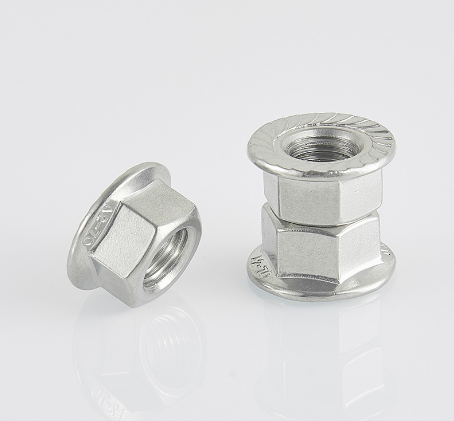
Stainless Steel Cap Nut Test Parameters
Durability tests for stainless steel cap nut evaluate critical aspects to withstand harsh real-world conditions, exceeding basic standards for client trust.
- Corrosion Resistance: Cap nut undergo extended salt spray tests to simulate coastal or industrial corrosion. This is key for stainless steel 201, 304, 316 variants, checking if protective layers and materials keep them rust-free and functional long-term.
- Tensile Strength: Specialized equipment applies increasing force to cap nut until breaking, revealing maximum load capacity. Essential for construction, automotive, and aerospace, this ensures they match project load requirements, preventing premature failure.
- Temperature Resistance: Cap nut face extreme temperature swings, from sub-zero to high heat. Tests verify they retain strength and threading integrity, avoiding brittleness in cold or grip loss in heat—critical for engine or outdoor equipment use.
Hebei Longze uses real-time data monitoring to refine production, ensuring each cap nut meets strict quality criteria.
Flange Nut Durability Under Pressure
Flange nut like Hexagonal, carbon steel galvanized, and stainless steel 201/304/316 types handle high pressure, requiring focused durability testing for their role in vibration-prone, heavy-load applications.
- Load-Bearing Capacity: Flange nut endure constant weight for weeks or months, simulating long-term structural support. Tests check if they stay tight and intact, vital for DIN 6923 galvanized hex flange nut in critical structures.
- Vibration Resistance: Mounted on equipment mimicking engine or pump vibrations, flange nut are checked for secure fastening over time. This prevents loosening in manufacturing or transportation, avoiding equipment failure.
- Thread Integrity: Repeated installation/removal on bolts tests flange nut Inspections for wear or deformation ensure they maintain a tight seal through repeated use, critical for performance and safety.
Our DIN 6923 flange nut pass these tests to meet client durability needs across industries.
Captive Nuts Long-Term Performance Checks
|
Type |
Size Range |
Material |
Surface Treatment |
|
cap nut |
M5-M20 |
Stainless steel, carbon steel |
Zinc plated, black oxide |
|
flange nut |
M5-M20 |
Stainless steel, carbon steel |
Galvanized, blue zinc plated |
|
captive nuts |
Custom sizes |
Various materials |
As per customer requirements |
Captive nuts stay attached to parent materials, making long-term performance checks vital for safety-critical uses like aerospace or medical equipment.
- Retention Strength: Captive nuts face tension, shear, and torque to test securement in their housing. Simulating assembly stress and vibrations ensures they won’t dislodge, preventing equipment malfunctions.
- Wear Resistance: Exposed to friction from bolts and tools over time, captive nuts are checked for surface and thread durability. High resistance reduces maintenance, cutting client downtime and costs.
- Compatibility: Tests with diverse bolts (sizes, materials, threads) and parent materials (metal, plastic) ensure captive nuts form secure fits, reliable in any application.
Hebei Longze ensures captive nuts pass these checks, providing reliable products for demanding uses.
Cap Nut and Related Nuts Industry Standards Compliance
Adhering to industry standards ensures cap nut, flange nut, and captive nuts are durable, reliable, and interchangeable, building client trust.
- Standard Conformance: Our nuts meet ISO, DIN, ANSI, ASME, and ASTM standards, with dimensions, threads, and materials aligned to specs. For example, DIN 6923 flange nut and ISO 4161 captive nuts fit global projects seamlessly.
- Quality Control: From raw materials to final inspection, strict measures apply. For cap nut and flange nut, this includes material testing and surface treatment checks. Captive nuts get extra checks on attachment mechanisms, with data tracking to fix issues early.
- Certifications: Earned from recognized bodies, certifications validate our nuts’ durability and safety. They give clients independent proof of quality, whether for corrosion resistance or load capacity.
Hebei Longze’s data-driven approach maintains compliance, ensuring top-quality cap nut, flange nut, and captive nuts.
FAQS About Cap Nut----H2
How do durability tests ensure the quality of cap nut?
Durability tests simulate real conditions for cap nut, exposing them to corrosion, extreme temps, and loads. This identifies design or material weaknesses—like rust resistance via salt spray or load capacity through tensile tests. Improvements, such as better coatings, are made using test data, refining production for consistent, reliable cap nut clients can trust.
What makes flange nut suitable for high-pressure applications?
Flange nut excel in high pressure due to their widened flange, distributing load to reduce surface pressure. Made from high-grade stainless steel (304, 316) or galvanized carbon steel, they offer strength and corrosion resistance. Treated variants (zinc-plated, hot-dip galvanized) undergo extra tests, handling oil pipelines, hydraulics, and heavy machinery demands.
Are captive nuts more durable than other types of nuts?
Captive nuts aren’t universally more durable than cap nut or flange nut, but their design aids retention in safety-critical apps, reducing failure risks from lost nuts. Their durability depends on material, manufacturing, and conditions, just like other nuts. They undergo the same rigorous tests, ensuring they meet standards for their intended use, whether corrosion or vibration resistance.
How do material choices affect the durability of cap nut?
Materials impact cap nut durability: stainless steel (304, 316) resists corrosion, ideal for outdoors; carbon steel offers strength for heavy loads but needs galvanization to prevent rust. Hebei Longze selects materials based on application needs, balancing strength, corrosion resistance, and longevity for optimal cap nut performance.
Why is industry standards compliance important for flange nut?
Compliance ensures flange nut meet uniform quality and safety benchmarks, making them interchangeable globally. Standards like DIN 6923 specify dimensions and performance, ensuring compatibility with bolts and systems. It gives clients confidence in reliability, reducing failure risks. For us, compliance builds trust, aiding global market competitiveness, with tested flange nut ensuring client peace of mind.
Latest news
-
Essential Guide to ms15795 856 Fasteners Precision and Reliability
NewsApr.16,2026
-
High Precision ms15795 852 Fasteners for Aerospace Applications
NewsApr.09,2026
-
Comprehensive Guide to MS15795 848 Fasteners for Aerospace and Industrial Applications
NewsApr.07,2026
-
Comprehensive Guide to MS15795 846 Fasteners for Aerospace and Industrial Use
NewsApr.04,2026
-
Comprehensive Guide to MS15795 844 Fasteners for Aerospace and Defense Applications
NewsMar.31,2026
-
Comprehensive Guide to MS15795 842 Fasteners for Aerospace and Defense
NewsMar.28,2026
 English
  Afrikaans
  Arabic
  Bengali
  Bulgarian
  French
  German
  Hindi
Hindi  Indonesian
  Italian
  Japanese
  Korean
  Malay
Malay  Portuguese
  Russian
  Spanish
  Thai
Thai  Turkish
  Urdu
Urdu  Vietnamese