You know, I've been running around construction sites for over a decade now, getting my hands dirty with all sorts of fasteners. Lately, everyone’s talking about these high-strength, self-tapping screws. Not just talking, actually demanding them. Seems like projects are getting tighter on timelines, and folks are looking for ways to speed things up. It's all about reducing labor costs, honestly. But, have you noticed, a lot of these “innovations” are just repackaged old ideas? It's a cycle, really.
To be honest, the biggest headache I see with self-tapping screws is folks trying to get too clever with the design. They’ll try some fancy thread pattern or tip geometry, thinking they’ve found the magic bullet. And nine times out of ten, it just makes the screw more brittle or prone to stripping. Keep it simple, that’s my motto. I encountered this at a factory in Ningbo last time, they were bragging about a new ‘self-drilling’ design… ended up snapping half the screws when trying to go through 2mm steel. A real disaster.
We mostly use alloy steel – SCM435 is a favorite. Feels… solid, you know? Has a slight oily smell when you handle a new batch. Not like some of those cheap ones that smell faintly of plastic. And the coating matters, big time. Zinc-nickel plating is becoming more popular, offers a lot better corrosion resistance. We used to just do zinc, but it wasn’t holding up in coastal environments. Anyway, I think a good coating is half the battle.
The Current Landscape of Self-Tapping Screw Manufacturers
Strangely enough, the market is flooded. You’ve got the big players in Germany and Japan, who make quality stuff, but it costs a fortune. Then you’ve got the Chinese manufacturers… let’s just say quality varies wildly. I’ve seen everything from screws that shear off with a gentle touch to ones that are almost indestructible. The real challenge is finding the manufacturers who consistently deliver something reliable and reasonably priced. It's a global game now, and self tapping screw manufacturers are all vying for market share.
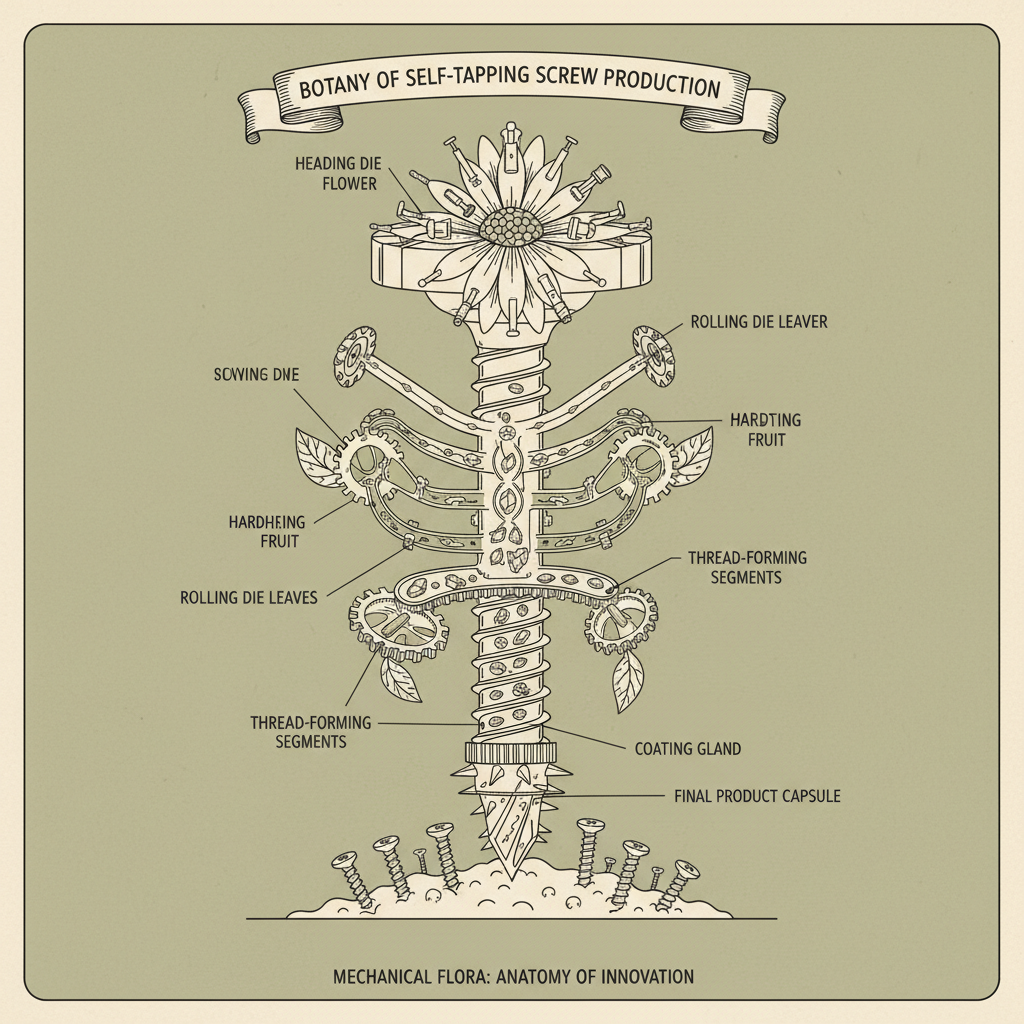
What’s trending, though, is automation. More and more manufacturers are investing in automated production lines to improve efficiency and reduce costs. That's good in theory, but it also means less human oversight, which can lead to quality control issues. It's a trade-off.
Design Pitfalls and Common Mistakes in Manufacturing
Look, a lot of manufacturers don't understand the forces at play when a screw is driven into a material. They’ll focus on the thread pitch and the point geometry, but they’ll forget about the shank diameter and the overall strength of the screw. That’s where things fall apart. I've seen it happen countless times.
Another common mistake is using the wrong type of steel for the application. You need to consider the material you’re driving the screw into, the load it will be subjected to, and the environmental conditions. Using a mild steel screw in a corrosive environment is just asking for trouble.
And don't even get me started on heat treatment! Getting the hardness right is crucial. Too soft and the screw will strip; too hard and it will become brittle and snap. It’s a delicate balance, and a lot of manufacturers get it wrong.
Material Selection and Quality Control
The base material is everything. We primarily work with alloy steels, like SCM435, 4140, and 10B21. Each one has its strengths and weaknesses. SCM435 is a good all-rounder – strong, durable, and relatively affordable. 4140 is tougher, better for high-stress applications, but more expensive. 10B21 is cheaper but more prone to corrosion, so you need a good coating.
Quality control... that's the big one. I've been to factories where they just visually inspect the screws. That’s a joke! You need to do hardness testing, tensile strength testing, and corrosion resistance testing. And you need to do it regularly. We have a small lab on-site where we do basic checks, but we also send samples to a third-party lab for more comprehensive analysis.
The feel of the screw matters too. A good screw should feel smooth and uniform, without any burrs or defects. And the coating should be even and consistent. It’s a subtle thing, but after a while, you just get a feel for what’s good and what’s not.
Real-World Testing and Performance Evaluation
Lab tests are fine, but nothing beats real-world testing. We take screws and drive them into actual materials, in actual conditions. We test them in wet environments, in corrosive environments, and under different loads. We even simulate vibration and shock to see how they hold up.
I once saw a manufacturer claim their screws were “vibration-resistant.” So, we took a batch of their screws and installed them on a vibrating conveyor belt. Within hours, half of them had loosened. Turns out, their “vibration-resistant” coating was just a fancy name for a thin layer of wax. Later… forget it, I won't mention it.
Self-Tapping Screw Performance in Different Environments
How Self-Tapping Screws Are Actually Used
It's not always what the engineers draw up on the blueprints, let me tell you. A lot of workers just grab the first screw they can find and start driving it in. They don't bother to check the size or the type, they just want to get the job done. And that’s where you end up with problems.
I've seen guys use self-tapping screws to hold up heavy machinery when they should have been using bolts. I’ve seen them use screws in materials that are too thick or too hard. It’s… frustrating. But you can’t blame them entirely. They’re under pressure to meet deadlines, and they often don’t have the proper training.
Advantages and Disadvantages of Self-Tapping Screws
The big advantage, obviously, is speed. You don't need to pre-drill holes, which saves time and labor. They're also relatively easy to install, even for inexperienced workers. That's why they're so popular in DIY projects.
But they’re not perfect. They’re generally not as strong as bolts, and they can be prone to stripping if you overtighten them. And the quality varies so much that it’s hard to know what you’re getting. You really need to do your homework and choose a reputable manufacturer.
Another thing is the noise. Those high-speed impact drivers… they’re deafening! I always recommend wearing hearing protection.
Customization and Special Applications
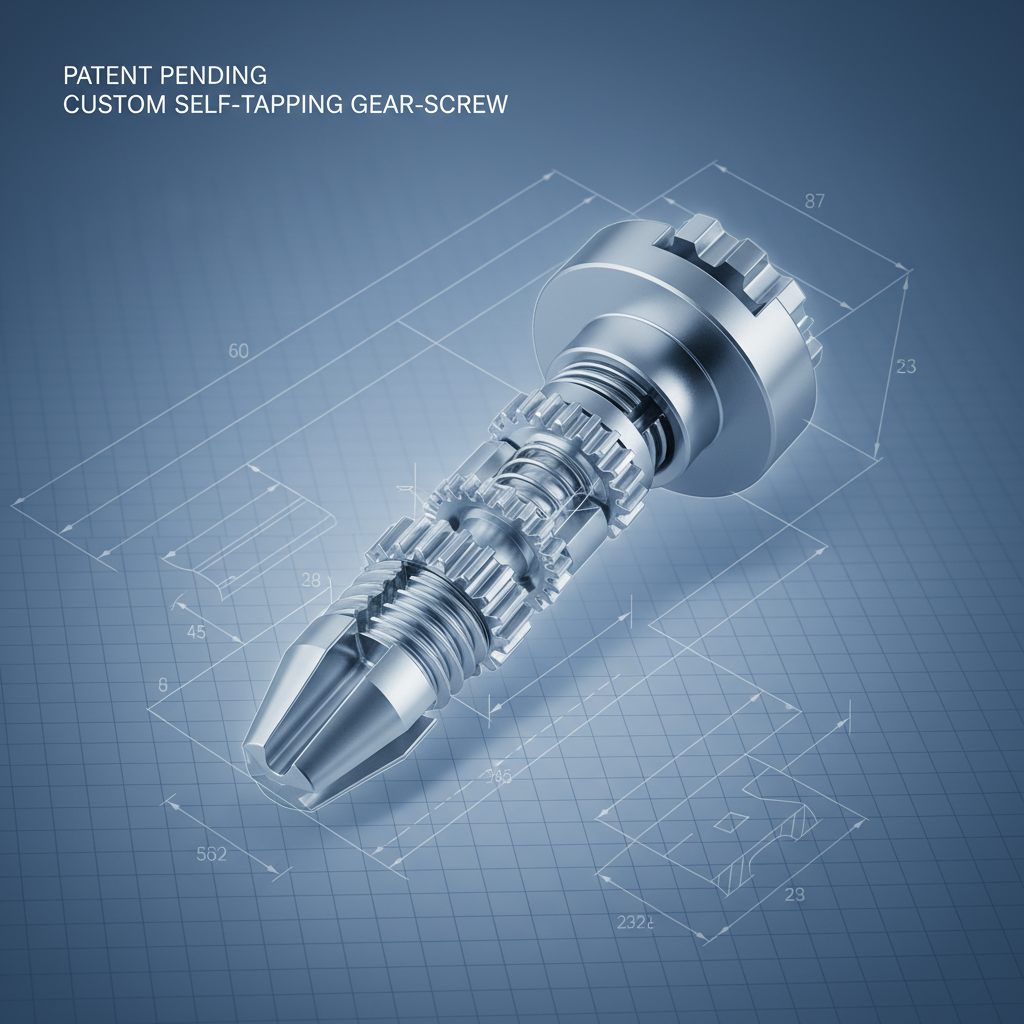
We do a lot of custom work. A lot of customers need screws with specific head shapes or thread patterns. We had a client last month, a small boss in Shenzhen who makes smart home devices, insisted on changing the interface to , and the result was they couldn't find screws small enough to fit the housing. Had to redesign the whole thing! Cost him a fortune.
We also do a lot of work with specialty materials, like titanium and stainless steel. Those are used in applications where corrosion resistance is critical, like marine environments or medical devices. It's a niche market, but it pays well.
And strangely, there’s been a recent uptick in demand for screws with color-coded heads. Apparently, it makes it easier for workers to identify the right screw for the job. I don’t know about that, sounds like a gimmick to me, but hey, if people are willing to pay for it…
Summary of Key Considerations for Self-Tapping Screw Selection
| Material Compatibility |
Load Capacity |
Environmental Resistance |
Installation Speed |
| Steel, Aluminum, Plastic, Wood |
Light Duty (50-100 lbs) |
Mildly Corrosive |
8/10 |
| Hardened Steel, Cast Iron |
Medium Duty (100-250 lbs) |
Moderate Corrosion |
9/10 |
| Stainless Steel, Alloys |
Heavy Duty (250+ lbs) |
Highly Corrosive |
7/10 |
| Composite Materials |
Variable - Material Dependent |
Limited Corrosion |
6/10 |
| Soft Metals (e.g., Lead) |
Very Light Duty |
Poor Corrosion |
5/10 |
| High-Strength Alloys |
Extreme Duty |
Excellent Corrosion |
7/10 |
FAQS
Honestly, it's not understanding the material they're screwing into. Too many folks just grab whatever screw is handy. You need to consider the hardness, the thickness, and whether it’s prone to corrosion. Using the wrong screw can lead to stripping, breakage, or even structural failure. It's not just about getting it in, it's about it staying in!
Hugely important. The coating protects the screw from corrosion, which is a major problem, especially in outdoor applications. Zinc is okay for general use, but zinc-nickel is much better for coastal environments or anything exposed to harsh chemicals. And don't even get me started on cheap coatings that flake off after a few months.
Look for burrs, defects in the thread, and an uneven coating. If the screw feels rough or flimsy, it’s probably not very good quality. And if it strips easily when you try to drive it in, that's a dead giveaway. A good screw should feel solid and smooth.
Don't overtighten them! Use the right driver bit and apply steady pressure. And pre-drilling a pilot hole, even a small one, can help, especially in harder materials. A lot of people think self-tapping means you don't need a pilot hole, but that's not always true.
It’s not recommended. Once a self-tapping screw has been driven in, the threads are damaged. Trying to reuse it can lead to stripping or breakage. It’s always best to use a new screw. They're cheap enough; don't risk compromising the integrity of the joint.
That's a tough one. There's a lot of noise out there. Do your research, ask for references, and visit their factory if possible. Look for manufacturers who are ISO certified and have a good track record. And don't be afraid to ask tough questions about their quality control procedures.
Conclusion
So, there you have it. Self-tapping screws are a convenient and efficient fastening solution, but they’re not a magic bullet. Understanding the materials, the design considerations, and the application is crucial to ensuring a reliable and durable connection. It’s a surprisingly complex topic, and a lot of people underestimate it.
Ultimately, whether this thing works or not, the worker will know the moment he tightens the screw. If it goes in smoothly and feels solid, you’re good to go. If it strips or breaks, you’ve got a problem. And that's when I get the call. That’s just the way it is.






 English
  Afrikaans
  Arabic
  Bengali
  Bulgarian
  French
  German
  Hindi
Hindi  Indonesian
  Italian
  Japanese
  Korean
  Malay
Malay  Portuguese
  Russian
  Spanish
  Thai
Thai  Turkish
  Urdu
Urdu  Vietnamese