



Ceramic Ferrule for Stud Welding: Cleaner, Stronger Welds?
A Practical Guide to Ceramic Ferrules for Stud Welding (from the shop floor up)
If you’re landing here to spec a ceramic ferrule for stud welding, you probably don’t want fluff. You want what works, what’s changing, and what to watch out for. I’ve spent a few too many mornings around welding bays, and—honestly—the quiet hero in many clean studs is the humble ferrule.
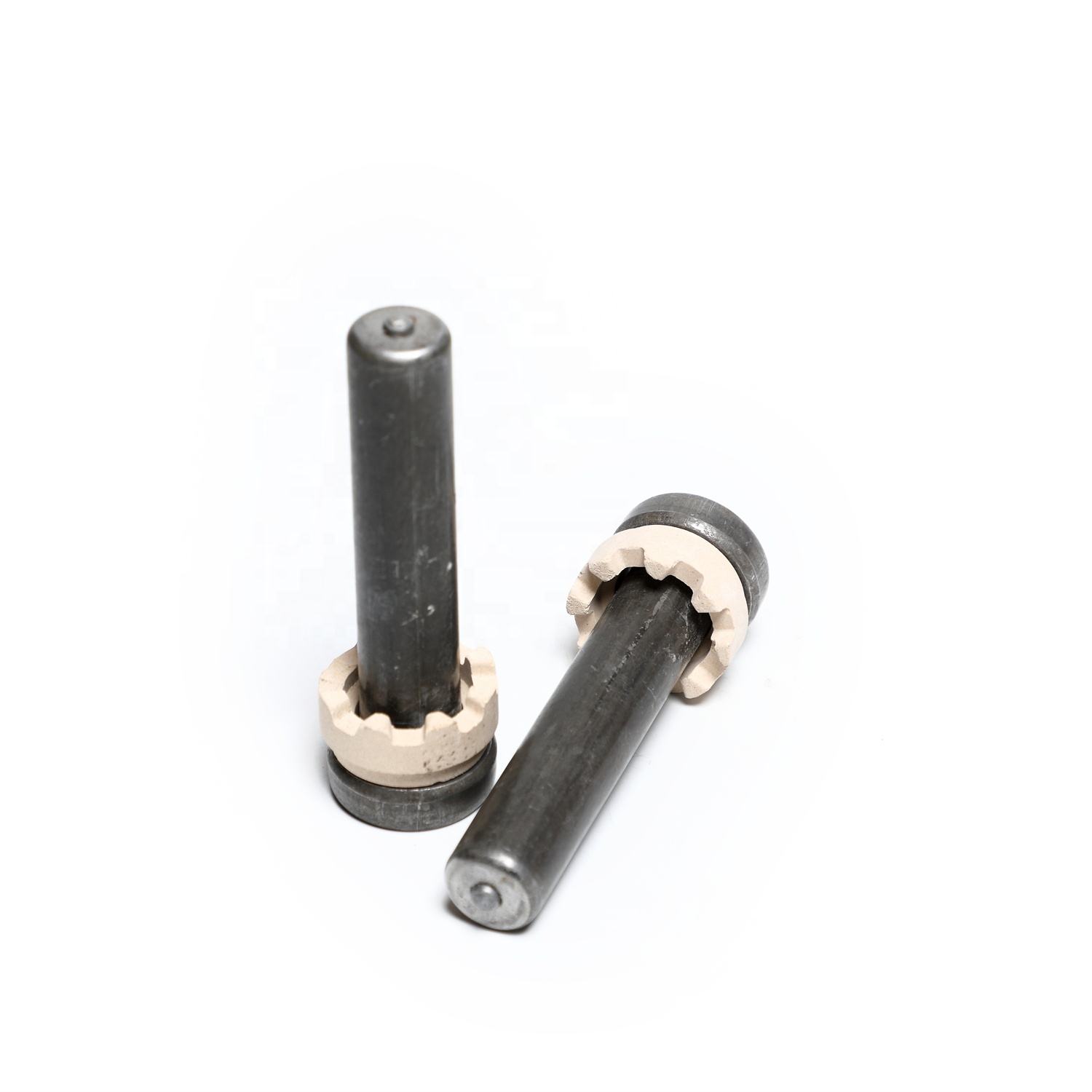
What the ferrule really does
The ceramic ferrule for stud welding forms a temporary cavity to contain the molten pool, shapes the fillet, blocks air, and manages spatter. After the arc cycle, it breaks away—consumable by design. Good ferrules mean consistent fillets and fewer reworks; bad ferrules mean cleanup, cracked collars, and grumpy QA.
Industry trends I’m seeing
- Move toward robot cells and tighter tolerance ferrules (dimensional control ≈ ±0.2 mm).
- Traceability and PPAP/COC requests even for consumables.
- Ferrule-less collars in clean rooms—but ferrules still dominate structural steel and shipbuilding.
Product snapshot (what buyers ask first)
| Parameter | Typical spec (real-world use may vary) |
|---|---|
| Material | Alumino‑silicate ceramic (cordierite-based) |
| Al2O3 content | ≈ 50–60% |
| Operating exposure | Short bursts up to ≈ 1600°C (arc window) |
| Stud compatibility | M6–M25 (¼″–1″); per EN ISO 13918 ferrule types |
| Ferrule OD range | ≈ 9–36 mm depending on stud diameter |
| Tolerances | Around ±0.2 mm on critical features |
| Service life | Single use; break-away after weld cools |
| Standards alignment | EN ISO 13918; EN ISO 14555; AWS D1.1 acceptance |
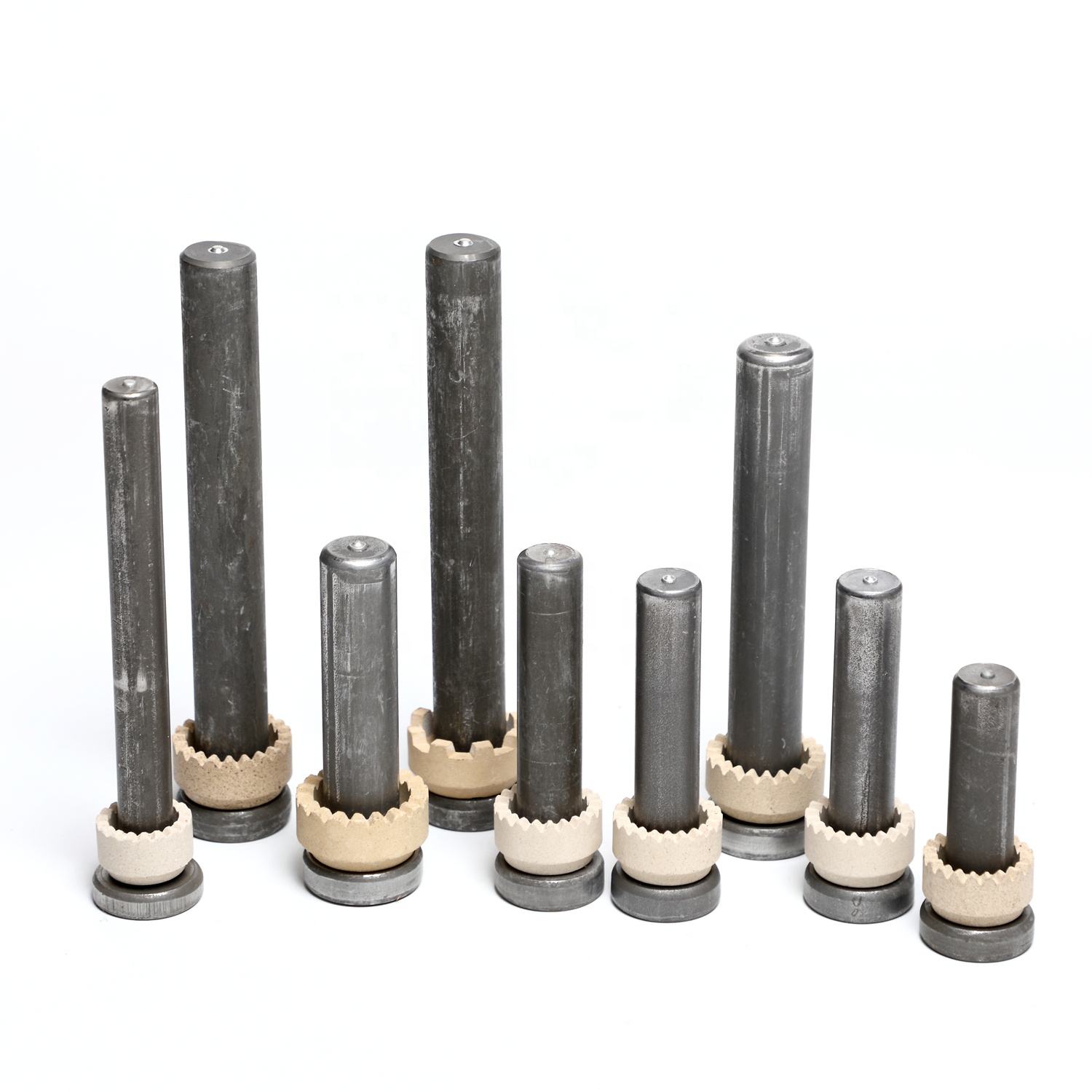
Process flow (materials → methods → testing)
- Raw mix: refined alumino‑silicate + binders; pressed to profile with vent grooves.
- Kiln firing: controlled curve to stabilize microstructure, reduce porosity.
- Dimensional QC: go/no‑go gauges per ferrule type; batch ID inked.
- In-use method: fit ceramic ferrule for stud welding to the gun foot, set lift/time, place stud, fire, hold, cool, twist off ferrule.
- Testing: bend test 30°/60° per EN ISO 14555; visual fillet check; occasional macro-etch.
Field data from recent lots (typical): crack-free fillet rate > 99% on S355 plate; spatter footprint ≈ 10–15% lower than generic imports. To be honest, good gun setup matters just as much.
Applications and advantages
- Bridges, viaducts, high-rise decking (composite beams).
- Shipbuilding and offshore modules.
- Prefab buildings, solar racking, rail car floors.
Advantages: consistent fillet geometry, better shielding, less post-weld cleanup, and a friendlier QA report. Several customers say they notice fewer undercuts when swapping to tighter-tolerance ceramic ferrule for stud welding batches.
Customization
Size tweaks for nonstandard studs, custom vent patterns, color coding by diameter, private labeling, and packaging counts (≈ 500–2000 pcs/ctn). Origin is Yongnian District, Handan, Hebei—specifically the west side of Jianshe Road, Lin Luoguan Town—so lead times are decent even on bespoke runs.
Vendor comparison (quick reality check)
| Criteria | LZ Fasteners (Hebei) | Global OEM A | Generic Import B |
|---|---|---|---|
| Dimensional tolerance | ≈ ±0.2 mm | ≈ ±0.15 mm | ≈ ±0.3–0.4 mm |
| Batch traceability | Yes (ID ink/COC on request) | Full digital trace | Often none |
| MOQ / lead time | Low / around 2–4 weeks | Medium / 4–6 weeks | Low / variable |
| Cert/test docs | EN ISO 13918 compliance statement | EN/AWS + PPAP | Sporadic |
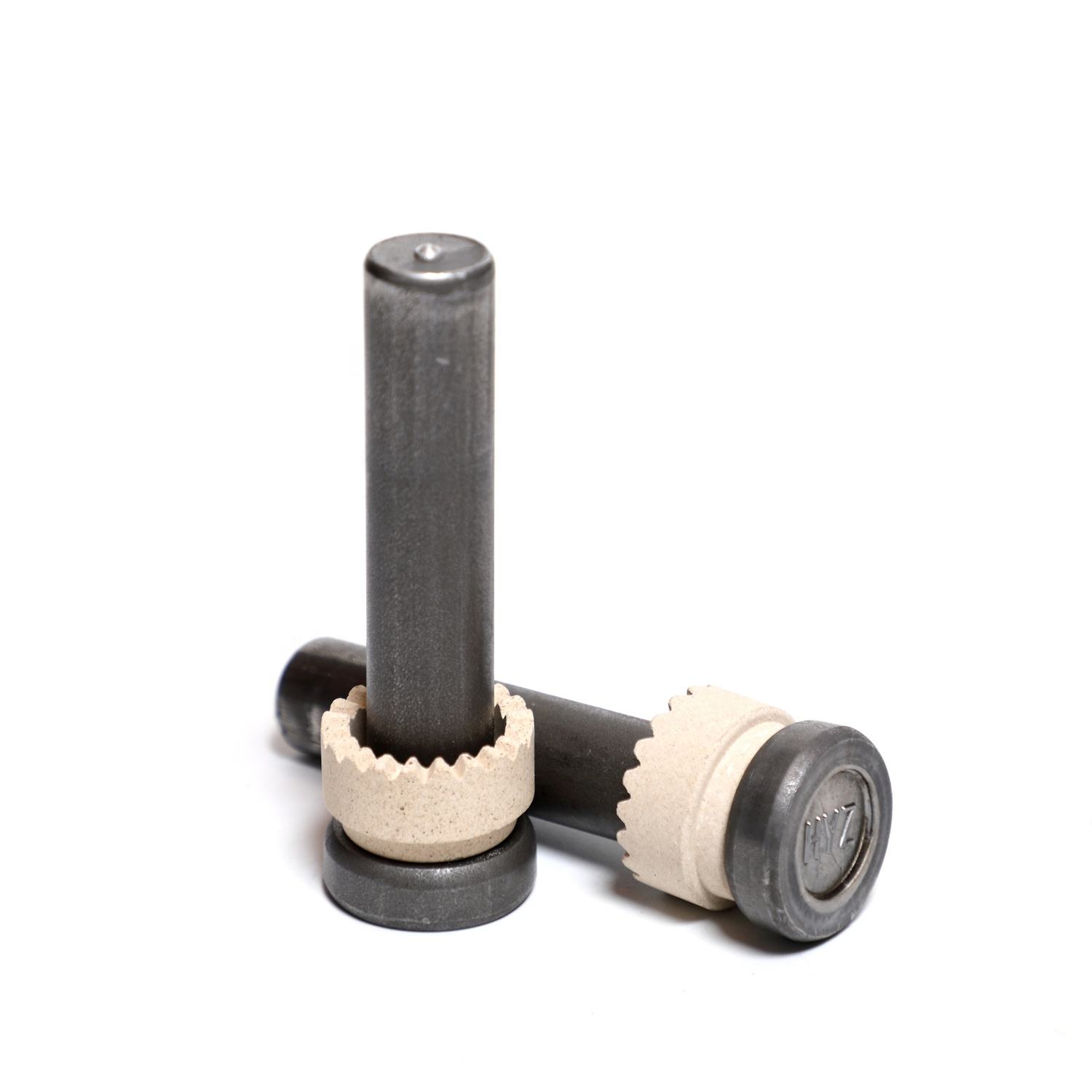
Two quick case notes
- Bridge retrofit (EU): 19 mm studs on S355—swap to tighter ceramic ferrule for stud welding cut rework by ≈ 12%, mainly due to cleaner fillets.
- Shipyard deck plates: M12 studs—operators reported faster cleanup; porosity rejects dropped from 2.1% to 0.6% over three lots.
Standards and checks
Specify per EN ISO 13918 ferrule type matching stud; qualify procedures per EN ISO 14555; verify with bend tests/visuals per AWS D1.1. If studs are galvanized, cross-check coating per ISO 1461 and adjust settings accordingly. It sounds fussy, but it saves sites from weekend call-backs.
References:
- EN ISO 13918: Welding — Studs and ceramic ferrules.
- EN ISO 14555: Arc stud welding of metallic materials — Quality levels and testing.
- AWS D1.1/D1.1M: Structural Welding Code — Steel (stud welding acceptance).
- ISO 1461: Hot dip galvanized coatings on fabricated iron and steel articles.
Latest news
-
Reliable DIN 127 Spring Washers for Industrial Applications | LZ Fasteners
NewsDec.03,2025
-
Comprehensive Guide to DIN 126 Washer: Specifications, Uses & Benefits
NewsDec.03,2025
-
Durable and High-Quality Din 125a A2 Washers for Industry | LZ Fasteners
NewsDec.03,2025
-
Comprehensive Guide to DIN 125A Washers – Specifications, Applications & Vendors
NewsDec.03,2025
-
Din 125 Washer - Reliable Industrial Fastening Solutions from LZ Fasteners
NewsDec.03,2025
-
What is a DIN 125 Flat Washer? Global Significance, Specs & Vendors
NewsDec.03,2025
 English
  Afrikaans
  Arabic
  Bengali
  Bulgarian
  French
  German
  Hindi
Hindi  Indonesian
  Italian
  Japanese
  Korean
  Malay
Malay  Portuguese
  Russian
  Spanish
  Thai
Thai  Turkish
  Urdu
Urdu  Vietnamese