



High Precision ms15795 852 Fasteners for Aerospace Applications
Understanding the Precision of ms15795 852 Fasteners
In the world of high-precision aerospace and industrial assembly, the integrity of every single component is non-negotiable. The ms15795 852 represents a critical standard in fastening technology, engineered to provide exceptional stability and strength under extreme conditions. Whether you are dealing with vibration-heavy environments or high-temperature fluctuations, choosing a fastener that adheres to strict military and industrial specifications is the only way to ensure long-term safety. This guide will explore the technical nuances, material compositions, and application scenarios that make this specific part indispensable for modern engineering.
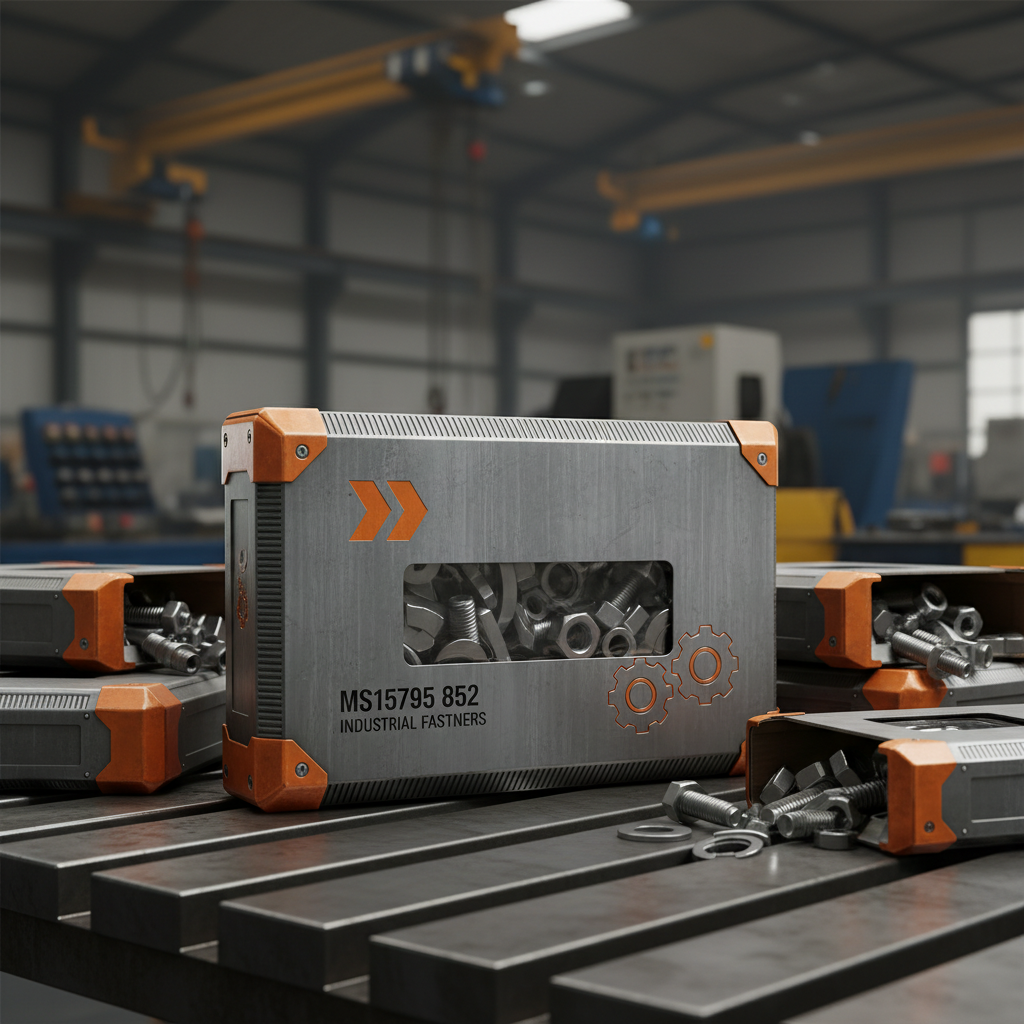
Material Composition and Durability
The effectiveness of the ms15795 852 lies in its advanced material science. Typically manufactured from high-grade alloys, these fasteners are designed to resist corrosion and fatigue. The alloy selection ensures that the part does not become brittle at low temperatures nor lose its tensile strength at elevated temperatures. Precision machining is applied to every thread to ensure a perfect fit, reducing the risk of stripping during installation or loosening during operation. This focus on material purity and manufacturing precision allows the fastener to outperform generic alternatives in critical load-bearing applications.
Performance Highlight: The combination of specific heat treatments and surface coatings ensures that the ms15795 852 maintains a consistent coefficient of friction, which is vital for maintaining precise torque values.
Technical Specifications of ms15795 852
When integrating fasteners into a complex assembly, technical data is the only language that matters. The ms15795 852 is governed by strict dimensional tolerances. Every micron counts when you are assembling components for aviation or high-end automotive systems. Below is a detailed specification table that outlines the primary physical and mechanical properties associated with this standard, ensuring that procurement managers and engineers can verify compatibility with their existing blueprints.
Comparison: ms15795 852 vs. Commercial Grade Fasteners
Many project managers ask if commercial-grade fasteners can replace the ms15795 852 to reduce costs. However, the risk associated with this substitution is substantial. Commercial fasteners are designed for general-purpose use and often lack the rigorous testing and traceability required for aerospace or medical applications. The difference lies in the fatigue limit and corrosion resistance. While a commercial bolt might hold under static loads, the ms15795 852 is engineered to withstand dynamic stresses and cyclic loading without developing micro-cracks.
Key Applications of the ms15795 852 System
The versatility of the ms15795 852 allows it to be utilized across several high-stakes industries. In aerospace engineering, it is often found in fuselage assemblies and wing attachment points where weight-to-strength ratios are critical. In the defense sector, these fasteners are used in armored vehicle plating and electronic housing to ensure components remain secure during high-impact events. Furthermore, the precision instrument industry utilizes them to maintain alignment in optical devices and medical scanners, where even a slight shift in a fastener could lead to calibration failure.
Primary Usage Areas:
• Aircraft structural joints and engine mounts
• High-frequency vibration machinery
• Military-grade electronics enclosures
• Precision medical imaging hardware
Installation Best Practices for Maximum Security
Possessing a high-quality ms15795 852 is only half the battle; correct installation is what guarantees safety. Professionals should always use calibrated torque wrenches to avoid over-tensioning, which can lead to stress corrosion cracking. It is also recommended to inspect the mating surfaces for any burrs or debris that could interfere with the seating of the fastener. For applications involving extreme thermal cycles, applying a compatible anti-seize compound can prevent galling and ensure that the fastener can be removed for maintenance without damaging the host component.
Conclusion: The Strategic Value of ms15795 852
The ms15795 852 is more than just a piece of hardware; it is a critical safety component that ensures the structural integrity of complex systems. By adhering to strict material standards and precision engineering, it provides the reliability that engineers and procurement officers demand. When the cost of failure is too high to contemplate, investing in certified fasteners from a trusted source is the only logical choice. Elevate your assembly standards today by choosing the precision of the ms15795 852.
Frequently Asked Questions (FAQs)
What exactly is the ms15795 852 standard?
The ms15795 852 refers to a specific military-standard (MS) specification for fasteners. These standards are developed to ensure that parts are interchangeable across different manufacturers while maintaining a consistent level of quality and performance. This specific part number defines the dimensions, material requirements, and finishing processes required for the fastener to be used in regulated industries like aerospace. By following this standard, companies can ensure that their components meet the rigorous safety requirements of government and international aviation bodies.
How can I verify the authenticity of an ms15795 852 fastener?
Authenticity is verified through Material Test Reports (MTRs) and Certificates of Conformance (CoC). A legitimate supplier will provide documentation that traces the batch of steel back to the mill and confirms that the heat treatment and plating processes were performed according to the MS specification. We recommend purchasing only from reputable vendors who provide full traceability. Physical inspection under a microscope can also reveal the quality of the thread machining and the uniformity of the surface coating, which are hallmarks of genuine high-precision fasteners.
Can the ms15795 852 be used in saltwater environments?
Whether it can be used in saltwater depends on the specific surface finish chosen for the part. While the base alloy is strong, saltwater is highly corrosive. Fasteners with a passivated stainless steel finish or specific anti-corrosive coatings are better suited for marine environments. It is critical to check the plating specification of your ms15795 852 before deployment. For extreme marine use, we often suggest additional protective sealants or upgrading to a higher grade of corrosion-resistant alloy to prevent pitting and stress corrosion.
What is the recommended torque for these fasteners?
There is no single "universal" torque value because the required tension depends on the material of the parts being joined and the desired clamping force. However, the torque should be calculated based on the fastener's proof load and the coefficient of friction of the specific coating used. Engineers should refer to the technical manual of the specific assembly or use a torque table based on the alloy grade. Over-torquing can lead to permanent deformation (yielding), while under-torquing can lead to fastener failure due to vibration.
Latest news
-
Essential Guide to ms15795 856 Fasteners Precision and Reliability
NewsApr.16,2026
-
High Precision ms15795 852 Fasteners for Aerospace Applications
NewsApr.09,2026
-
Comprehensive Guide to MS15795 848 Fasteners for Aerospace and Industrial Applications
NewsApr.07,2026
-
Comprehensive Guide to MS15795 846 Fasteners for Aerospace and Industrial Use
NewsApr.04,2026
-
Comprehensive Guide to MS15795 844 Fasteners for Aerospace and Defense Applications
NewsMar.31,2026
-
Comprehensive Guide to MS15795 842 Fasteners for Aerospace and Defense
NewsMar.28,2026
 English
  Afrikaans
  Arabic
  Bengali
  Bulgarian
  French
  German
  Hindi
Hindi  Indonesian
  Italian
  Japanese
  Korean
  Malay
Malay  Portuguese
  Russian
  Spanish
  Thai
Thai  Turkish
  Urdu
Urdu  Vietnamese