



High-Strength Flange Bolts | Secure & Reliable Industrial Fasteners
Understanding the Critical Role of Flange bolt in Industrial Applications
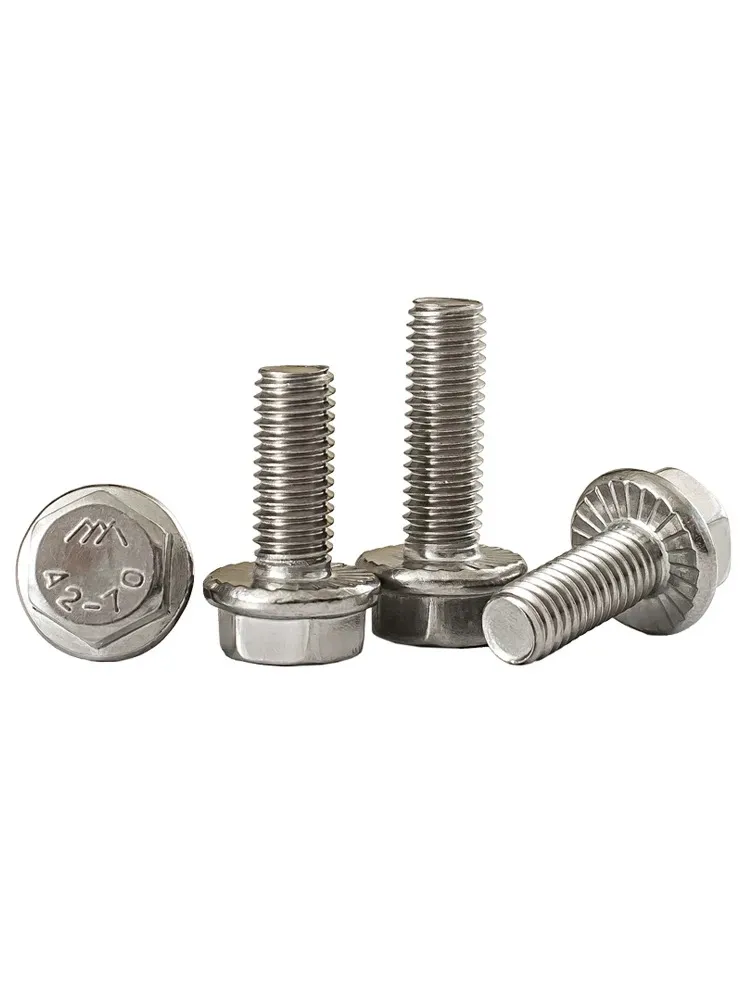
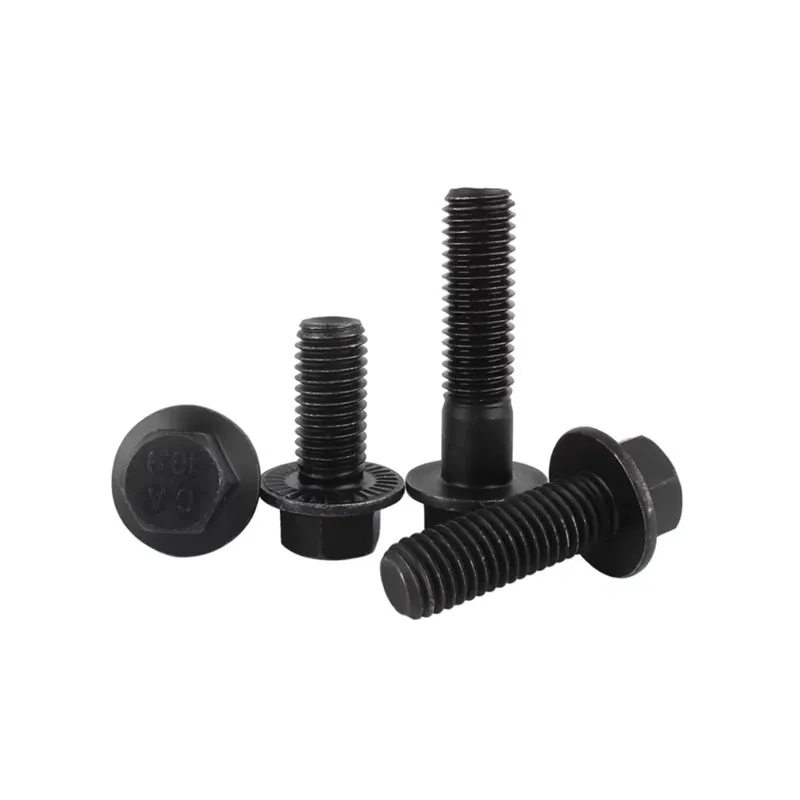
The Flange bolt stands as a cornerstone in myriad industrial fastening applications, particularly where robust, secure, and reliable connections are paramount. Characterized by an integrated washer-like flange directly beneath the bolt head, this design distributes the bearing load over a wider area, thereby reducing the risk of material deformation and ensuring a more stable joint. Its significance spans across heavy machinery, automotive, construction, and critical infrastructure sectors. This comprehensive guide delves into the intricate details of Flange bolts, covering their manufacturing, technical specifications, diverse applications, and the competitive landscape that defines their market.
Industry Trends and Market Dynamics
The market for industrial fasteners, particularly specialized components like the Flange bolt, is experiencing significant evolution. Key trends include an increasing demand for high-performance materials capable of withstanding extreme conditions, a greater emphasis on corrosion resistance for enhanced service life, and the integration of smart manufacturing processes. The push towards lightweighting in industries like automotive and aerospace also drives innovation in materials and design. Furthermore, global infrastructure development, especially in emerging economies, fuels consistent demand. Suppliers are increasingly focusing on customized solutions, rapid prototyping, and stringent quality control to meet the evolving requirements of diverse B2B clients.
Material Innovation
Development of advanced alloys (e.g., Duplex Stainless Steel, Nickel-based Superalloys) for improved strength-to-weight ratio and enhanced chemical resistance.
Sustainable Manufacturing
Adoption of energy-efficient processes and reduction in waste, aligning with global environmental standards and corporate social responsibility.
Smart Fasteners
Emergence of fasteners with integrated sensors for real-time monitoring of tension, vibration, and temperature in critical applications.
Detailed Manufacturing Process of a Flange bolt
The production of a high-quality Flange bolt involves a meticulously controlled multi-stage process, ensuring both dimensional accuracy and material integrity. This process often leverages advanced metallurgical techniques and precision engineering.
1. Material Selection & Preparation
Raw material, typically high-grade alloy steel (e.g., 40Cr, 35CrMo, 42CrMo) or stainless steel (e.g., 304, 316), is selected based on application requirements for strength, corrosion resistance, and temperature tolerance. Rods or wire coils are cut to precise lengths.
2. Cold Forging/Hot Forging
Cold Forging: For smaller diameters, material is shaped at room temperature using high-pressure dies, enhancing strength and surface finish. Hot Forging: For larger diameters or specific material properties, material is heated before shaping, allowing for complex geometries and reducing internal stresses.
3. Thread Rolling
Threads are formed by rolling the blank between dies, displacing material rather than cutting it. This process creates stronger, more uniform threads with improved fatigue resistance compared to cut threads.
4. Heat Treatment
The bolts undergo precise heat treatment processes (e.g., quenching, tempering) to achieve desired hardness, tensile strength, and ductility, adhering to standards like ISO 898-1 for mechanical properties of fasteners.
5. Surface Treatment & Finishing
Depending on the application, bolts receive surface treatments such as zinc plating, hot-dip galvanizing, or organic coatings for enhanced corrosion resistance, lubricity, or aesthetic appeal.
6. Quality Control & Testing
Each batch undergoes rigorous testing including dimensional checks, tensile strength tests, hardness tests (Rockwell, Brinell), impact tests (Charpy), and non-destructive testing (NDT) like magnetic particle inspection, ensuring compliance with standards like ISO, ANSI, ASTM, and DIN.
The service life of a Flange bolt is directly proportional to the quality of its manufacturing process and the suitability of its material for the target environment. High-quality bolts manufactured from corrosion-resistant alloys and properly heat-treated can offer decades of reliable service in industries such as petrochemical, metallurgy, and water supply & drainage, demonstrably contributing to energy saving through reduced maintenance and system integrity, and superior corrosion resistance in harsh environments.
Technical Specifications and Parameters
Understanding the technical specifications of Flange bolt components is crucial for engineers and procurement specialists to ensure optimal performance and safety. Key parameters include material grade, dimensions (diameter, length, thread pitch), head style, thread type, mechanical properties, and surface finish. These are typically governed by international standards to ensure interchangeability and consistent performance.
Typical Product Specifications: Flange bolt
| Parameter | Description/Value | Relevant Standards |
|---|---|---|
| Material Grades | Carbon Steel (Grade 8.8, 10.9, 12.9), Stainless Steel (A2/304, A4/316), Alloy Steel (ASTM A193 B7) | ISO 898-1, ASTM F593, ASTM A193 |
| Thread Diameter (D) | M5 to M24 (Metric), 1/4" to 1" (Imperial) - Larger on request | ISO 261, ANSI/ASME B1.1 |
| Length (L) | 10mm to 300mm (Metric), 1/2" to 12" (Imperial) - Custom lengths available | ISO 888, ANSI B18.2.1 |
| Head Style | Hex Flange (Serrated or Non-Serrated) | DIN 6921, ISO 4161, ASME B18.2.1 |
| Tensile Strength | 800 MPa (Grade 8.8) to 1220 MPa (Grade 12.9) | ISO 898-1 |
| Yield Strength | 640 MPa (Grade 8.8) to 1080 MPa (Grade 12.9) | ISO 898-1 |
| Surface Finish | Plain, Zinc Plated (clear, yellow), Hot-Dip Galvanized, Dacromet, Geomet | ISO 4042, ASTM B695, ASTM A153 |
These specifications are crucial for ensuring that the chosen Flange bolt meets the exact mechanical and environmental demands of its intended application, ranging from high-stress automotive assemblies to corrosion-prone marine environments.
Application Scenarios and Technical Advantages
The integrated flange of a Flange bolt offers distinct advantages over traditional hex bolts with separate washers, leading to its widespread adoption across various demanding industries. Its ability to distribute load more effectively mitigates the risk of joint failure, particularly in dynamic or high-vibration environments.
Key Application Industries:
- Automotive Industry: Used extensively in engine assemblies, chassis components, and wheel connections where high clamping force and vibration resistance are critical. The integrated flange ensures a secure connection without loosening, a common problem with separate washers.
- Heavy Machinery & Construction: For securing structural elements, heavy equipment parts, and conveyor systems. The wide bearing surface helps prevent embedding into softer materials and maintains joint integrity under heavy loads and operational stresses.
- Petrochemical & Energy: In pipelines, valve assemblies, and pressure vessels where leak-proof and high-integrity joints are essential. Corrosion-resistant flange bolts are critical in these environments, preventing costly downtime and safety hazards.
- Water Supply & Drainage Systems: For connecting pipes, pumps, and other infrastructure components. The large bearing area reduces localized stress on sealing surfaces, enhancing leak prevention and overall system reliability.
- Marine Applications: In shipbuilding and offshore structures, where constant exposure to saltwater demands fasteners with superior corrosion resistance and robustness.
Technical Advantages:
- Improved Load Distribution: The integrated flange distributes the clamping force over a larger surface area, reducing localized stress on the fastened material. This minimizes material deformation (e.g., crushing, embedding) and increases the resistance to joint relaxation.
- Enhanced Vibration Resistance: By providing a wider contact surface, the flange significantly improves the fastener's resistance to loosening caused by vibration, a common failure mode in machinery. Serrated flanges further enhance this by 'biting' into the surface.
- Simplified Assembly & Reduced Parts Count: Eliminates the need for a separate washer, streamlining assembly processes, reducing inventory, and preventing installation errors (e.g., forgetting a washer or using the wrong type). This translates to labor cost savings and efficiency gains.
- Cost-Effectiveness: While initially appearing similar in cost, the long-term benefits of reduced assembly time, fewer components, and enhanced joint reliability often lead to significant overall cost savings for industrial operations.
- Corrosion Resistance: When combined with appropriate material grades and surface coatings (e.g., zinc-nickel, hot-dip galvanization), flange bolts offer exceptional protection against rust and chemical degradation, extending service life in harsh environments.
Vendor Comparison and Selection Criteria
Selecting the right vendor for Flange bolt components is a strategic decision that impacts product quality, operational efficiency, and long-term costs. A thorough evaluation involves more than just price; it encompasses quality assurance, manufacturing capabilities, supply chain reliability, and technical support.
Key Vendor Comparison Factors:
| Criterion | High-Tier Vendor (e.g., LZ Fasteners) | Standard Vendor |
|---|---|---|
| Quality Certifications | ISO 9001:2015, IATF 16949 (Automotive), AS9100 (Aerospace), CE, PED. Robust internal QC. | Basic ISO 9001, less stringent internal testing. |
| Material Traceability | Full batch traceability from raw material to finished product, Mill Test Certificates (MTCs) readily available. | Limited or no batch-specific traceability. |
| Customization Capabilities | Extensive R&D, design consultation, rapid prototyping, bespoke materials/coatings, small-batch custom runs. | Primarily standard products, limited custom options. |
| Lead Time & Logistics | Optimized supply chain, flexible production, global distribution network, reliable on-time delivery. | Potentially longer lead times, less flexible shipping. |
| Technical Support | Dedicated engineering support, application guidance, failure analysis, post-sale consultation. | Basic product information only. |
A reputable vendor like LZ Fasteners, with a decade-long track record and certifications like ISO 9001 and IATF 16949, offers not just a product but a partnership, ensuring consistent quality, innovation, and support vital for critical B2B operations.
Customized Solutions for Specialized Requirements
While standard Flange bolt products cater to a broad range of applications, many industrial projects require fasteners with highly specific attributes that off-the-shelf solutions cannot meet. Customization capabilities are a hallmark of an advanced fastener manufacturer, enabling solutions tailored to unique environmental, mechanical, or design challenges.
Customization options can include:
- Exotic Materials: Beyond standard steel and stainless steel, bespoke orders often involve materials like Inconel, Monel, Hastelloy, or Titanium for extreme temperature, highly corrosive, or magnetic-sensitive environments.
- Unique Dimensions & Threading: Non-standard diameters, lengths, thread pitches, or even custom thread forms to match existing equipment or specialized assembly requirements.
- Special Coatings & Treatments: Application-specific coatings such as PTFE (Teflon) for low friction, ceramic coatings for high-temperature resistance, or specialized paint systems for aesthetic and protective purposes. Custom heat treatments can also be applied to achieve very specific hardness or ductility profiles.
- Integrated Features: Design modifications such as pre-applied thread lockers, anti-galling compounds, or unique head markings for identification and traceability.
- Engineered Fastening Solutions: Collaborating with client engineers to develop entirely new fastener designs that optimize performance for a specific assembly, often involving FEA (Finite Element Analysis) and extensive prototyping.
By offering these tailored solutions, manufacturers demonstrate their expertise and commitment to meeting complex B2B needs, ensuring that even the most challenging projects can proceed with optimal fastening integrity. Our engineering team at LZ Fasteners thrives on these challenges, providing robust solutions that uphold the highest standards of safety and performance.
Real-World Application Case Studies
The proven performance of Flange bolt solutions is best illustrated through real-world applications where they have delivered tangible benefits in terms of reliability, safety, and operational efficiency.
Case Study 1: High-Pressure Petrochemical Pipeline Joint
- Challenge: A major petrochemical plant faced recurrent leakage issues at critical flange joints in high-pressure, high-temperature sulfuric acid transfer lines. The existing fasteners, standard hex bolts with separate washers, were susceptible to crevice corrosion and uneven load distribution, leading to gasket degradation.
- Solution: We provided custom-manufactured Flange bolt assemblies made from Duplex Stainless Steel (UNS S31803) with a specialized PTFE coating. The integrated flange ensured uniform clamping pressure across the gasket, and the material selection provided superior resistance to sulfuric acid and high temperatures.
- Result: Post-installation, the plant reported zero leakage incidents at the upgraded joints over a 3-year period, significantly extending the service life of the joints and reducing maintenance costs by an estimated 40%. The corrosion resistance also improved worker safety by eliminating hazardous leaks.
Case Study 2: Wind Turbine Tower Assembly
- Challenge: A leading wind turbine manufacturer required fasteners for securing critical sections of turbine towers that could withstand extreme wind loads, constant vibration, and corrosive marine air. Conventional fasteners showed susceptibility to loosening and fatigue failure.
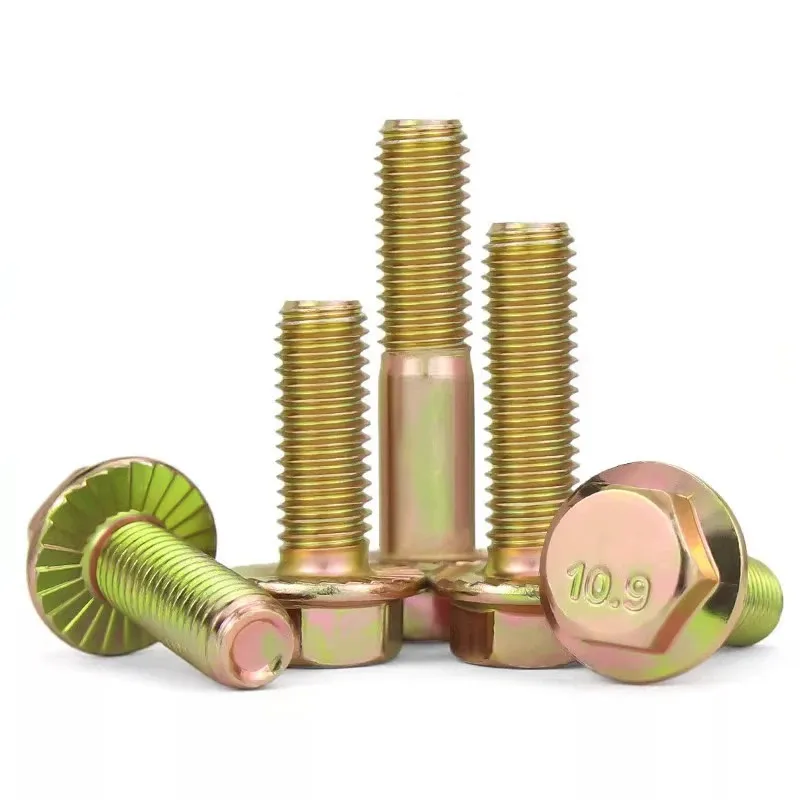
- Solution: Our team supplied high-strength Grade 10.9 Flange bolt with serrated flanges and a hot-dip galvanized finish. The serrations provided additional anti-loosening properties under dynamic loads, while the galvanization offered robust corrosion protection. Each bolt underwent comprehensive fatigue testing simulating turbine operational life.
- Result: The implementation of these specialized flange bolts led to a 95% reduction in fastener-related joint failures and unscheduled maintenance, enhancing turbine uptime and overall energy production efficiency. The longer service life aligned with the turbine's design lifespan, providing significant long-term savings.
Frequently Asked Questions (FAQ)
Q1: What are the primary advantages of a Flange bolt over a standard hex bolt and washer assembly?
A1: The primary advantages include superior load distribution due to the integrated flange, enhanced vibration resistance (especially with serrated flanges), reduced parts count for simplified assembly, and improved efficiency by eliminating the need for separate washers.
Q2: What materials are commonly used for Flange bolts, and how do I choose the right one?
A2: Common materials include carbon steel (grades 8.8, 10.9, 12.9) for high strength, and stainless steel (304, 316) for corrosion resistance. Selection depends on the application's required tensile strength, operating temperature, and exposure to corrosive environments. Our technical team can assist with material selection based on your specific needs.
Q3: Can Flange bolts be customized for unique industrial applications?
A3: Absolutely. We offer extensive customization options, including specialized materials (e.g., Inconel, Titanium), non-standard dimensions, bespoke thread types, and application-specific coatings (e.g., PTFE, ceramic). Our engineering team works closely with clients to develop tailored fastening solutions.
Q4: What are the typical lead times for Flange bolt orders?
A4: Lead times vary based on product specifications, order volume, and customization requirements. For standard orders, lead times typically range from 2-4 weeks. Customized or large-volume orders may require 6-10 weeks. We maintain a flexible production schedule and communicate transparently about expected delivery dates.
Q5: What warranty and after-sales support do you provide for your Flange bolts?
A5: We stand behind the quality of our products with a comprehensive warranty against manufacturing defects, typically for 12 months from the date of purchase. Our after-sales support includes technical assistance, application guidance, and prompt resolution of any quality concerns to ensure complete customer satisfaction.
Commitment to Trust and Reliability
Our unwavering commitment to quality, backed by rigorous certifications (ISO 9001, IATF 16949), ensures that every Flange bolt delivered meets or exceeds the highest industry standards. With a decade of experience serving global B2B clients, we understand the critical nature of reliable fastening solutions in industrial operations. Our dedicated customer support team is available from 8 AM to 5 PM (GMT+8) on weekdays to provide technical assistance, order updates, and tailored advice. We guarantee material traceability and provide comprehensive test reports with every significant order, reinforcing our pledge to transparency and trust.
Authoritative References
- ISO 898-1: Mechanical properties of fasteners made of carbon steel and alloy steel — Part 1: Bolts, screws and studs with specified property classes — Coarse thread and fine pitch thread. International Organization for Standardization.
- ASTM A193/A193M: Standard Specification for Alloy-Steel and Stainless Steel Bolting for High Temperature or High Pressure Service and Other Special Purpose Applications. ASTM International.
- Google Search Central: What is E-E-A-T and why it's important for content creators. (blog.google/products/search/new-ways-we-are-improving-search-for-you/)
- Industrial Fasteners Institute (IFI) Standards: Fastener Technology.
- Machine Design: The Fundamentals of Fastener Selection. (machinedesign.com)
Latest news
-
Essential Guide to ms15795 856 Fasteners Precision and Reliability
NewsApr.16,2026
-
High Precision ms15795 852 Fasteners for Aerospace Applications
NewsApr.09,2026
-
Comprehensive Guide to MS15795 848 Fasteners for Aerospace and Industrial Applications
NewsApr.07,2026
-
Comprehensive Guide to MS15795 846 Fasteners for Aerospace and Industrial Use
NewsApr.04,2026
-
Comprehensive Guide to MS15795 844 Fasteners for Aerospace and Defense Applications
NewsMar.31,2026
-
Comprehensive Guide to MS15795 842 Fasteners for Aerospace and Defense
NewsMar.28,2026
 English
  Afrikaans
  Arabic
  Bengali
  Bulgarian
  French
  German
  Hindi
Hindi  Indonesian
  Italian
  Japanese
  Korean
  Malay
Malay  Portuguese
  Russian
  Spanish
  Thai
Thai  Turkish
  Urdu
Urdu  Vietnamese