



Ceramic Ferrule for Stud Welding - Precise & Heat-Resistant
Welding Stud with Ceramic Ferrule: Practical Notes from the Shop Floor
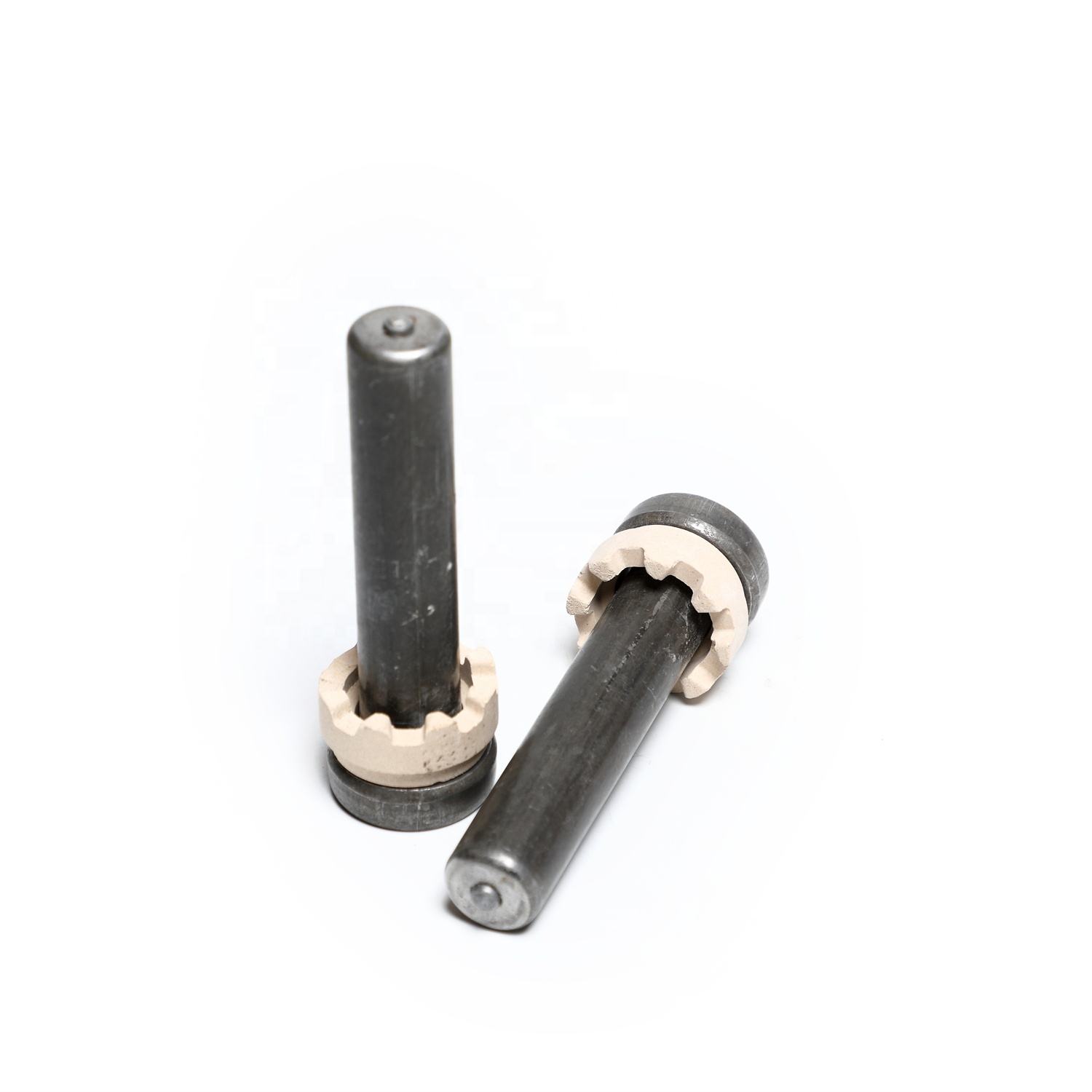
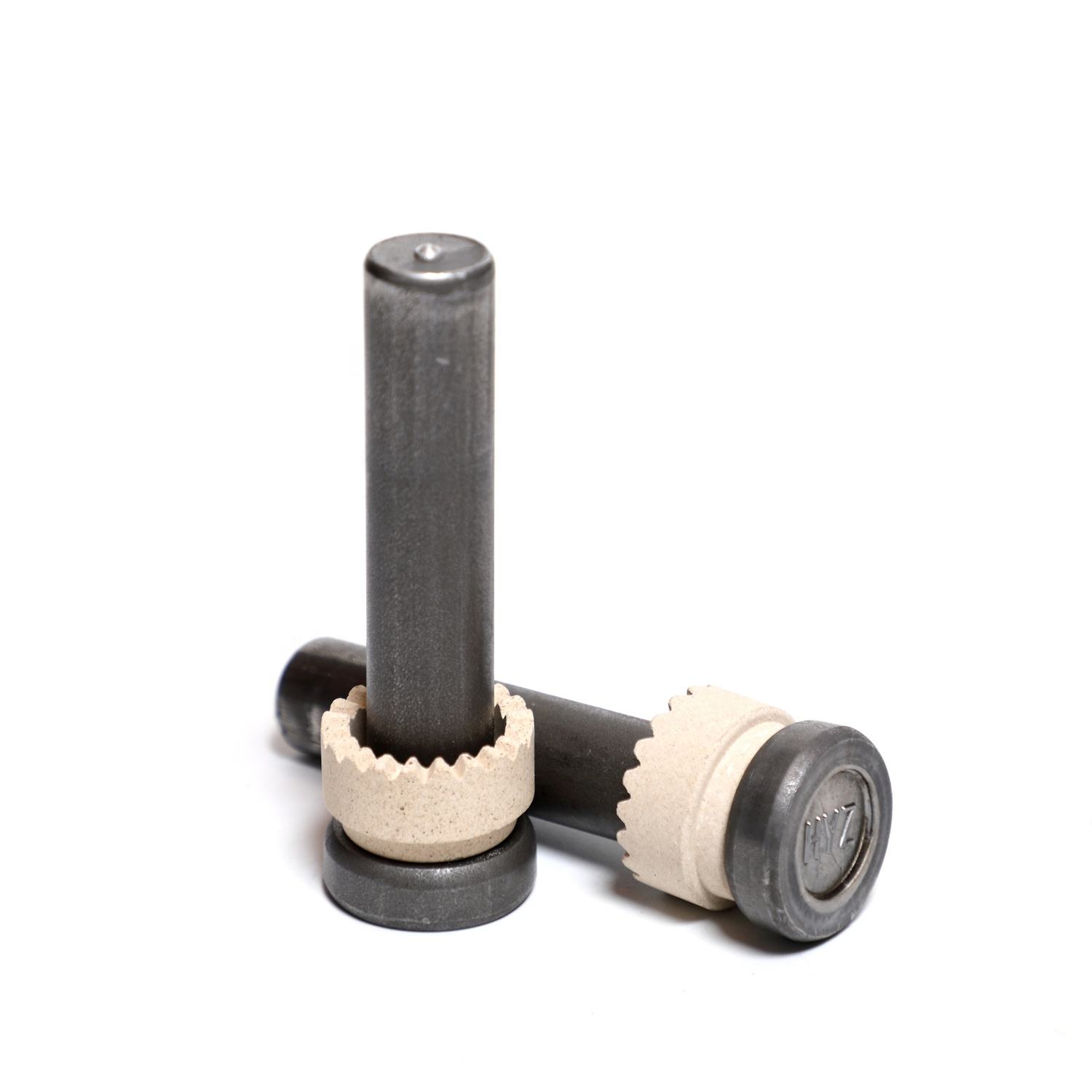
If you're piecing together steel decks, bridge bearings, or offshore platforms, sooner or later you land on the humble ceramic ferrule for stud welding. Not glamorous, but critical. In fact, many customers say the ferrule is the quiet hero—shielding the arc, pooling the molten metal, and keeping spatter in check so the stud fuses like it should.
Industry trends (and a few coffee-break observations)
Lately, we’re seeing bigger diameters and higher duty cycles in modular construction, wind towers, shipyards, and data-center mezzanines. To be honest, demand for repeatable quality is pushing ferrule specs tighter: higher alumina content, cleaner bores, and consistent vents. Sustainability chatter is real too—recyclable packaging, fewer rejects, and ferrules that don’t crumble under heat soak.
Technical snapshot
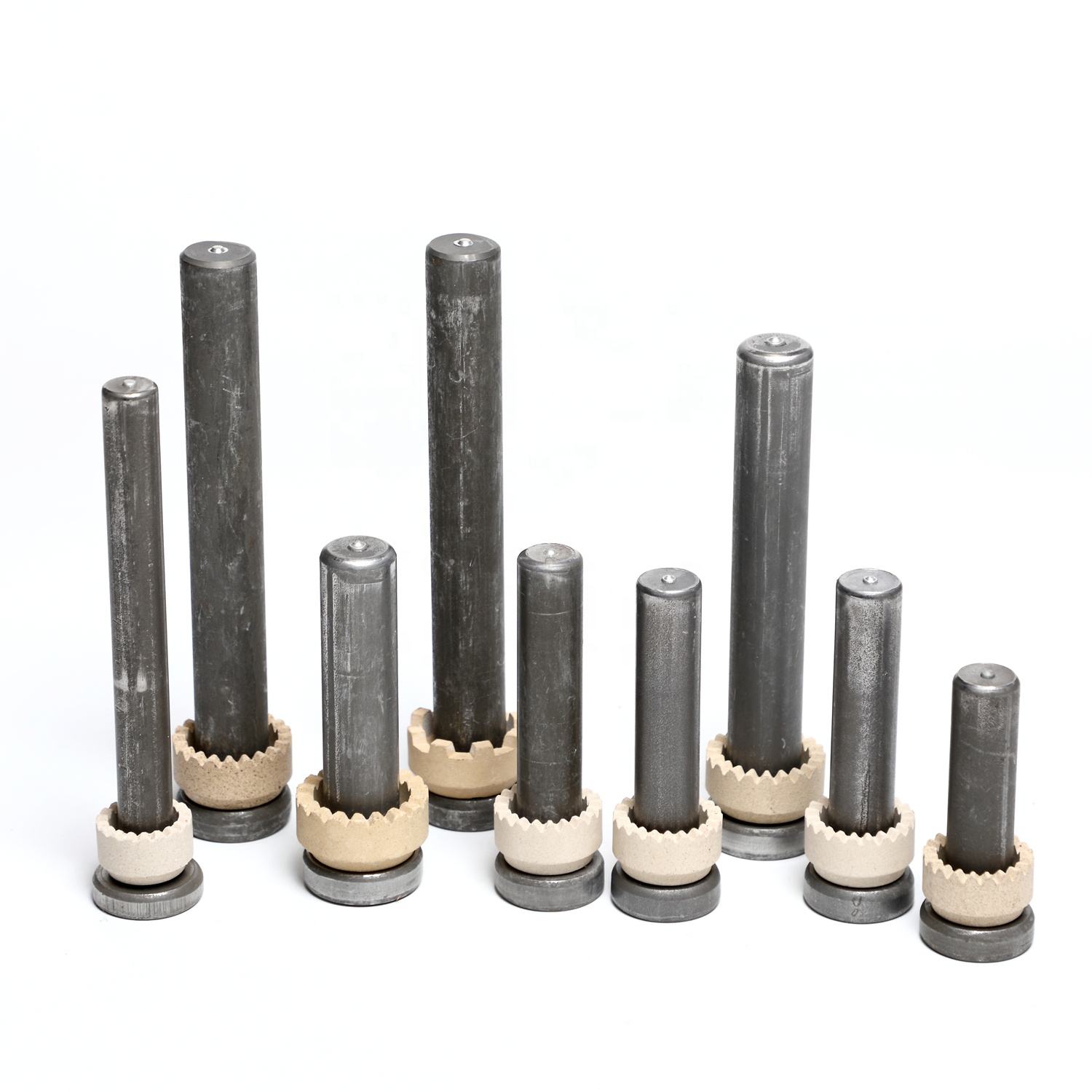
The product here—Welding Stud with Ceramic Ferrule from LZ Fasteners (origin: South of Xi Zhaozhuang Village, Lin Luoguan Town, Yongnian District, Handan City, Hebei Province; west side of Jianshe Road)—pairs standard shear connectors with a ceramic ferrule for stud welding built to classic stud-welding norms (think ISO 13918 and EN ISO 14555).
| Spec | Typical Value (≈; real-world use may vary) |
|---|---|
| Material | Alumina ceramic (Al₂O₃) ≈ 90–95% |
| Working temperature | Up to ≈ 1,600°C during arc |
| Compatible stud diameters | M6–M25 (ISO 13918 types SD, RD, PD) |
| Hardness | ≈ 80–90 HRA |
| Service life | Single-use ferrule; shelf life 2–3 years dry-stored |
| Color | Natural/ivory (varies by batch firing) |
| Standards | ISO 13918; EN ISO 14555; AWS D1.1 acceptance criteria |
Process flow (how the sausage is made)
- Materials: graded alumina powders + binders; controlled particle size for clean vents.
- Forming: high-pressure pressing and precision boring; vent patterns set for gas escape.
- Firing: kiln cycle tuned for density; thermal shock checks—no microcracking.
- Incoming QC: dimensional tolerance check (ID/OD/height), visual, weight.
- Weld test: coupon trials per EN ISO 14555; bend and torque checks per AWS D1.1.
- Packing: anti-chipping trays; batch traceability labels and lot test sheets.
Applications and advantages
- Industries: bridges, shipbuilding, offshore wind towers, prefab buildings, rail, heavy equipment.
- Advantages: stable arc containment, neat fillet profile, reduced spatter, predictable fusion.
- Customers say: fewer re-welds when ferrules run true and vents aren’t clogged—unsurprising, but still nice.
Vendor landscape (quick comparison)
| Vendor | Alumina content | Size range | MOQ | Lead time | Certs |
|---|---|---|---|---|---|
| LZ Fasteners (Handan, Hebei) | ≈ 92–95% | M6–M25 | Around 10k pcs | 10–20 days typical | ISO/EN test reports |
| Vendor A (Regional) | ≈ 90–92% | M8–M22 | 15k pcs | 2–4 weeks | Factory CoC |
| Vendor B (Global) | ≈ 94–96% | M6–M25 | 5k–10k pcs | Stock + 1–2 weeks | ISO + 3rd-party lab |
Customization
Need special vents for high-hydrogen environments, custom heights for decking, or branded trays? LZ can tool custom ceramic ferrule for stud welding batches with small tweaks to alumina or vent geometry. Realistically, add a week or two for tooling.
Case notes (field-proven)
- Bridge deck retrofit, APAC: 19 mm studs, 3,000+ welds/shift. Rework rate dipped below 0.5% after switching to tighter-tolerance ferrules.
- Offshore tower shop, EU: salt-mist exposure around the line. Ferrules with higher density fired bodies showed fewer chips and steadier fillets—operators noticed immediately.
Testing and QC
Routine bend tests, torque tests, and visual acceptance per AWS D1.1; dimensional checks against ISO 13918 gauges; weld procedure qualification following EN ISO 14555. Keep ferrules dry, and don’t reuse—sounds obvious, yet we still see it.
Authoritative citations:
- ISO 13918: Welding — Studs and ceramic ferrules. https://www.iso.org/standard/61631.html
- EN ISO 14555: Arc stud welding of metallic materials. https://www.iso.org/standard/58119.html
- AWS D1.1/D1.1M: Structural Welding Code — Steel. https://pubs.aws.org/
Latest news
-
Reliable DIN 127 Spring Washers for Industrial Applications | LZ Fasteners
NewsDec.03,2025
-
Comprehensive Guide to DIN 126 Washer: Specifications, Uses & Benefits
NewsDec.03,2025
-
Durable and High-Quality Din 125a A2 Washers for Industry | LZ Fasteners
NewsDec.03,2025
-
Comprehensive Guide to DIN 125A Washers – Specifications, Applications & Vendors
NewsDec.03,2025
-
Din 125 Washer - Reliable Industrial Fastening Solutions from LZ Fasteners
NewsDec.03,2025
-
What is a DIN 125 Flat Washer? Global Significance, Specs & Vendors
NewsDec.03,2025
 English
  Afrikaans
  Arabic
  Bengali
  Bulgarian
  French
  German
  Hindi
Hindi  Indonesian
  Italian
  Japanese
  Korean
  Malay
Malay  Portuguese
  Russian
  Spanish
  Thai
Thai  Turkish
  Urdu
Urdu  Vietnamese