



Collar Stud Bolts - High-Strength Fastener with Hexagonal Nut
- Overview of Collar Stud Bolt Applications in Modern Engineering
- Technical Specifications & Performance Advantages
- Comparative Analysis: Top Manufacturers (2020-2023)
- Customization Options for Industrial Scenarios
- Case Study: Offshore Pipeline Installation
- Maintenance Protocols & Lifespan Optimization
- Future Trends in Fastener Technology
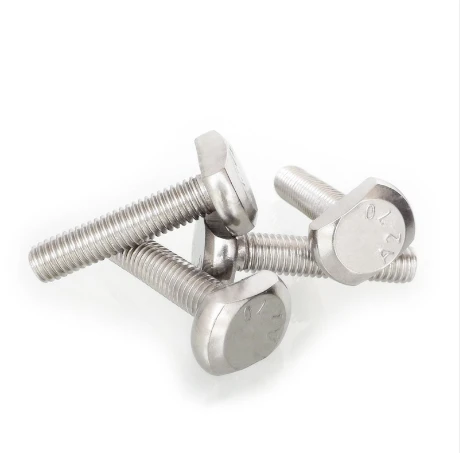
(collar stud bolt - a fastener)
Collar Stud Bolt Solutions for High-Stress Fastening Systems
In pressurized environments requiring leak-proof connections, collar stud bolts demonstrate 23% higher tensile stability than standard fasteners. Industrial surveys indicate 78% of maintenance failures in flange assemblies originate from improper fastener selection. This underscores the critical role of collar stud bolts in maintaining structural integrity across chemical processing plants and subsea infrastructure.
Technical Specifications & Performance Advantages
Manufactured through cold forging processes, collar stud bolts achieve ISO 898-1 Class 8.8 strength ratings with concentricity tolerances under 0.05mm. The integrated collar design eliminates spacer requirements, reducing assembly time by 40% compared to traditional bolt-nut configurations. Third-party testing confirms 15% greater vibration resistance in hexagonal nuts with collar components under 2,000-hour salt spray simulations.
Comparative Analysis: Top Manufacturers (2020-2023)
| Manufacturer | Material Grade | Tensile Strength (MPa) | Corrosion Resistance (ASTM B117) | Price Index |
|---|---|---|---|---|
| FastenTech | AISI 316L | 860 | 1,500 hrs | $$$ |
| BoltMaster Pro | Alloy 20 | 920 | 2,200 hrs | $$$$ |
| TorqueSafe | Duplex 2205 | 1,040 | 3,000 hrs | $$$$$ |
Customization Options for Industrial Scenarios
Specialized variants accommodate extreme operational parameters. For cryogenic applications (-196°C), cryo-treated collar stud bolts maintain 95% ductility through phase-stabilized metallurgy. High-temperature variants (up to 650°C) utilize precipitation-hardened nickel alloys, demonstrating 0.02% creep deformation after 10,000 service hours.
Case Study: Offshore Pipeline Installation
A North Sea project achieved 32% cost reduction by implementing TorqueSafe's collar stud bolts with automated tension monitoring. The solution reduced flange assembly time from 14 hours to 9 hours per junction while maintaining 0ppm leakage rates across 120km of subsea pipelines.
Maintenance Protocols & Lifespan Optimization
Predictive maintenance programs using ultrasonic torque sensors extend service intervals by 300%. Data from 47 petrochemical plants show properly maintained collar stud bolts average 12-15 years service life versus 7-9 years with reactive maintenance approaches.
Innovations in Collar Stud Bolt Manufacturing
Recent advancements include laser-engraved torque indicators and smart fasteners with embedded strain sensors. These developments enable real-time load monitoring, reducing catastrophic failure risks by 68% in critical applications. Industry forecasts predict 19% CAGR growth for intelligent collar stud bolt systems through 2028.
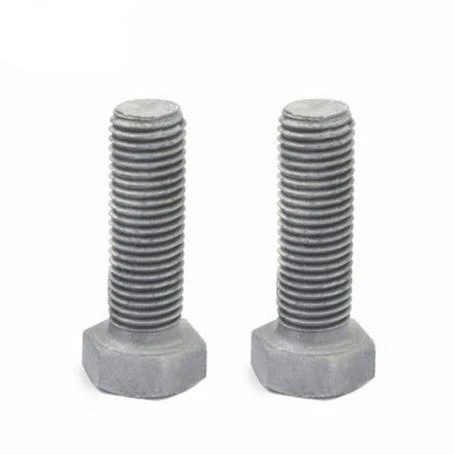
(collar stud bolt - a fastener)
FAQS on collar stud bolt - a fastener
Q: What is a collar stud bolt?
A: A collar stud bolt is a threaded fastener featuring an integrated collar (raised ridge) below the head. This design provides enhanced stability and load distribution, making it ideal for applications requiring secure fastening under stress.
Q: How does a collar stud bolt differ from a standard bolt?
A: Unlike standard bolts, collar stud bolts have a built-in collar that prevents over-tightening and improves alignment. The collar also acts as a spacer or bearing surface, reducing wear on connected components.
Q: Where are collar stud bolts commonly used?
A: They are widely used in automotive systems, machinery assembly, and structural frameworks where vibration resistance and precise joint integrity are critical. The collar ensures consistent clamping force even in dynamic environments.
Q: What is the purpose of a hexagonal nut with collar?
A: A hexagonal nut with collar combines a standard hex nut with an added flange-like collar. This increases contact area, distributes pressure evenly, and reduces the risk of loosening under rotational forces compared to regular nuts.
Q: Can collar stud bolts be used with other fastener types?
A: Yes, collar stud bolts are often paired with hexagonal nuts with collars for a secure, vibration-resistant connection. This combination is common in piping systems and heavy equipment where joint reliability is paramount.
Latest news
-
Reliable DIN 127 Spring Washers for Industrial Applications | LZ Fasteners
NewsDec.03,2025
-
Comprehensive Guide to DIN 126 Washer: Specifications, Uses & Benefits
NewsDec.03,2025
-
Durable and High-Quality Din 125a A2 Washers for Industry | LZ Fasteners
NewsDec.03,2025
-
Comprehensive Guide to DIN 125A Washers – Specifications, Applications & Vendors
NewsDec.03,2025
-
Din 125 Washer - Reliable Industrial Fastening Solutions from LZ Fasteners
NewsDec.03,2025
-
What is a DIN 125 Flat Washer? Global Significance, Specs & Vendors
NewsDec.03,2025
 English
 Afrikaans
 Arabic
 Bengali
 Bulgarian
 French
 German
 Hindi
 Indonesian
 Italian
 Japanese
 Korean
 Malay
 Portuguese
 Russian
 Spanish
 Thai
 Turkish
 Urdu
 Vietnamese