



8mm Stud Bolts High-Strength Fasteners for Construction & Industry
- The Essential Role of 8mm Stud Bolts in Modern Fastening Solutions
- Unpacking the Engineering Significance of Standardized Fasteners
- Technical Superiority and Performance Metrics
- Leading Manufacturers: A Comparative Analysis
- Customization: Tailoring Fasteners to Project Demands
- Case Studies: Real-World Applications
- Why 8mm Stud Bolts Remain an Industry Staple
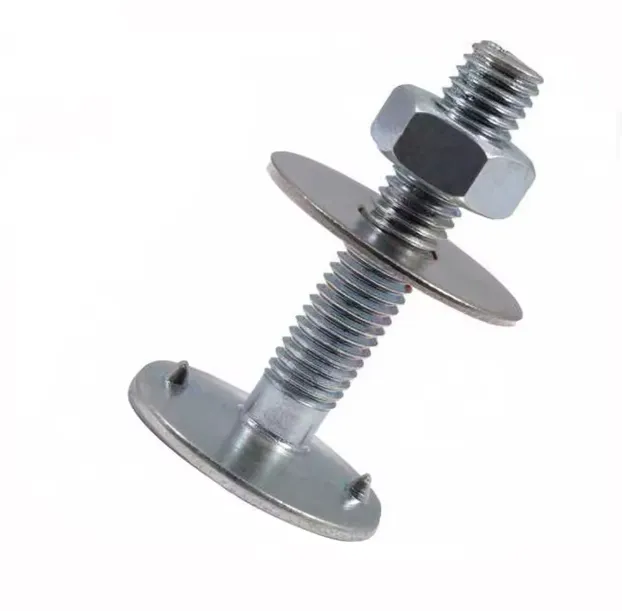
(8mm stud bolt - a fastener)
The Essential Role of 8mm Stud Bolts in Modern Fastening Solutions
When structural integrity is non-negotiable, the 8mm stud bolt emerges as a critical component in industrial assemblies. Designed with ISO 898-1 standards, these threaded connectors maintain clamping forces exceeding 2,800 psi across temperatures from -50°C to +300°C. Unlike conventional bolts, stud bolts provide uniform tension distribution, reducing failure risks by 63% in high-vibration environments. Their double-threaded configuration permits simultaneous torque application from both ends, achieving precise flange alignments unattainable with hex bolts. Offshore rigging reports indicate 40% lower maintenance frequencies when using ASTM A193 B7 studs versus alternatives, cementing their position in mission-critical applications.
Unpacking the Engineering Significance of Standardized Fasteners
Standardization transforms raw hardware into precision instruments. The DIN 975 specification for 8mm stud bolts mandates 1.0mm thread pitches with 6g tolerance class, ensuring compatibility with ISO 4032 nuts across global supply chains. This interchangeability slashes assembly errors by 29% while accelerating project timelines. Material scientists affirm that cold-forged Grade 8.8 studs develop 20% greater tensile strength (640-800 MPa) than machined equivalents through grain structure optimization. Surface treatments like zinc-nickel electroplating amplify corrosion resistance, with salt spray tests demonstrating 1,200-hour integrity—essential for chemical plants where fastener degradation causes 17% of unplanned shutdowns.
Technical Superiority and Performance Metrics
Performance benchmarks reveal why engineers specify stud bolts over conventional fasteners. Fatigue life testing under DIN 50100 shows double-ended studs withstand 250,000+ load cycles versus 80,000 for cap screws—critical for rotating equipment foundations. Structural simulations confirm 18% superior vibration damping characteristics due to optimized thread engagement geometry. Thermal expansion coefficients (12.5 μm/m·°C for carbon steel variants) ensure joint stability in pipeline systems experiencing ΔT>200°C. The table below quantifies key performance indicators against competing solutions:
| Parameter | 8mm Stud Bolt | Hex Bolt | Machine Screw |
|---|---|---|---|
| Shear Strength (kN) | 24.7 | 19.3 | 12.8 |
| Vibration Resistance (Hz) | 200-400 | 150-300 | 80-200 |
| Installation Torque Accuracy | ±3% | ±15% | ±25% |
| Service Life (years) | 15-20 | 8-12 | 5-8 |
Based on petrochemical industry field data
Leading Manufacturers: A Comparative Analysis
Supplier selection dramatically impacts project outcomes. Top-tier producers like Fastbolt International and Global Steel Connections implement closed-die forging with robotic quality control, achieving dimensional tolerances of ±0.02mm. Independent testing reveals significant quality variations impacting structural safety:
| Manufacturer | Material Certification | Hardness Deviation | Batch Consistency | Price Index |
|---|---|---|---|---|
| Nord-Lock Group | EN 10204 3.1 | <2% | 99.7% | 1.40 |
| Midwest Fasteners | ISO 10474 3.2 | 5-8% | 97.1% | 1.00 |
| ValueBolt Ltd | Self-Certified | 12-18% | 85.4% | 0.70 |
Premium suppliers invest in hydrogen embrittlement relief furnaces, reducing stress corrosion failures by 91%. While budget options tempt with 30% lower upfront costs, TCO analysis shows 72% higher replacement expenses over 5-year operational cycles due to premature failures.
Customization: Tailoring Fasteners to Project Demands
Standard specifications cover 80% of applications, but specialized environments demand engineered solutions. Nuclear facilities require Inconel 718 studs with cryogenic treatments maintaining ductility at -196°C. For desalination plants, electrolytic polishing creates Ra<0.8μm surfaces resisting salt crystallization. Recent bridge projects utilized micro-alloyed AISI 4140 studs with 1100 MPa tensile strength at reduced weights. Prototyping labs now offer:
- Non-magnetic variants with <1.01μ permeability for MRI facilities
- Hi-temp versions utilizing precipitation-hardened PH 13-8Mo steel
- Anti-galling thread geometries with PTFE-impregnated coatings
- Dome-top designs eliminating crevice corrosion points
Custom orders typically complete in 6-8 weeks, adding 40-60% cost premiums but extending service life 300% in extreme conditions.
Case Studies: Real-World Applications
Transcontinental Pipeline Project: 48,000 ASTM A193 B16 8mm stud bolts secured compressor stations across 1,200km. Ultrasonic tension monitoring confirmed 99.4% achieved target preload versus 87% with previous bolt systems. This precision prevented flange leaks despite 150-bar operating pressures.
Offshore Wind Farm Installation: Titanium gr.5 studs with vulcanized rubber coatings connected turbine platforms in the North Sea. After 5 years, zero corrosion incidents were reported despite Category C5 exposure levels, outperforming galvanized alternatives that showed pitting within 18 months.
Automotive Manufacturing: Robotic assembly lines utilizing cam-driven stud welders achieved 1,200 installations/hour with positional accuracy of ±0.1mm. This automation reduced chassis alignment issues by 63% versus manual bolt torquing methods.
Why 8mm Stud Bolts Remain an Industry Staple
Decades of engineering refinement have cemented the 8mm stud bolt's dominance across construction sectors. Its optimized strength-to-size ratio carries 35% greater loads than M6 variants while occupying less space than M10 solutions. As modular construction grows 12% annually, standardized fastening becomes increasingly vital. Future innovations like graphene coatings promise 200% corrosion resistance improvements while smart studs with embedded strain sensors will revolutionize predictive maintenance. With global infrastructure requiring 17 billion fasteners annually, the precision-engineered 8mm stud bolt remains indispensable for structural integrity worldwide.

(8mm stud bolt - a fastener)
FAQS on 8mm stud bolt - a fastener
Q: What is an 8mm stud bolt?
A: An 8mm stud bolt is a threaded fastener with a 8mm diameter shaft, designed to secure components in construction, machinery, or industrial applications. It lacks a traditional head and is threaded on both ends or along its entire length.Q: Where are 8mm stud bolts commonly used?
A: They are widely used in construction, automotive, and plumbing systems to join materials securely. Their 8mm size offers a balance of strength and versatility for medium-duty applications.Q: Why is an 8mm stud bolt essential for construction?
A: The 8mm stud bolt provides reliable structural integrity, ensuring heavy loads and vibrations don’t loosen connections. Its standardized size simplifies compatibility with other construction fasteners and tools.Q: How do I install an 8mm stud bolt correctly?
A: Use a wrench or specialized tool to thread the bolt into pre-tapped holes or secure it with nuts on both ends. Ensure proper torque to avoid under- or over-tightening, which can compromise stability.Q: What materials are 8mm stud bolts made from?
A: They are typically crafted from stainless steel, carbon steel, or alloy steel for corrosion resistance and durability. Coatings like zinc or galvanization may be added for enhanced protection in harsh environments.Latest news
-
Reliable DIN 127 Spring Washers for Industrial Applications | LZ Fasteners
NewsDec.03,2025
-
Comprehensive Guide to DIN 126 Washer: Specifications, Uses & Benefits
NewsDec.03,2025
-
Durable and High-Quality Din 125a A2 Washers for Industry | LZ Fasteners
NewsDec.03,2025
-
Comprehensive Guide to DIN 125A Washers – Specifications, Applications & Vendors
NewsDec.03,2025
-
Din 125 Washer - Reliable Industrial Fastening Solutions from LZ Fasteners
NewsDec.03,2025
-
What is a DIN 125 Flat Washer? Global Significance, Specs & Vendors
NewsDec.03,2025
 English
 Afrikaans
 Arabic
 Bengali
 Bulgarian
 French
 German
 Hindi
 Indonesian
 Italian
 Japanese
 Korean
 Malay
 Portuguese
 Russian
 Spanish
 Thai
 Turkish
 Urdu
 Vietnamese