



Types of T Bolts: M10, Slotted, & T-Slot Fasteners
Understanding types of t bolts: Industry Trends and Innovations
In the realm of industrial fastening, the selection of appropriate components is critical for structural integrity, operational efficiency, and long-term reliability. Among the myriad of fastening solutions, t bolts, also known as t slot bolts or t track bolts, stand out for their unique design and versatile applications. Their distinctive 'T' shaped head is specifically engineered to slide into a corresponding T-slot channel, providing a secure and adjustable anchoring point without requiring access to the underside of the mounting surface. This design makes them indispensable in scenarios demanding flexible positioning and robust clamping.
Current industry trends highlight an escalating demand for fastening solutions that offer enhanced modularity, accelerated assembly, and superior resistance to harsh environmental conditions. The proliferation of automation systems, modular construction techniques, and advanced manufacturing processes has significantly amplified the relevance of various types of t bolts. Industries such as machine building, renewable energy (particularly solar panel mounting structures), and automotive manufacturing are increasingly relying on the adaptability and strength provided by these specialized fasteners. Innovations are also pushing towards materials with improved strength-to-weight ratios and advanced corrosion-resistant coatings, ensuring longer service life and reduced maintenance in critical applications.
The versatility of tee bolts extends beyond simple clamping, encompassing precision alignment, jig and fixture construction, and heavy machinery installation. Engineers and procurement specialists are increasingly seeking suppliers who can offer not just standard dimensions like the common t bolt m10, but also custom solutions tailored to specific project requirements, emphasizing material grade, thread type, and surface treatment.
The Manufacturing Process of Advanced Types of T Bolts
The production of high-performance t bolts involves a series of meticulously controlled stages, ensuring that the final product meets stringent technical specifications and industry standards. The process begins with the careful selection of raw materials, which are paramount to the bolt's mechanical properties and longevity.
1. Material Selection
Common materials include various grades of stainless steel (e.g., 304, 316, 316L) for superior corrosion resistance in aggressive environments, carbon steel (e.g., Grade 8.8, 10.9) for high tensile strength, and alloy steels for specialized applications requiring extreme durability. The choice depends heavily on the intended application, considering factors like chemical exposure, temperature fluctuations, and load bearing requirements.
2. Forming Process
- Cold Forging: This method is typically used for smaller diameter t bolts. It involves shaping the metal at room temperature, which enhances the material's grain structure, leading to increased strength and fatigue resistance.
- Hot Forging: For larger dimensions and specific alloy steels, hot forging is employed. The material is heated to a high temperature, making it more ductile and easier to form intricate shapes, like the distinctive T-head. This process ensures uniform material flow and reduces internal stresses.
- CNC Machining: For highly specialized or low-volume slotted t bolts and other custom designs, CNC (Computer Numerical Control) machining is utilized. This precision method allows for exact tolerances and complex geometries, ensuring optimal fit and performance.
3. Thread Rolling
After forming the head and shank, the threads are typically created through a thread rolling process. This method cold-forms the threads by pressing dies into the blank, rather than cutting them. Thread rolling improves the thread's fatigue resistance and strength by maintaining the material's grain flow and creating a smoother surface finish, which reduces stress concentration points.
4. Heat Treatment
Depending on the material and required mechanical properties, t bolts undergo heat treatment processes such as hardening and tempering. This process modifies the microstructure of the steel, optimizing its tensile strength, yield strength, and hardness, ensuring the fasteners can withstand the intended loads and stresses in challenging industrial environments.
5. Surface Treatment
Various surface treatments are applied to enhance corrosion resistance and aesthetics. Common options include zinc plating (for sacrificial protection), hot-dip galvanizing (for heavy-duty corrosion resistance), black oxide coating, and specialized coatings like Xylan or PTFE for extreme chemical resistance or reduced friction. These treatments significantly extend the service life of the t bolt, especially in target industries like petrochemical, marine, and water supply & drainage, where corrosion is a major concern.
6. Quality Control and Testing Standards
Rigorous quality control is maintained throughout the entire manufacturing process. Finished t bolts are subjected to comprehensive testing to ensure compliance with international standards such as ISO (International Organization for Standardization), ANSI (American National Standards Institute), DIN (Deutsches Institut für Normung), and ASTM (American Society for Testing and Materials). Tests include:
- Dimensional Inspection: Verification of all critical dimensions including head size, shank diameter, thread pitch, and overall length.
- Mechanical Testing: Tensile strength, yield strength, hardness, and impact testing (Charpy V-notch) to confirm mechanical properties.
- Material Composition Analysis: Spectrographic analysis to confirm alloy composition.
- Corrosion Resistance Testing: Salt spray tests for coated fasteners.
These stringent measures guarantee a predictable service life and reliable performance in demanding application scenarios, contributing to energy saving by preventing failures and reducing the need for frequent replacements, thus enhancing overall operational efficiency.
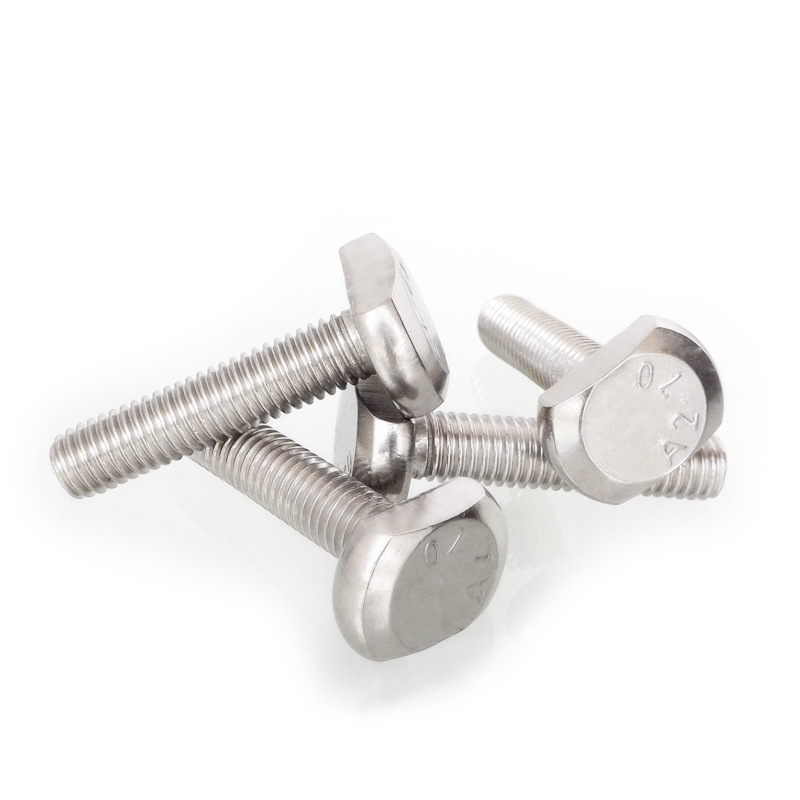
Image: Diverse range of types of t bolts ready for various industrial applications.
Technical Specifications and Parameters of Types of T Bolts
The selection of the correct t bolt for a specific application requires a detailed understanding of its technical specifications. These parameters dictate the bolt's compatibility, strength, and suitability for various environmental and mechanical stresses. Here we delve into the critical dimensions and material properties.
Key Technical Parameters
- Material Grade: Specifies the alloy composition (e.g., A2-70, A4-80 stainless steel; 8.8, 10.9 high-tensile carbon steel) determining mechanical properties.
- Nominal Diameter (Thread Size): Common sizes range from M6 to M30, with t bolt m10 being a widely used dimension for general industrial fastening.
- Length: Measured from the underside of the T-head to the end of the threaded portion, available in a vast array of standard and custom lengths.
- Head Dimensions: The 'T' head's width and height must precisely match the T-slot channel dimensions to ensure proper engagement and load distribution. This is particularly crucial for slotted t bolts.
- Thread Pitch: Standard (coarse) or fine pitch threads, selected based on vibration resistance and adjustment requirements.
- Tensile Strength: The maximum stress a material can withstand before breaking, typically measured in MPa.
- Yield Strength: The stress at which a material begins to deform plastically, crucial for preventing permanent deformation under load.
- Hardness: Resistance to indentation, often measured using Rockwell or Brinell scales.
- Surface Finish: Plating (zinc, nickel), galvanization, or specialized coatings for corrosion protection and friction reduction.
Typical Product Specification Table: T-Bolts (Metric Series)
| Parameter | Common Specifications (e.g., T Bolt M10) | Typical Range |
|---|---|---|
| Material Grade | Stainless Steel A2-70 (304), Carbon Steel 8.8 | A2-70, A4-80, 8.8, 10.9, 12.9 |
| Nominal Diameter (D) | M10 | M6 - M30 |
| Thread Pitch | 1.5 mm (Coarse) | 0.75 mm - 3.5 mm (Fine/Coarse) |
| Shank Length (L) | 50 mm | 20 mm - 300 mm+ (Custom) |
| T-Head Width (W) | 18 mm | 10 mm - 40 mm |
| T-Head Height (H) | 6 mm | 4 mm - 15 mm |
| Tensile Strength (Min) | 700 MPa (A2-70) / 800 MPa (8.8) | 500 MPa - 1200 MPa |
| Yield Strength (Min) | 450 MPa (A2-70) / 640 MPa (8.8) | 300 MPa - 900 MPa |
| Surface Treatment | Plain, Zinc Plated | Plain, Zinc, Hot-Dip Galvanized, Black Oxide, Dacromet, PTFE |
This table provides a generalized overview; specific project requirements will necessitate precise adherence to engineering drawings and material certifications. Understanding these specifications is paramount for ensuring the structural integrity and longevity of any assembly utilizing these fasteners.
Diverse Application Scenarios and Real-World Experience with T-Bolts
The adaptability and robust clamping capabilities of t bolts make them an indispensable component across a multitude of industrial sectors. Their design allows for swift, secure, and adjustable fastening, offering significant advantages over traditional bolting methods where alignment and positional flexibility are crucial. Our experience spans diverse applications, consistently delivering reliable performance.
Typical Application Fields:
- Machine Tool Fixturing: In CNC machining centers, milling machines, and lathes, t slot bolts are fundamental for clamping workpieces, jigs, and fixtures to the machine's T-slotted tables. Their quick engagement and high clamping force ensure precise and secure setup, essential for machining accuracy.
- Automation and Robotics: Modular aluminum extrusion profiles, widely used in constructing industrial automation cells, robot bases, and conveyor systems, rely heavily on t track bolts. They facilitate rapid assembly, reconfiguration, and attachment of various components, sensors, and actuators, significantly reducing downtime during system setup and modifications.
- Solar Panel Mounting Systems: The renewable energy sector utilizes specific types of t bolts for securing solar panels to mounting rails. Often made from corrosion-resistant materials like stainless steel (e.g., 304 or 316), these fasteners ensure long-term stability and weather resistance in outdoor installations. Their ability to slide and lock into place simplifies alignment and installation across large arrays.
- Heavy Machinery and Equipment Assembly: From construction equipment to agricultural machinery, tee bolts provide robust fastening points for access panels, modular attachments, and structural elements that may require periodic adjustment or removal.
- Structural Framing and Display Systems: In applications requiring adjustable structural elements, such as exhibition stands, retail displays, and laboratory setups, slotted t bolts offer the flexibility to position and secure components along slotted channels, allowing for design versatility and easy reconfigurations.
Customer Feedback and Operational Insights:
Feedback from our clients consistently underscores the operational benefits of well-engineered t bolts. A leading automotive jig manufacturer reported a 15% reduction in fixture setup time by standardizing on our precision-machined t bolt m10 range, citing enhanced productivity and reduced labor costs. Similarly, a major solar farm developer highlighted the critical role of stainless steel t bolts in resisting saline corrosion in coastal installations, extending the lifespan of their solar array infrastructure significantly beyond projections for standard fasteners.
These real-world applications demonstrate not only the functional versatility but also the profound economic and operational advantages gained from selecting the right t bolt for the job. Our fasteners are designed to deliver consistent performance, ensuring reliability even in the most demanding industrial environments.
Technical Advantages of Utilizing Specific Types of T Bolts
The design of t bolts imparts several distinct technical advantages that make them superior to conventional fastening methods in specific applications. These advantages contribute directly to improved operational efficiency, structural integrity, and long-term cost savings.
1. Enhanced Adjustability and Flexibility
Unlike standard bolts that require fixed holes, t slot bolts can slide along a T-slot channel, allowing for infinite adjustability in positioning components. This flexibility is invaluable in prototyping, jig and fixture design, and modular construction, where precise alignment and the ability to reconfigure layouts without redrilling are essential.
2. Superior Clamping Force and Load Distribution
The T-head design provides a broad contact area within the slot, distributing clamping forces effectively over a larger surface. This reduces stress concentration and enhances the stability of the clamped components. High-grade t bolts, such as those manufactured from 8.8 or 10.9 carbon steel, offer exceptional tensile and shear strength, ensuring robust connections even under dynamic loads.
3. Non-Intrusive Assembly
Installation of t bolts does not require access to the backside of the mounting surface. This 'front-side' assembly capability is a significant advantage in enclosed spaces, large structures, or when working with thick profiles where through-bolting is impractical or impossible. This simplifies design, reduces assembly time, and lowers labor costs.
4. Corrosion Resistance and Durability
When manufactured from materials like 316-grade stainless steel, t bolts offer excellent resistance to corrosion, pitting, and crevice corrosion in harsh chemical or marine environments. Combined with appropriate surface treatments, their durability ensures an extended service life, minimizing maintenance and replacement costs, and upholding structural integrity in critical applications like petrochemical facilities and water treatment plants.
5. Reusability and Modularity
The ability to easily insert, adjust, and remove t bolts without damaging the T-slot profile makes them ideal for modular designs. This reusability supports rapid prototyping, temporary setups, and system upgrades, promoting cost-effectiveness and sustainability in manufacturing and construction.
These advantages collectively underscore why various types of t bolts are preferred choices for engineers seeking reliable, adaptable, and high-performance fastening solutions for their complex industrial challenges.
Vendor Comparison for High-Quality T-Bolts
Selecting the right supplier for industrial fasteners like t bolts is as crucial as selecting the right product itself. A reliable vendor not only provides quality products but also offers essential support, technical expertise, and timely delivery. This comparison focuses on key criteria that B2B decision-makers should consider.
Key Comparison Factors:
- Product Quality & Certifications: Look for vendors with ISO 9001 certification, material test reports (MTRs), and compliance with international standards like ANSI, DIN, ASTM. This ensures consistent quality across all types of t bolts.
- Customization Capabilities: The ability to provide custom material grades, dimensions, threads (e.g., custom t bolt m10 lengths or unique head designs), and surface finishes is vital for specialized projects.
- Lead Time & Logistics: Evaluate the vendor's ability to meet delivery schedules, especially for large orders or urgent requirements. Assess their supply chain efficiency.
- Technical Support & Expertise: A knowledgeable sales and engineering team can provide valuable assistance in product selection, application guidance, and troubleshooting.
- After-Sales Service & Warranty: Clear warranty policies and responsive customer support are indicators of a trustworthy partner.
- Pricing & Value: While cost is a factor, it should be weighed against quality, service, and the total cost of ownership (TCO).
Comparative Analysis: Standard vs. Premium T-Bolt Suppliers
| Feature | Standard Supplier (General Purpose) | Premium Supplier (Specialized/Bespoke) |
|---|---|---|
| Product Range | Limited standard sizes (e.g., common t bolt m10), few materials. | Extensive range of types of t bolts, metric/imperial, diverse materials (304, 316, 8.8, 10.9). |
| Customization | Minimal or none, only high volume. | Full customization (material, dimensions, surface treatment, head design for slotted t bolts). |
| Quality Assurance | Basic QC, generic certifications. | ISO 9001, comprehensive testing, MTRs, compliance to specific industry standards (e.g., API, PED). |
| Technical Support | Basic product information. | Application engineering, design consultation, material compatibility guidance. |
| Lead Time | Variable, often longer for non-stock items. | Reliable and predictable, expedited options for critical orders. |
| Value Proposition | Low initial cost, potential higher TCO due to quality issues. | Higher initial investment, significantly lower TCO due to reliability, longevity, and performance. |
For critical industrial applications, partnering with a premium supplier offering certified quality and comprehensive support for various t bolts is an investment that pays dividends in reliability, safety, and long-term cost efficiency.
Tailored Solutions: Customizing Types of T Bolts for Unique Demands
While standard t bolts meet the requirements of many applications, numerous industrial scenarios demand specialized fastening solutions that off-the-shelf products cannot provide. Customized t bolts are crucial for optimizing performance, ensuring perfect fit, and addressing unique environmental or mechanical challenges. Our expertise lies in collaborating with clients to develop bespoke fasteners that integrate seamlessly into their complex systems.
Key Areas of Customization:
- Material Grades: Beyond standard stainless steel (304, 316) and carbon steel (8.8, 10.9), we offer custom formulations using exotic alloys like Duplex, Super Duplex, Monel, or Inconel for extreme corrosion resistance, high-temperature stability, or specific chemical compatibility, crucial in the petrochemical sector.
- Dimensional Modifications: Custom lengths, thread sizes, and T-head dimensions are frequently required to fit non-standard T-slots or to accommodate specific clamping thicknesses. This includes unique modifications for slotted t bolts to match unusual slot profiles.
- Specialized Head Designs: While the 'T' shape is fundamental, variations in head height, width, and chamfering can be customized to optimize engagement with specific T-slots or to integrate with other components. For instance, specific t track bolts might require a finer tolerance on head dimensions for precision rail systems.
- Advanced Surface Treatments: Beyond typical zinc plating or galvanization, we provide specialized coatings such as Xylan, PTFE, or ceramic coatings for enhanced wear resistance, reduced friction, or superior performance in highly corrosive or abrasive environments.
- Thread Types: Custom thread forms (e.g., left-hand threads, fine pitches, or Acme threads) can be incorporated to meet specific mechanical requirements or assembly processes.
- Integrated Features: Customization can extend to integrating additional features like captive washers, specialized knurling, or pilot points for easier assembly and enhanced functionality.
Our design and engineering teams work closely with clients, leveraging advanced CAD/CAM capabilities and material science expertise, to transform precise specifications into high-quality, fully compliant t bolts. This collaborative approach ensures that even the most complex fastening challenges are met with optimal, cost-effective, and reliable solutions.
Authoritative references like ISO and ASTM standards guide our customization process, ensuring that even bespoke products adhere to recognized quality and performance benchmarks, maintaining the highest levels of safety and operational integrity for our clients.
Application Case Studies: T-Bolts in Action
Real-world application case studies demonstrate the tangible benefits and problem-solving capabilities of our types of t bolts across critical industries. These examples highlight our commitment to delivering reliable and high-performance fastening solutions.
Case Study 1: Petrochemical Processing Facility - Corrosion Resistance
Challenge: A large petrochemical plant in a coastal region faced significant challenges with the integrity of its pipe support systems due to severe atmospheric corrosion and exposure to various corrosive chemicals. Standard carbon steel fasteners required frequent replacement, leading to high maintenance costs and potential safety risks.
Solution: We supplied custom-designed t bolts manufactured from Super Duplex stainless steel (UNS S32750) with an additional PTFE coating for enhanced chemical resistance. These slotted t bolts were specifically engineered to fit the existing T-slot channels on their structural framework, providing secure and adjustable clamping for critical piping.
Results: After two years of continuous operation, the Super Duplex t bolts showed no signs of corrosion or material degradation, a stark contrast to the previous fasteners that failed within months. This led to a 70% reduction in maintenance frequency for these specific connection points, substantial cost savings, and improved operational safety and reliability.
Case Study 2: High-Speed Automated Assembly Line - Precision and Speed
Challenge: An automotive component manufacturer needed a highly precise and rapidly adjustable fastening system for their new automated assembly line. The existing setup used conventional bolts, which were slow to adjust and often led to minor misalignments, impacting product quality and throughput.
Solution: We provided a series of precision-machined t bolt m10 fasteners, specifically optimized for aluminum extrusion profiles. These t track bolts featured fine pitch threads and a unique anti-vibration washer design.
Results: The implementation of our t bolts resulted in a 25% improvement in assembly line setup and adjustment times. The enhanced precision of the fasteners contributed to a 5% reduction in product defect rates attributed to component misalignment. The client praised the ease of use and the immediate impact on operational efficiency and product quality.
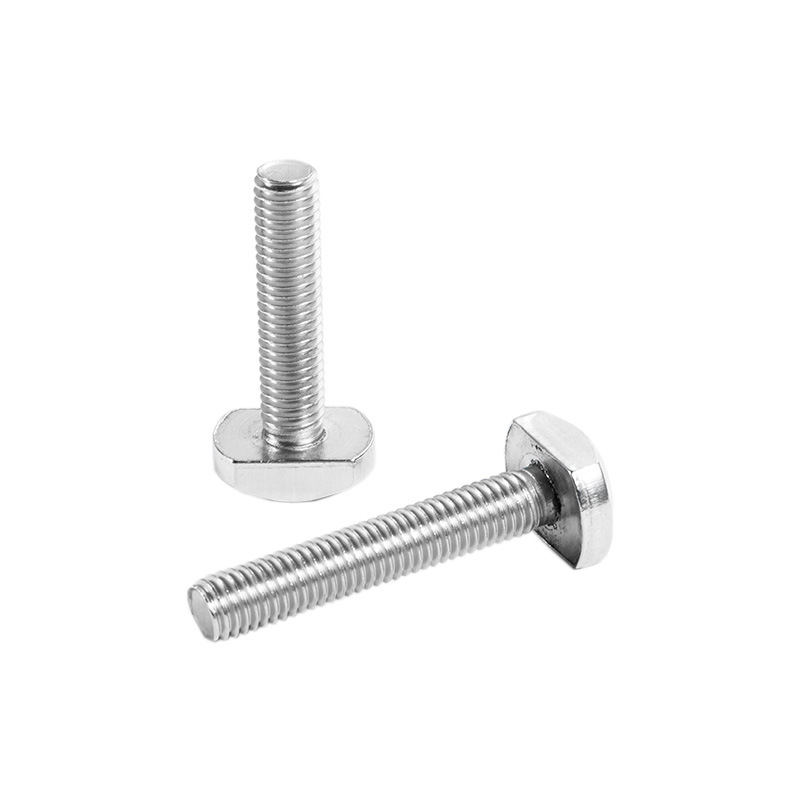
Image: Precision t bolts integrated into an industrial assembly system.
These case studies illustrate the versatility and significant performance improvements that can be achieved through the strategic application of high-quality t bolts, supported by expert technical consultation and robust product development.
Ensuring Trustworthiness: FAQs, Fulfillment, and Support for T-Bolts
Building and maintaining trust with our B2B partners is fundamental. This section addresses common queries, outlines our commitment to timely fulfillment, and details our robust support infrastructure, affirming our reliability as a supplier of industrial fasteners, including various types of t bolts.
Frequently Asked Questions (FAQ)
-
Q1: What materials are available for your t bolts?
A1: We offer a comprehensive range of materials including Stainless Steel (304, 316, 316L, Duplex, Super Duplex), Carbon Steel (Grade 8.8, 10.9, 12.9), Alloy Steel, and specialized alloys like Monel or Inconel upon request. -
Q2: Can you provide custom dimensions for t slot bolts?
A2: Absolutely. We specialize in custom solutions. Our engineering team can work with your specifications for unique lengths, head dimensions, thread types, and materials to ensure a perfect fit for your application. -
Q3: What are your typical lead times for standard vs. custom t bolts?
A3: For in-stock standard t bolt products, lead times are typically 3-5 business days. Custom orders depend on complexity and material availability but generally range from 3-6 weeks. Expedited options are available for critical requirements. -
Q4: What quality certifications do your products hold?
A4: All our fasteners are manufactured under ISO 9001 certified processes. We provide full material traceability and compliance with international standards such as ANSI, DIN, ASTM, and can supply specific industry certifications (e.g., PED, API) as required. -
Q5: How do I ensure I select the correct t bolt for my application?
A5: Our experienced technical sales team and engineers are available to assist you. Provide us with your application details, environmental conditions, and required mechanical properties, and we will recommend the optimal t bolt solution.
Lead Time & Fulfillment Details
We understand the critical importance of timely delivery in B2B operations. Our robust supply chain and optimized manufacturing processes enable us to offer competitive lead times. For standard, in-stock t bolts, we strive for dispatch within 72 hours. For larger volume orders or non-stock items, we provide transparent and accurate lead time estimates at the point of quotation. We also offer various shipping options, including express delivery, to accommodate urgent project deadlines, ensuring your production schedules remain on track.
Warranty Commitments
We stand behind the quality and performance of our fasteners. All our t bolts are covered by a comprehensive warranty against defects in material and workmanship. This warranty period and its specific terms are clearly outlined in our sales agreements. Our commitment extends to ensuring that products meet or exceed the agreed-upon technical specifications and industry standards, providing our customers with peace of mind and long-term reliability.
Customer Support & After-Sales Service
Our dedication to customer satisfaction extends far beyond the point of sale. We provide extensive after-sales support, including technical assistance, product installation guidance, and troubleshooting. Our responsive customer service team is available via phone and email to address any queries or concerns promptly. We believe in fostering long-term partnerships built on trust, quality, and unparalleled support, ensuring that your experience with our t bolts and other fastening solutions is consistently excellent.
Conclusion
The strategic selection and application of various types of t bolts are pivotal for the success and longevity of industrial projects across diverse sectors. From their precise manufacturing processes, encompassing material selection and advanced forging techniques, to their critical roles in machine tool fixturing, automation, and petrochemical infrastructure, t bolts offer unparalleled flexibility, strength, and corrosion resistance. By prioritizing quality, adhering to international standards, and offering comprehensive customization and support, suppliers can significantly contribute to the operational efficiency, safety, and cost-effectiveness of their clients' endeavors. Investing in high-quality, meticulously engineered t bolts is not merely a purchasing decision, but a strategic commitment to reliability and performance.
Authoritative References:
- ISO (International Organization for Standardization) official website: https://www.iso.org/
- ASTM International official website: https://www.astm.org/
- American National Standards Institute (ANSI) official website: https://www.ansi.org/
- Machine Design, "Fastener Basics: T-Bolts and T-Nuts": https://www.machinedesign.com/fasteners/article/21832009/fastener-basics-tbolts-and-tnuts
Latest news
-
Reliable DIN 127 Spring Washers for Industrial Applications | LZ Fasteners
NewsDec.03,2025
-
Comprehensive Guide to DIN 126 Washer: Specifications, Uses & Benefits
NewsDec.03,2025
-
Durable and High-Quality Din 125a A2 Washers for Industry | LZ Fasteners
NewsDec.03,2025
-
Comprehensive Guide to DIN 125A Washers – Specifications, Applications & Vendors
NewsDec.03,2025
-
Din 125 Washer - Reliable Industrial Fastening Solutions from LZ Fasteners
NewsDec.03,2025
-
What is a DIN 125 Flat Washer? Global Significance, Specs & Vendors
NewsDec.03,2025
 English
  Afrikaans
  Arabic
  Bengali
  Bulgarian
  French
  German
  Hindi
Hindi  Indonesian
  Italian
  Japanese
  Korean
  Malay
Malay  Portuguese
  Russian
  Spanish
  Thai
Thai  Turkish
  Urdu
Urdu  Vietnamese