



Types of Bolts: Galvanized, Anchor & Screws | High-Strength
What buyers really mean when they ask about types of bolts
In practice, they’re comparing corrosion protection, strength classes, and—lately—traceability. The hottest segment? Hot dip galvanized bolts for outdoor steelwork and marine projects. I’ve toured plants from Hebei to Hamburg; the best lines balance metallurgy with coating control. And yes, the price spread is wider than many expect.
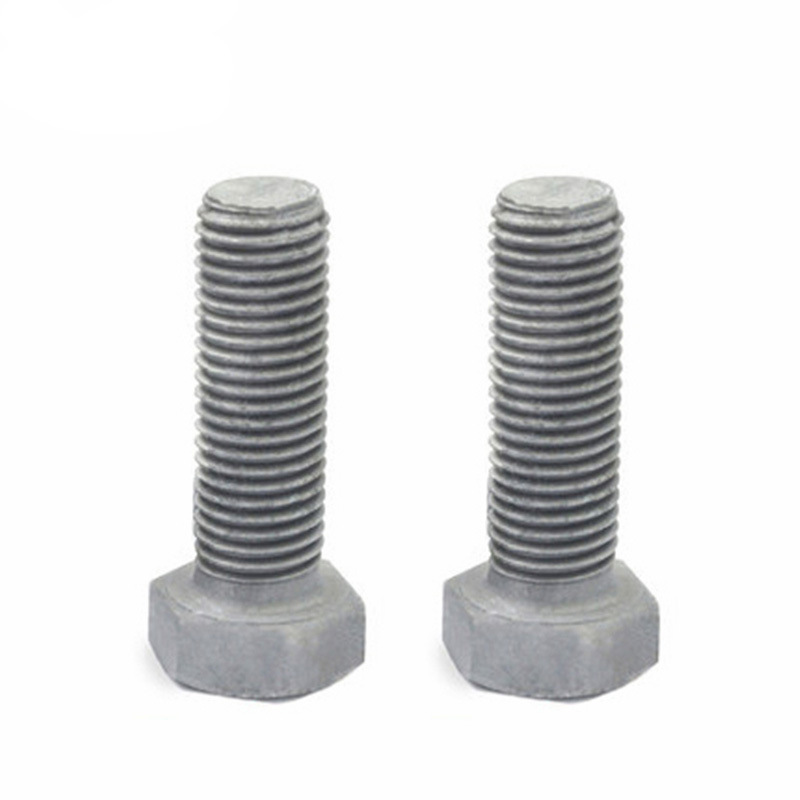
Industry snapshot and trends
- Structural steel and renewables are pulling demand for high-strength, zinc-coated bolt families; EN 14399/F3125 hybrids are common on global projects.
- Sustainability push: longer service life via thicker HDG (≈55–85 μm) reduces replacements—contractors love the lifecycle math.
- Traceability is standardizing: heat numbers laser-marked on heads; QR codes tied to mill certs. Honestly, it saves so many emails.
Product focus: hot dip galvanized bolts
From LZ Fasteners (origin: South of Xi Zhaozhuang Village, Lin Luoguan Town, Yongnian District, Handan City, Hebei Province — West side of Jianshe Road), these are built for harsh weather, coastal air, and splash zones. If you’re comparing types of bolts, HDG wins where paint fails.
| Parameter | Spec (≈ real-world use may vary) |
| Sizes | M8–M36 (custom up to M64 on request) |
| Grades | ISO 898-1: 4.8, 8.8, 10.9; ASTM A307/A325/F3125 |
| Threads | Metric 6g / UNC-2A; rolled threads |
| Coating | Hot dip galvanized per ISO 1461 / ASTM A153; 55–85 μm typical |
| Testing | Proof load, hardness, coating thickness, salt spray (ISO 9227 ≥ 480 h no red rust) |
| Certifications | ISO 9001:2015; 3.1 material certs; PPAP on request |
| Service life | ≈25–50 years rural/urban; coastal depends on chloride load |
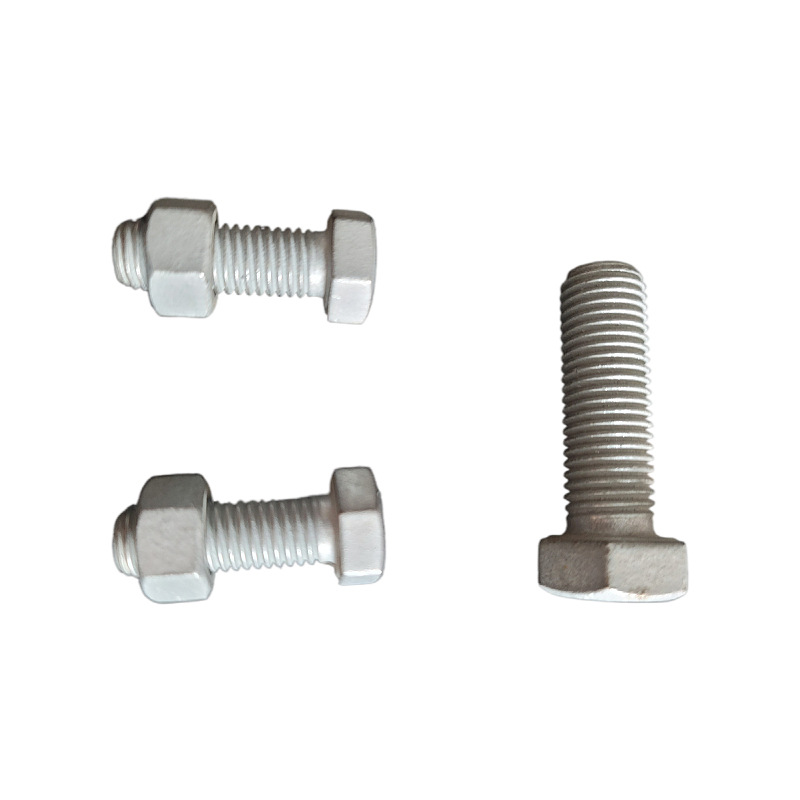
How they’re made (quick process flow)
- Materials: low/medium carbon steel (Q235, 35CrMo), fully traceable heats.
- Forming: cold heading for precision; hot forging for larger diameters.
- Threading: rolling dies (better fatigue vs cut threads).
- Heat treatment: quench & temper for 8.8/10.9; hardness checked per ISO 898-1.
- HDG: degrease, pickle, flux, zinc immersion, centrifuge/spin to keep threads clean; thickness checked via magnetic gauge.
- Testing: proof load, wedge tensile, impact (when specified), ISO 9227 salt spray, thread gauges GO/NO-GO.
Where they excel (and why)
Use cases: highway guardrails, transmission towers, wind turbine foundations, marina structures, rooftop PV racking, and general steel frames. Compared with other types of bolts, HDG fasteners offer a self-healing zinc layer and thicker barrier, which, frankly, buys maintenance teams time.
Customer notes: “Torque scatter was low even after HDG; threads ran clean,” said a South China EPC. Another client told me, “After two typhoon seasons, zero red rust on the exposed connections.” That’s the kind of boring reliability we want.
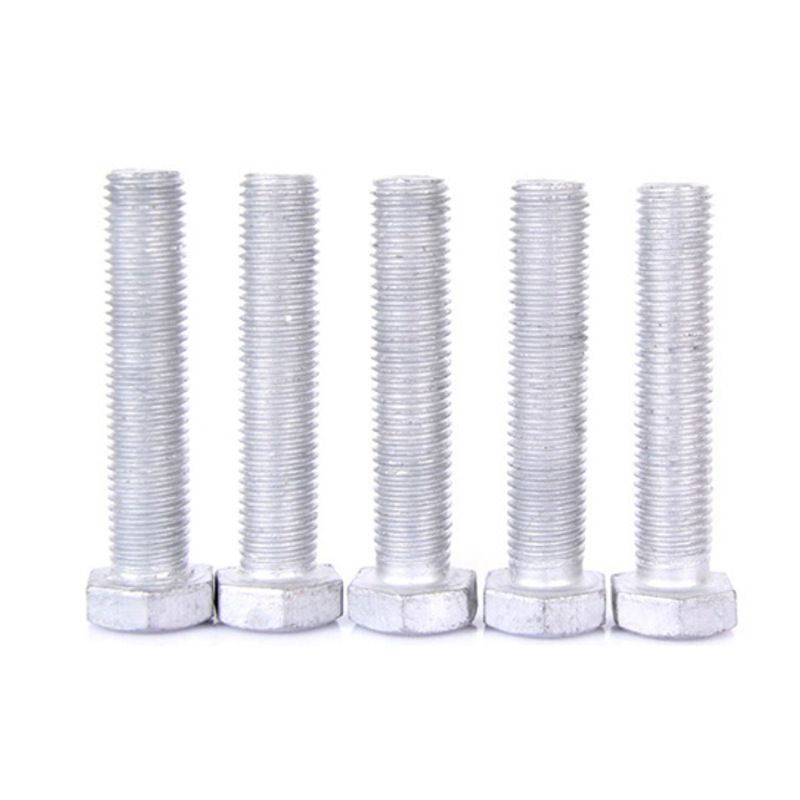
Vendor comparison (field-notes level)
| Feature | LZ Fasteners (Hebei) | Vendor A | Vendor B |
| Standards | ISO 1461, ISO 898-1, F3125 | ISO 898-1 only | ISO 1461; EN 14399 optional |
| Coating thickness | ≈55–85 μm | ≈40–60 μm | ≈50–80 μm |
| Lead time | 10–18 days typical | 18–25 days | 12–20 days |
| Customization | Marking, special nuts, packs | Limited | Moderate |
| Third‑party testing | SGS / BV optional | On request | Available |
Mini case files
- Coastal wind farm: M24 8.8 HDG sets, ISO 9227 test ≈720 h; after 18 months, in-situ checks showed no red rust on threads.
- Urban footbridge: EN 14399 assemblies swapped for HDG M20 with calibrated torque; maintenance interval extended by ≈5 years.
If you’re mapping other types of bolts to your BOM—zinc-flake, stainless A2/A4, weathering steel—start with exposure, then fatigue, then maintenance budget. The rest falls into place.
Citations
- ISO 1461: Hot dip galvanized coatings — Requirements and test methods.
- ASTM F3125/A325: High-strength structural bolts; consolidated standard.
- ISO 898-1: Mechanical properties of fasteners — Bolts, screws and studs.
- ISO 9227: Corrosion tests in artificial atmospheres — Salt spray tests.
Latest news
-
Reliable DIN 127 Spring Washers for Industrial Applications | LZ Fasteners
NewsDec.03,2025
-
Comprehensive Guide to DIN 126 Washer: Specifications, Uses & Benefits
NewsDec.03,2025
-
Durable and High-Quality Din 125a A2 Washers for Industry | LZ Fasteners
NewsDec.03,2025
-
Comprehensive Guide to DIN 125A Washers – Specifications, Applications & Vendors
NewsDec.03,2025
-
Din 125 Washer - Reliable Industrial Fastening Solutions from LZ Fasteners
NewsDec.03,2025
-
What is a DIN 125 Flat Washer? Global Significance, Specs & Vendors
NewsDec.03,2025
 English
  Afrikaans
  Arabic
  Bengali
  Bulgarian
  French
  German
  Hindi
Hindi  Indonesian
  Italian
  Japanese
  Korean
  Malay
Malay  Portuguese
  Russian
  Spanish
  Thai
Thai  Turkish
  Urdu
Urdu  Vietnamese