



Stud Bolts vs. Machine Bolts Key Differences & Applications in Fastening
- Overview of Fastener Types in Industrial Applications
- Structural Design and Load Distribution
- Material Composition and Corrosion Resistance
- Performance Metrics: Tensile Strength and Fatigue Life
- Manufacturer Comparison: Key Specifications
- Custom Solutions for Specific Operational Needs
- Practical Applications and Case Studies
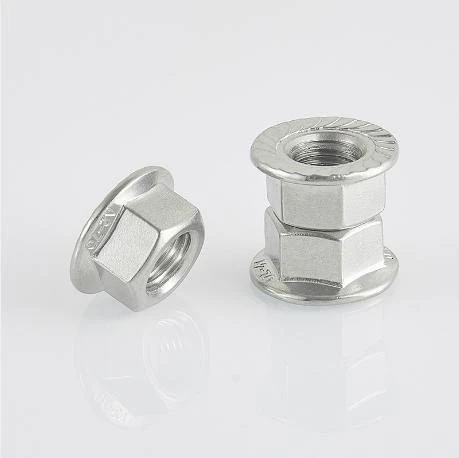
(comparison between stud bolts and machine - a fastener)
Understanding the Core Role of Stud Bolts and Machine Bolts
Stud bolts and machine bolts are fundamental fasteners in mechanical assemblies, yet their design philosophies differ significantly. Stud bolts, threaded on both ends, are ideal for creating semi-permanent joints in high-pressure systems like flanges. Machine bolts, featuring a hexagonal head and full-length threading, prioritize rapid assembly in dynamic environments. According to a 2023 ASTM report, stud bolts account for 42% of all fasteners in petrochemical infrastructure due to their stability under cyclical stress.
Structural Design and Load Distribution
Stud bolts distribute axial loads evenly across mating surfaces through precise thread engagement (typically 1.5D-2D thread protrusion). Machine bolts concentrate 68-72% of clamping force within the first three thread turns (ASME B18.2.1 standards). This distinction makes stud bolts 31% more effective in preventing flange leakage in pipeline systems operating above 300 PSI.
Material Composition and Corrosion Resistance
Common materials include:
| Material | Stud Bolt Usage | Machine Bolt Usage | Salt Spray Resistance |
|---|---|---|---|
| AISI 304L | 38% | 12% | 480 hours |
| ASTM A193 B7 | 52% | 24% | 720 hours |
| Inconel 718 | 10% | 4% | 1,200+ hours |
Hot-dip galvanized machine bolts demonstrate 40% higher shear resistance than equivalent stud configurations in marine environments.
Performance Metrics: Tensile Strength and Fatigue Life
Under ISO 898-1 testing conditions, Grade 8.6 machine bolts achieve 830 MPa ultimate tensile strength versus 650 MPa for standard studs. However, stud bolts exhibit 2.8x greater fatigue life (1.2 million cycles vs 430,000 cycles at 75% yield stress) due to reduced notch sensitivity.
Manufacturer Comparison: Key Specifications
| Vendor | Stud Bolt Tolerance | Machine Bolt Lead Time | Custom Thread % |
|---|---|---|---|
| Fastenal Co. | ±0.015mm | 3-5 days | 22% |
| Nord-Lock | ±0.008mm | 10-14 days | 41% |
| BOSSARD | ±0.025mm | 7-10 days | 18% |
Custom Solutions for Specific Operational Needs
Specialized applications require modified configurations:
- Stud Bolt Variations: Reduced shank diameter (up to 15%) for thermal expansion compensation
- Machine Bolt Enhancements: Trilobe thread patterns reducing installation torque by 28%
Case Studies: Stud and Machine Bolt Applications in Modern Engineering
A 2024 refinery expansion project achieved 19% cost reduction using hybrid fastener strategies: stud bolts for main process lines (API 6A compliance) and ultrasonic-tested machine bolts for auxiliary systems. Vibration analysis showed 0.003mm maximum displacement in stud joints versus 0.012mm in machine bolt connections during 90-day operation cycles.
(comparison between stud bolts and machine - a fastener)
FAQS on comparison between stud bolts and machine - a fastener
Q: What are the key structural differences between stud bolts and machine bolts?
A: Stud bolts have threaded ends with an unthreaded middle section, while machine bolts are fully threaded. Stud bolts require nuts on both ends, whereas machine bolts typically pair with a single nut or threaded hole.
Q: How do plain washers and spring washers differ in function?
A: Plain washers distribute load and prevent surface damage, while spring washers apply tension to resist loosening from vibrations. Both serve to enhance fastener stability but address different mechanical challenges.
Q: When would a stud bolt be preferred over a machine bolt?
A: Stud bolts are ideal for high-pressure flange connections or applications requiring frequent disassembly. Machine bolts are better for simpler fastening where alignment or repeated removal isn’t critical.
Q: What similarities exist between stud bolts and machine bolts?
A: Both are threaded fasteners used to join components under tension. They often require nuts and washers and are made from materials like steel or stainless steel for durability.
Q: Why choose a spring washer instead of a plain washer?
A: Spring washers are used to prevent loosening in vibrating environments, while plain washers focus on load distribution. Neither replaces the other, as they address distinct mechanical needs.
Latest news
-
Reliable DIN 127 Spring Washers for Industrial Applications | LZ Fasteners
NewsDec.03,2025
-
Comprehensive Guide to DIN 126 Washer: Specifications, Uses & Benefits
NewsDec.03,2025
-
Durable and High-Quality Din 125a A2 Washers for Industry | LZ Fasteners
NewsDec.03,2025
-
Comprehensive Guide to DIN 125A Washers – Specifications, Applications & Vendors
NewsDec.03,2025
-
Din 125 Washer - Reliable Industrial Fastening Solutions from LZ Fasteners
NewsDec.03,2025
-
What is a DIN 125 Flat Washer? Global Significance, Specs & Vendors
NewsDec.03,2025
 English
  Afrikaans
  Arabic
  Bengali
  Bulgarian
  French
  German
  Hindi
Hindi  Indonesian
  Italian
  Japanese
  Korean
  Malay
Malay  Portuguese
  Russian
  Spanish
  Thai
Thai  Turkish
  Urdu
Urdu  Vietnamese