



SS Fasteners - 304/316 Stainless, Corrosion-Resistant, Bulk
Hexagon Nuts With Flange: what’s driving the new wave in stainless hardware
If you’re sourcing precision hardware, you’ve probably bumped into Ss Fasteners more than once this quarter—especially flange nuts. I’ve been walking shop floors and maintenance docks where these little parts keep assemblies honest. The latest interest isn’t hype; it’s about consistent torque retention, corrosion resistance, and frankly, fewer returns.
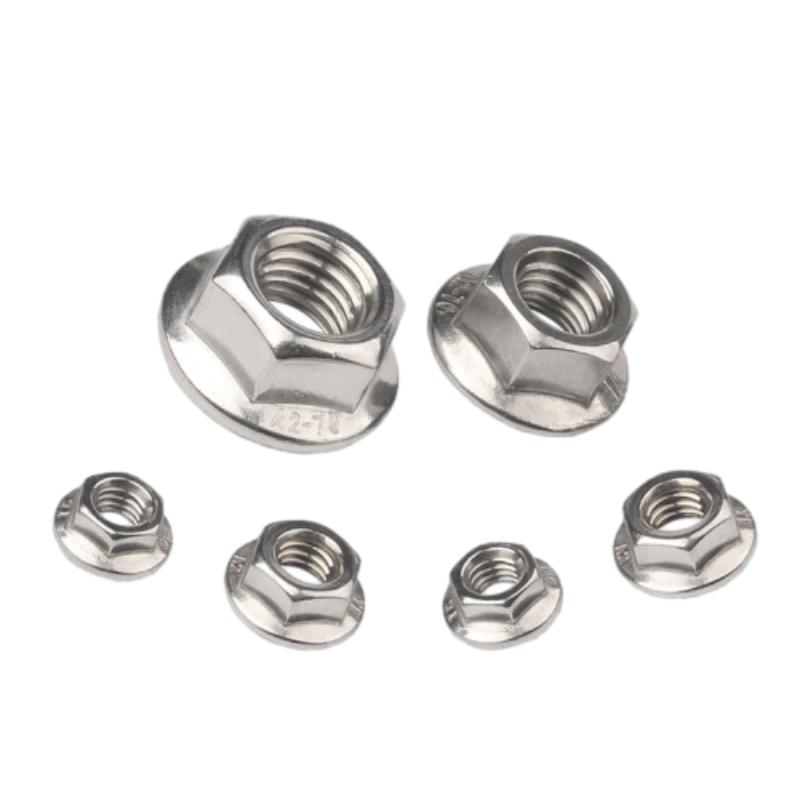
What they are and why they matter
These Hexagon Nuts With Flange integrate a wide bearing surface at the base, spreading load and reducing the need for separate washers. On automotive brackets, in HVAC housings, and in marine handrails, a flange nut often cuts assembly steps and improves clamp force stability. Many customers say torque-to-yield consistency is “boringly predictable,” which is exactly what you want on a production line.
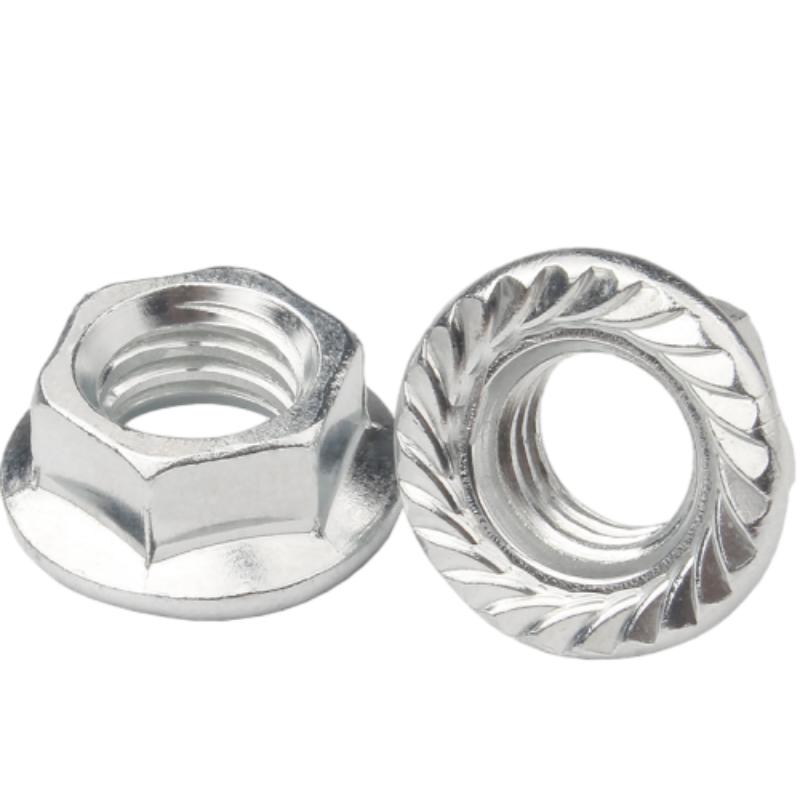
Materials, process, testing
Typical builds use A2 (304) or A4 (316) stainless. Production is cold-headed, then tapped, with optional serrated flange. Surfaces are cleaned and passivated (ASTM A967) to remove free iron and stabilize corrosion resistance. Proof-load and hardness are verified per ISO 3506‑2 for stainless steel nuts; some buyers also ask for neutral salt spray (ASTM B117) as a comparative screen—real‑world use may vary, to be honest.
Manufacturing origin: South of Xi Zhaozhuang Village, Lin Luoguan Town, Yongnian District, Handan City, Hebei Province (West side of Jianshe Road). It seems simple, but proximity to raw stock and heat-treatment subcontractors (when needed for non-SS variants) trims lead time.
Product specifications (typical)
| Standard | ISO 4161 / DIN 6923; threads ISO metric (6H) |
| Sizes | M5–M20 (others on request) |
| Materials | A2-70 (304), A4-80 (316); specials: 410/430, 10.9 alloy (non-SS) |
| Flange | Smooth or serrated (≈10–12 serrations) |
| Finish | Passivated (ASTM A967); optional PTFE coat for low friction |
| Mechanical | Meets ISO 3506‑2 class; hardness ≈ 150–220 HV |
| Corrosion | 316: strong resistance in chlorides; lab NSS ≥ 1,000 h (indicative) |
| Service life | ≈10–25 years depending on environment and maintenance |
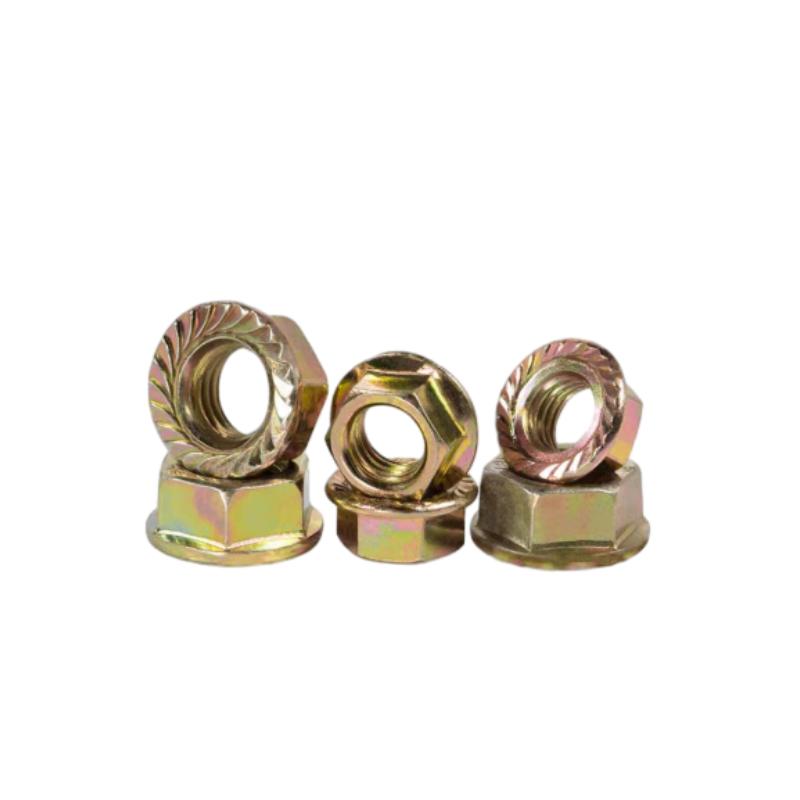
Where they’re used (and why)
- Automotive subframes and heat shields: quick seating, fewer washers.
- Marine fittings: A4 stainless avoids messy replacements at sea.
- Food & beverage equipment: passivation plus easy washdowns.
- HVAC mounts and rooftop rails: serrations fight vibration.
Feedback from maintenance teams: “Serrated flange keeps torque after a season of vibration.” Another buyer told me the switch cut assembly time by ~8%—small, but over thousands of units, it matters.
Vendor comparison (indicative)
| Vendor | Certifications | MOQ | Lead Time | Customization | Traceability |
|---|---|---|---|---|---|
| LZ (Handan) | ISO 9001; reports to ISO 3506‑2 | ≈ 5,000 pcs | 10–20 days | Sizes, serrations, coatings | Heat/lot certificates |
| Regional Trader A | ISO 9001 (varies by source) | Low (mixed lots) | 2–6 weeks | Limited | Partial |
| OEM Supplier B | IATF 16949, ISO 9001 | High | 4–8 weeks | Broad (PPAP ready) | Full |
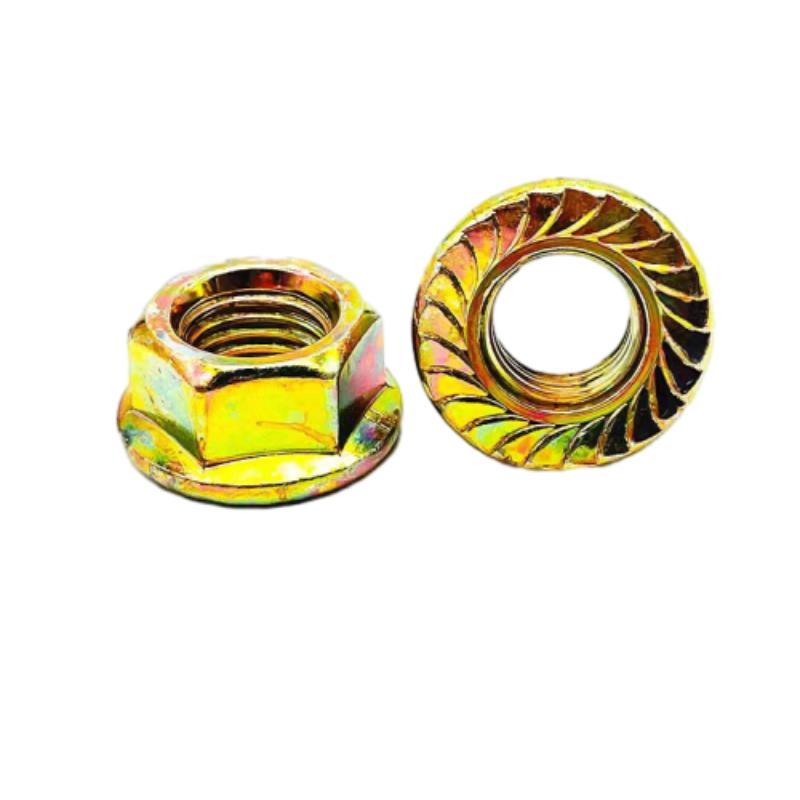
Customization and real-world cases
With Ss Fasteners, buyers often request nonstandard flange OD for softer substrates, PTFE topcoats for stable K-factors, and laser-etched lot codes for traceability. Actually, a rail integrator specced A4-80 serrated versions and reported a 35% drop in loosening incidents on vibrating installations. Another food processor swapped to smooth-flange A2-70 to protect painted panels—no more scarring around the seat.
Final note: ask for torque-tension curves from your vendor. When you combine serrations, lubricant, and thread quality, the scatter can change. The better Ss Fasteners teams will share joint diagrams and sample PPAPs upon request.
Citations
- ISO 3506-2: Mechanical properties of corrosion-resistant stainless steel fasteners — Nuts. https://www.iso.org/standard/73939.html
- ISO 4161: Hexagon nuts with flange — Product grade A. https://www.iso.org/standard/61309.html
- ASTM A967/A967M: Chemical Passivation of Stainless Steel Parts. https://www.astm.org/a0967_a0967m-17.html
- ASTM B117: Standard Practice for Operating Salt Spray (Fog) Apparatus. https://www.astm.org/b0117-19.html
Latest news
-
Reliable DIN 127 Spring Washers for Industrial Applications | LZ Fasteners
NewsDec.03,2025
-
Comprehensive Guide to DIN 126 Washer: Specifications, Uses & Benefits
NewsDec.03,2025
-
Durable and High-Quality Din 125a A2 Washers for Industry | LZ Fasteners
NewsDec.03,2025
-
Comprehensive Guide to DIN 125A Washers – Specifications, Applications & Vendors
NewsDec.03,2025
-
Din 125 Washer - Reliable Industrial Fastening Solutions from LZ Fasteners
NewsDec.03,2025
-
What is a DIN 125 Flat Washer? Global Significance, Specs & Vendors
NewsDec.03,2025
 English
  Afrikaans
  Arabic
  Bengali
  Bulgarian
  French
  German
  Hindi
Hindi  Indonesian
  Italian
  Japanese
  Korean
  Malay
Malay  Portuguese
  Russian
  Spanish
  Thai
Thai  Turkish
  Urdu
Urdu  Vietnamese