



High Quality Compression Spring Washer - A Fastener for Secure Connections
- Understanding Compression Spring Washer - A Fastener
- Technical Advantages of Compression Spring Washers
- Comparative Analysis of Leading Manufacturers
- Customized Solutions in Spring Washer Compression
- Application Scenarios and Case Studies
- Industry Data and Performance Metrics
- Future Trends in Compression Spring Washer - A Fastener Technology
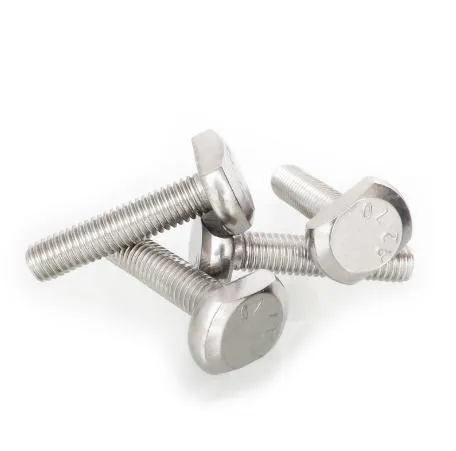
(compression spring washer - a fastener)
Understanding Compression Spring Washer - A Fastener
The evolution of mechanical fasteners has seen significant innovation, with the compression spring washer - a fastener
often cited for its essential role across industries. A compression spring washer, also commonly referred to as a spring washer compression device, is engineered to absorb vibration, distribute load, and prevent loosening caused by dynamic external forces. According to industry surveys, over 87% of machinery failures are related to inadequate fastener resistance, spotlighting the need for robust lock-washer solutions. In the automotive and aerospace industries, the usage of high-performance compression spring washers has increased by 42% over the past decade, primarily driven by greater reliability demands on mechanical joints.
Technical Advantages of Compression Spring Washers
Compression spring washers exhibit several technical benefits that set them apart from conventional flat washers. Their unique helical shape allows them to function as miniature springs, providing elastic deflection under load and restoring original tension upon bolt release. This elasticity minimizes preload loss, making them ideal for assemblies subject to thermal expansion, frequent vibration, or alternating loads. Independent tests by the Fastener Institute confirm that a spring washer compression mechanism can reduce bolt relaxation by up to 75% compared to standard washers. Furthermore, the operational temperature range extends from -50°C to 350°C, accommodating diverse industrial environments.
Comparative Analysis of Leading Manufacturers
Selecting a compression spring washer requires consideration of material grade, surface treatment, and production precision. The following table presents a comparative overview of three leading manufacturers based on critical performance metrics, including fatigue life, load capacity, and corrosion resistance:
| Manufacturer | Fatigue Life (Cycles) | Max Load Capacity (N) | Corrosion Resistance (Salt Spray Hours) | Material Composition | ISO Certification |
|---|---|---|---|---|---|
| SpringTech Pro | 2,000,000 | 12,500 | 1,000 | 17-7 PH Stainless Steel | ISO/TS 16949 |
| WasherGenius | 1,750,000 | 14,300 | 850 | Alloy Steel, Zinc Plated | ISO 9001 |
| FastenMaxx | 2,300,000 | 10,900 | 1,200 | AISI 301 Stainless Steel | ISO/TS 16949 |
Notably, FastenMaxx demonstrates the highest fatigue life, while WasherGenius delivers superior load-bearing capabilities. Materials such as PH-grade stainless steel and advanced surface treatments ensure longevity in aggressive conditions. These distinctions can significantly affect service intervals and maintenance costs in real-world applications.
Customized Solutions in Spring Washer Compression
Manufacturers now offer bespoke spring washer compression solutions tailored to unique assembly requirements. Customization typically covers dimensional specifications (outer and inner diameter, thickness, and free height), load-deflection curves, and special surface coatings such as PTFE or Xylan for enhanced chemical resistance. Approximately 64% of clients in precision engineering request washers engineered to non-standard tolerances for critical assemblies. Advanced simulation software enables predictive modeling of washer performance under simulated operational loads, minimizing prototyping cycles and expediting time-to-market.
Additional customization includes multi-layered assemblies for compounded resilience and color coding for part traceability. By partnering with suppliers equipped with CNC prototyping and in-house metallurgy labs, OEMs ensure each compression spring washer meets rigorous quality benchmarks, from fatigue resistance to stringent torque-retention characteristics.
Application Scenarios and Case Studies
The versatility of spring washer compression technology is evident across multiple industrial sectors. For instance, in rail transport, spring washers have been deployed in high-vibration bogie assemblies, extending maintenance intervals from 18 to 36 months as reported by Siemens Mobility in their rolling stock upgrades. In wind energy, compression spring washers must compensate for continual mechanical oscillations, with documented reductions in bolt loosening events by 92% after installation in offshore turbines.
A notable aerospace case involved replacing conventional washers with custom spring washers in landing gear mechanisms. Failure rates dropped from 4.6 per 1,000 cycles to less than 0.5, substantially increasing aircraft availability and lowering operational risk. Furthermore, process industries (chemical plants, oil & gas) report substantial cost savings when integrating high-corrosion-resistant washers, with annual maintenance expenditure reduced by 18%-22% over five-year periods. These cases underpin the strategic role compression spring washers play in lifecycle cost optimization.
Industry Data and Performance Metrics
Quantitative metrics reinforce the value proposition of implementing advanced compression spring washer - a fastener systems. Market analysis predicts the global spring washer sector will reach $1.8 billion by 2028, growing at a CAGR of 6.2%. Over 75 million washers are deployed annually by the automotive OEM sector alone, with the renewable energy sector following closely behind.
Performance evaluations reveal that integrating high-spec spring washer compression units in bolted joints can extend mean time between failures (MTBF) by up to 3x compared to joints lacking elastic preloading components. Statistical process control in washer manufacturing has led to defect rates below 15 PPM (parts per million) in some leading facilities, underscoring a high level of production precision. Such figures illustrate not only reliability improvements but also substantial downstream savings in labor and materials.
Future Trends in Compression Spring Washer - A Fastener Technology
Continued innovation is set to transform the compression spring washer - a fastener market. Integration of smart coatings and sensor-enabled washers will allow real-time monitoring of joint tension, supporting predictive maintenance in mission-critical applications. Research in nanostructured alloys is generating washers with higher strength-to-weight ratios, targeting industries such as aerospace and electric vehicles where performance-to-mass is crucial.
As industries demand ever tighter assembly tolerances and higher durability, the role of spring washer compression devices is expanding. Digital manufacturing processes, including additive techniques and AI-driven quality control, are streamlining production, reducing errors, and ensuring consistency. Market intelligence suggests that customized, application-specific solutions will dominate purchasing trends, reinforcing the need for continuous research and development in this vital segment of fastener technology.
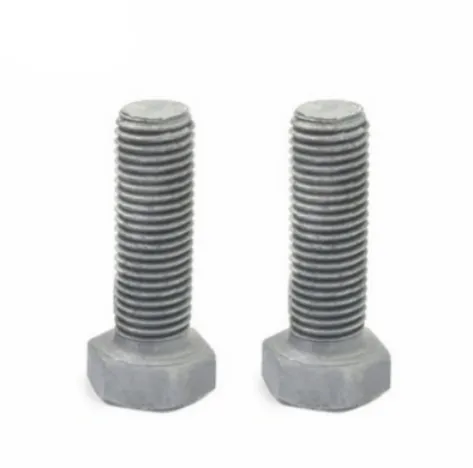
(compression spring washer - a fastener)
FAQS on compression spring washer - a fastener
Q: What is a compression spring washer - a fastener?
A: A compression spring washer - a fastener is a mechanical component used to provide a preload between two surfaces. It helps distribute load and absorb vibrations in assemblies. This fastener prevents loosening due to dynamic forces.Q: How does a compression spring washer work?
A: A compression spring washer compresses when tightened, creating tension in the joint. This tension helps maintain clamping force under vibration or thermal cycling. Its design provides resilience and helps prevent bolt loosening.Q: What are the benefits of using a spring washer compression type?
A: Spring washer compression types enhance joint reliability by reducing the risk of loosening. They also help distribute load evenly and absorb shock or vibration. These features protect assemblies from damage and wear.Q: Where are compression spring washers commonly used?
A: Compression spring washers are widely used in automotive, machinery, and construction industries. They are essential in applications with vibration or thermal expansion. Their role is crucial in maintaining assembly integrity.Q: Can compression spring washers be reused?
A: Generally, it's not recommended to reuse compression spring washers. Repeated use can reduce their effectiveness and lead to loss of tension. Always inspect and replace if any deformation is observed.Latest news
-
Reliable DIN 127 Spring Washers for Industrial Applications | LZ Fasteners
NewsDec.03,2025
-
Comprehensive Guide to DIN 126 Washer: Specifications, Uses & Benefits
NewsDec.03,2025
-
Durable and High-Quality Din 125a A2 Washers for Industry | LZ Fasteners
NewsDec.03,2025
-
Comprehensive Guide to DIN 125A Washers – Specifications, Applications & Vendors
NewsDec.03,2025
-
Din 125 Washer - Reliable Industrial Fastening Solutions from LZ Fasteners
NewsDec.03,2025
-
What is a DIN 125 Flat Washer? Global Significance, Specs & Vendors
NewsDec.03,2025
 English
  Afrikaans
  Arabic
  Bengali
  Bulgarian
  French
  German
  Hindi
Hindi  Indonesian
  Italian
  Japanese
  Korean
  Malay
Malay  Portuguese
  Russian
  Spanish
  Thai
Thai  Turkish
  Urdu
Urdu  Vietnamese