



Cap Nut Supplier - Durable, Corrosion-Resistant, OEM Ready
Cap Nut versus Flange Nuts: what buyers are really choosing today
If you work with fasteners long enough, you learn two things: the catalog never tells the whole story, and real-world assemblies rarely behave like lab rigs. That’s why I spent a week talking to plant engineers and walking the production floor at a manufacturer in the Yongnian District—yes, the fastener capital—specifically South of Xi Zhaozhuang Village, Lin Luoguan Town, Handan City, Hebei Province (west side of Jianshe Road). We compared the classic Cap Nut silhouette with the everyday workhorse, flange nuts, and—spoiler—specs matter, but surface finish and QC matter more.
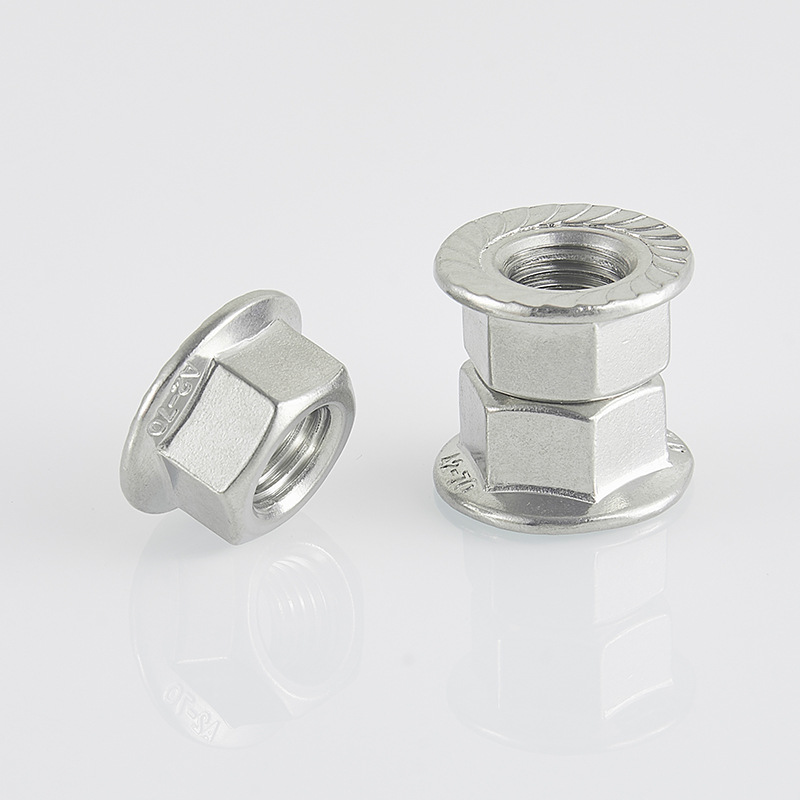
Industry snapshot (and why Cap Nut buyers look at flange nuts too)
The trend is toward fewer components and faster assembly. That’s why flange nuts (integrated washer face, usually serrated or smooth) often replace a separate washer + Cap Nut combo in automotive brackets, HVAC frames, and agricultural machinery. Sustainability also pushes Cr6+-free plating and better corrosion budgets—think 240–480 h neutral salt spray as the baseline, sometimes higher for coastal installs.
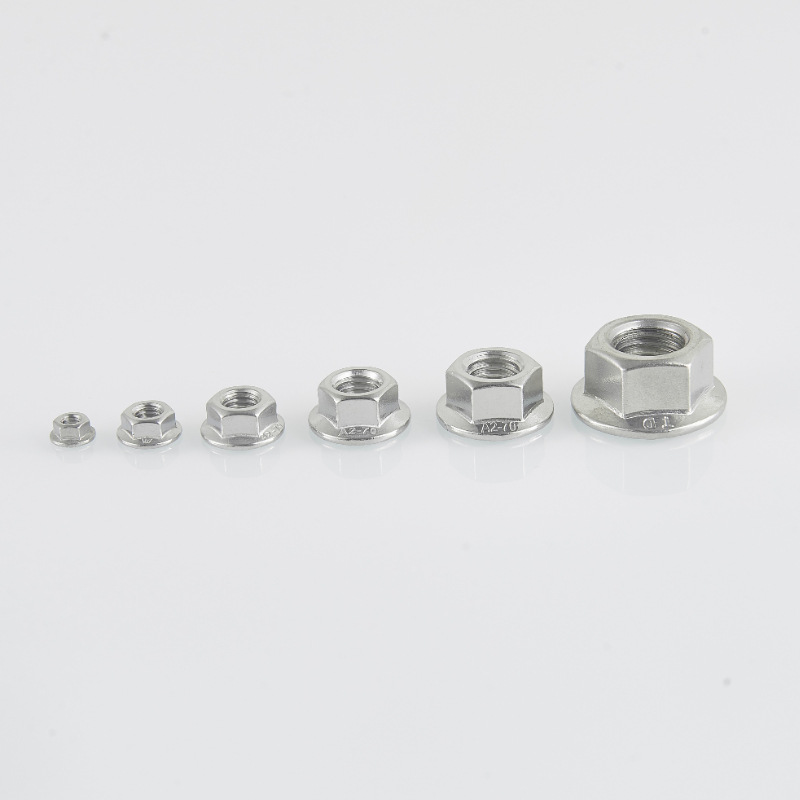
Product specification (typical flange nut that competes with a Cap Nut closure)
| Parameter | Spec (≈/typical) | Notes |
|---|---|---|
| Sizes | M5–M20, UNC/UNF on request | Thread tolerance 6H (ISO) |
| Materials | Carbon steel (C1022, 10B21), SS304/316 | Meets ISO 898-2 / ASTM F594 |
| Grades | Class 8, 10, 12; A2-70, A4-70 | Proof loads per ISO 898-2 |
| Finishes | Zn, Zn-Ni, HDG, black oxide, passivation | ISO 4042; RoHS/REACH compliant |
| Proof load (example) | M10 Class 8 ≈ 35 kN | Real-world may vary ±5–10% |
| Corrosion test | 240–720 h NSS | ISO 9227; finish-dependent |
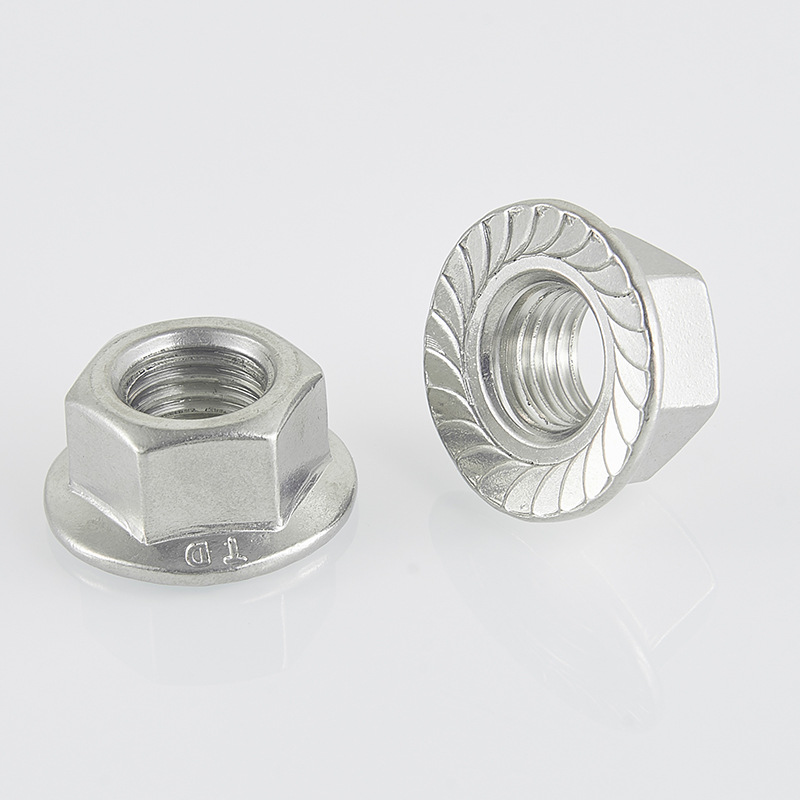
Process flow (how a good flange nut earns its keep)
Materials → cold forming (multi-station) → tapping/roll thread → flange serration (optional) → heat treatment (quench & temper for Class 8/10/12) → surface finish (ISO 4042) → 100% go/no-go thread gauge → torque/tension sampling → salt spray test → packaging and lot traceability. Service life? Indoors ≈ 10–15 years; outdoor with HDG or Zn-Ni, often 5–10 years depending on pollution and maintenance.
Applications where a Cap Nut is considered, but flange wins
-
- Automotive: brackets, exhaust hangers, seat rails (DIN 6923 / ISO 4161 geometry).
- Machinery frames: fewer parts on the line; serrated flange reduces loosening.
- HVAC and solar racking: installers like one-hand tightening; fewer washers to drop.
- Agri-equipment: mud and vibration—serrations bite better than a smooth Cap Nut finish.
Customer feedback? “Torque is consistent, and we cut assembly time by about 12%,” one midwest OEM told me. Another buyer said they still specify a decorative Cap Nut for exposed furniture joints—but switch to flange nuts inside the chassis to save cost.
Vendor comparison (quick, pragmatic)
| Vendor | MOQ | Lead Time | QC & Certifications | Notes |
|---|---|---|---|---|
| LZ Fasteners (Yongnian) | ≈ 10,000 pcs | 10–20 days | ISO 9001; RoHS/REACH | In-house salt spray + hardness; traceability |
| Local Trader | Low | Stock-dependent | Varies | Convenient, but spec consistency can drift |
| Import Brand | Medium–High | 4–8 weeks | Strong documentation | Premium pricing, tight tolerances |
Customization and testing
Options include logo emboss, flange OD tweaks, serration angle, special coatings (Zn-Ni 12–15% Ni), and k-factor targets for torque-tension. Typical tests: proof load, hardness (HV), friction coefficient, and NSS hours. Certifications shipped with each lot on request.
Mini case study
A rail-systems client replaced decorative Cap Nut covers with Class 10 serrated flange nuts under panels. Result: 18% assembly time reduction and no re-torque after 1,000 km vibration trials. The aesthetic caps stayed where visible; the rest went utilitarian—and reliable.
Standards you’ll likely cite
DIN 6923 / ISO 4161 (hex flange nuts), ISO 898-2 (nut properties), ISO 4042 (electroplating), ISO 9227 (corrosion), ASTM F594 (SS nuts). To be honest, compliance isn’t a brag—it's the minimum.
- ISO 4161: Hexagon nuts with flange — Product grades A and B
- DIN 6923: Hexagon nuts with flange
- ISO 898-2: Mechanical properties of fasteners — Nuts
- ISO 4042: Fasteners — Electroplated coatings
- ISO 9227: Corrosion tests in artificial atmospheres — Salt spray tests
- ASTM F594: Stainless steel nuts
- EU RoHS and REACH directives for restricted substances
Latest news
-
Essential Guide to ms15795 856 Fasteners Precision and Reliability
NewsApr.16,2026
-
High Precision ms15795 852 Fasteners for Aerospace Applications
NewsApr.09,2026
-
Comprehensive Guide to MS15795 848 Fasteners for Aerospace and Industrial Applications
NewsApr.07,2026
-
Comprehensive Guide to MS15795 846 Fasteners for Aerospace and Industrial Use
NewsApr.04,2026
-
Comprehensive Guide to MS15795 844 Fasteners for Aerospace and Defense Applications
NewsMar.31,2026
-
Comprehensive Guide to MS15795 842 Fasteners for Aerospace and Defense
NewsMar.28,2026
 English
  Afrikaans
  Arabic
  Bengali
  Bulgarian
  French
  German
  Hindi
Hindi  Indonesian
  Italian
  Japanese
  Korean
  Malay
Malay  Portuguese
  Russian
  Spanish
  Thai
Thai  Turkish
  Urdu
Urdu  Vietnamese